

Experience Design
Sponsorship Activation
Technology
How Sales Centers Generate Premium Sponsorship Revenue: 7 Design Principles That Close Corporate Deals
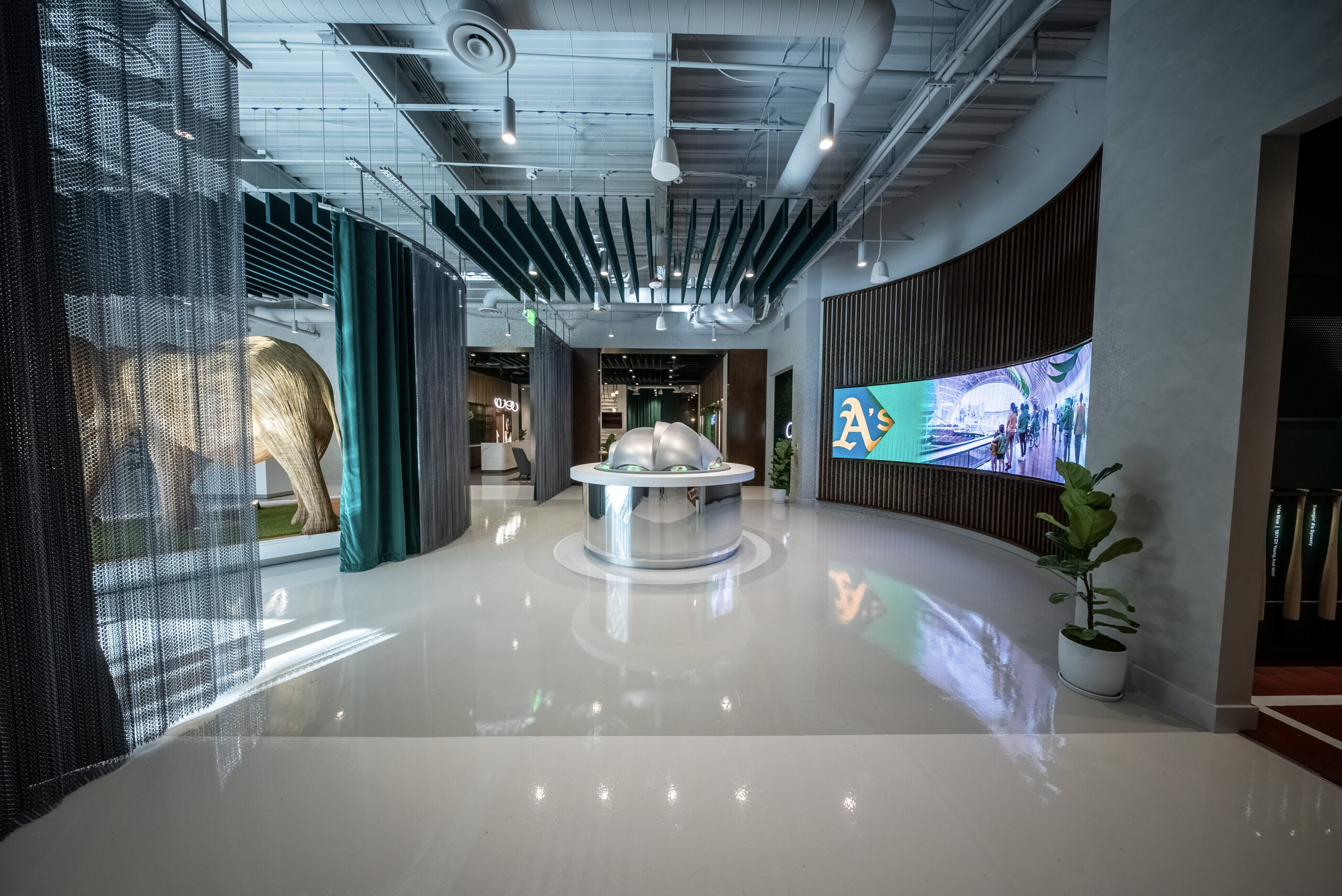
Corporate sponsorships will represent some of the most valuable and complex deals in your sports venue development. Unlike season ticket sales, which often follow established pricing models and sales processes, sponsorship deals require customization, relationship building, and helping executives envision how their brand will benefit from association with your venue.
The challenge? You’re asking corporate decision-makers to commit millions of dollars to a stadium that doesn’t exist yet, for marketing value they can’t see, based on activation opportunities that remain theoretical.
Sales centers designed specifically to close corporate deals aren’t simply showcasing the venue. You have to think bigger, upstream and create that emotional connection. They’re designed to demonstrate the value proposition, illustrate activation possibilities, and create the emotional conviction that moves once cautious executives toward excitement and commitment.
There’s a gulf of difference between a sales center that generates premium sponsorship revenue and one that simply impresses visitors. That difference lies in specific design principles that address the unique psychology of corporate decision-making. The work we do here at Advent.
Understanding these principles helps organizations evaluate whether their planned sales center will actually drive the sponsorship revenue they need or just create another attractive space that fails to convert prospects into partners (revenue!)
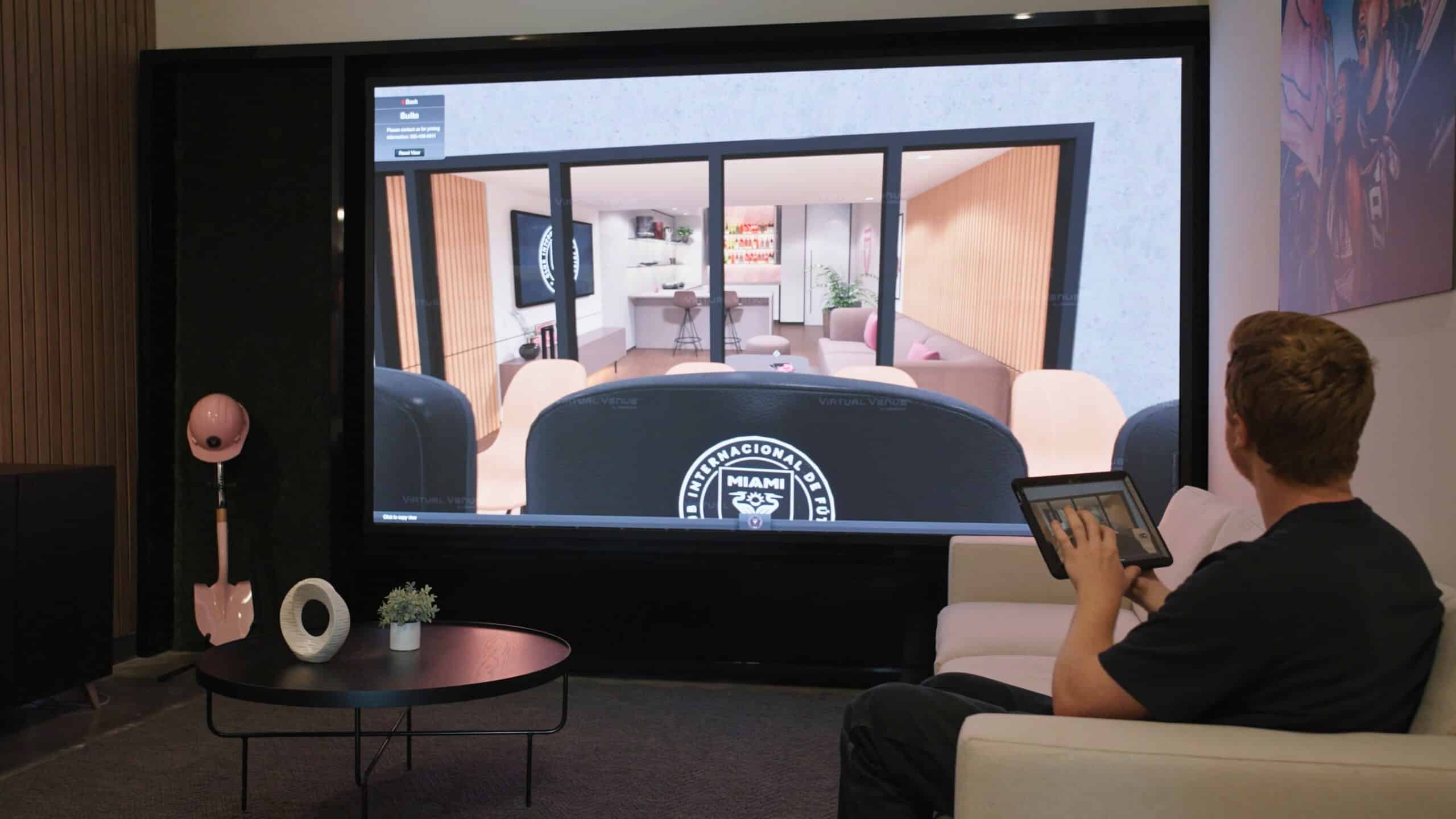
1: Create Personalized Brand Moments That Visually Demonstrate Sponsorship Value
Corporate executives hear pitches constantly. They’re skilled at politely listening to presentations about “brand visibility” and “market reach” while remaining noncommittal. What changes their posture is the moment they see their own brand integrated into the venue experience.
The most effective sales centers incorporate technology that allows real-time brand visualization. Rather than showing a generic rendering of a club space with a placeholder logo, sales teams can display that same space with the prospect’s actual brand, colors, and messaging integrated throughout. Crude Photoshop mockups shown on a tablet? Not us. it’s about seamless, high-fidelity integration that allows executives to genuinely visualize their partnership.
RFID-activated experiences take this further. When a prospect enters the sales center, their company’s brand can appear on displays throughout the space, their logo can integrate into video content showcasing activation possibilities, and interactive displays can demonstrate how their brand would appear across various venue touchpoints. The experience moves from hypothetical to tangible.
This principle addresses a fundamental challenge in sponsorship sales: helping prospects overcome the abstraction barrier. When an executive can see their brand integrated into premium spaces, activation zones, and fan experiences. Not as a concept but as a visual reality… the conversation shifts from “maybe” to “how much.”
What separates effective personalization from gimmicks: The integration must feel authentic rather than forced. When prospects see their brand awkwardly slapped onto renderings, it raises questions about how thoughtfully their partnership would actually be managed. When they see integration that respects their brand guidelines and feels natural within the venue aesthetic, it builds confidence in your team’s ability to deliver meaningful partnerships.
Organizations should ask potential sales center designers how personalization will be implemented. Is it a manual process requiring advance preparation, or can sales teams dynamically personalize experiences during the meeting itself? The answer reveals whether the space truly supports agile selling or simply provides predetermined presentations.
2: Design One Space to Serve Different Sponsorship Decision‑Makers
Corporate sponsorship decisions rarely involve a single individual. The CMO evaluating brand positioning has different priorities than the CFO analyzing ROI, who has different concerns than the VP of Sales interested in hospitality opportunities for client entertainment.
Sales centers that treat all visitors the same miss opportunities to address each stakeholder’s specific concerns. The most sophisticated spaces allow sales teams to adapt the experience based on who’s in the room, emphasizing different aspects of the partnership without requiring different physical locations.
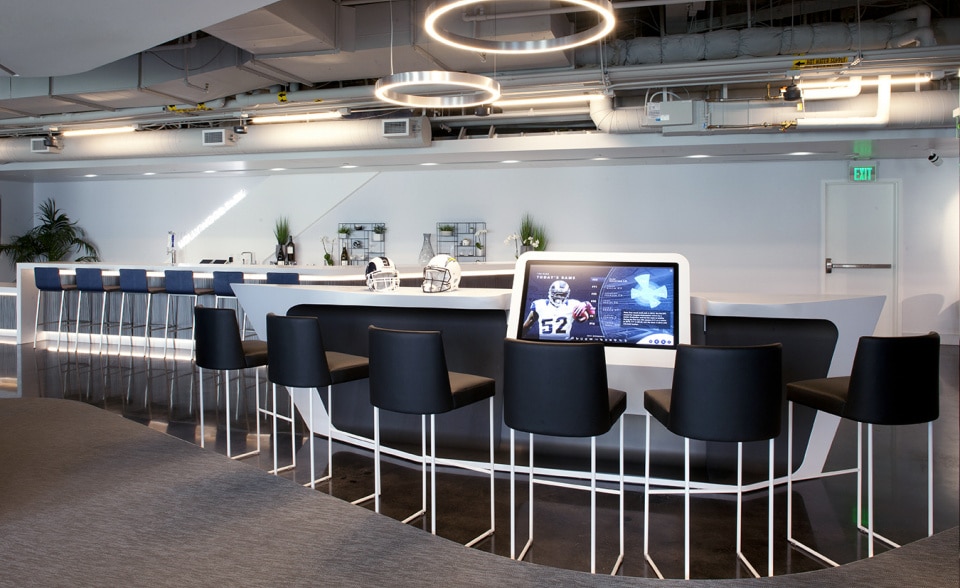
This might mean having zones that showcase brand visibility and marketing reach for CMOs, areas that demonstrate hospitality and client entertainment value for sales leaders, spaces that highlight community impact and corporate social responsibility for executives focused on brand reputation, and data visualization areas that present audience demographics, reach metrics, and comparative value analysis for financially-focused decision-makers.
The key is designing these zones so they feel like a cohesive journey rather than disconnected rooms. Sales teams need the flexibility to emphasize certain areas while moving quickly through others, depending on who they’re guiding through the space.
What this looks like in practice: A sales team hosting a CMO might spend significant time in zones showcasing activation possibilities and brand integration throughout the venue, touching briefly on metrics and moving quickly through hospitality spaces. When that same CMO returns with their CFO, the sales team can adjust the journey to spend more time on ROI data and comparative value analysis while still reinforcing the creative possibilities that excited the CMO initially.
Technology integration supports this flexibility. Rather than having static displays that show the same content regardless of visitor, interactive systems can be cued to emphasize different aspects of the partnership depending on the prospect’s role and interests. The space becomes responsive rather than prescriptive.
Organizations working with sales center designers should ask how the space accommodates different stakeholder priorities. If the answer focuses primarily on brand storytelling without addressing financial justification, hospitality value, or community impact, the design may not support the complex, multi-stakeholder sales process that premium sponsorships require.
3: Use Experiential Technology to Make Sponsorship Impact and Fan Energy Tangible
The fundamental challenge in sponsorship sales is that you’re selling something intangible. Let’s talk brand association, marketing reach, emotional connection between fans and partners. Corporate executives are being asked to invest millions in concepts rather than concrete assets.
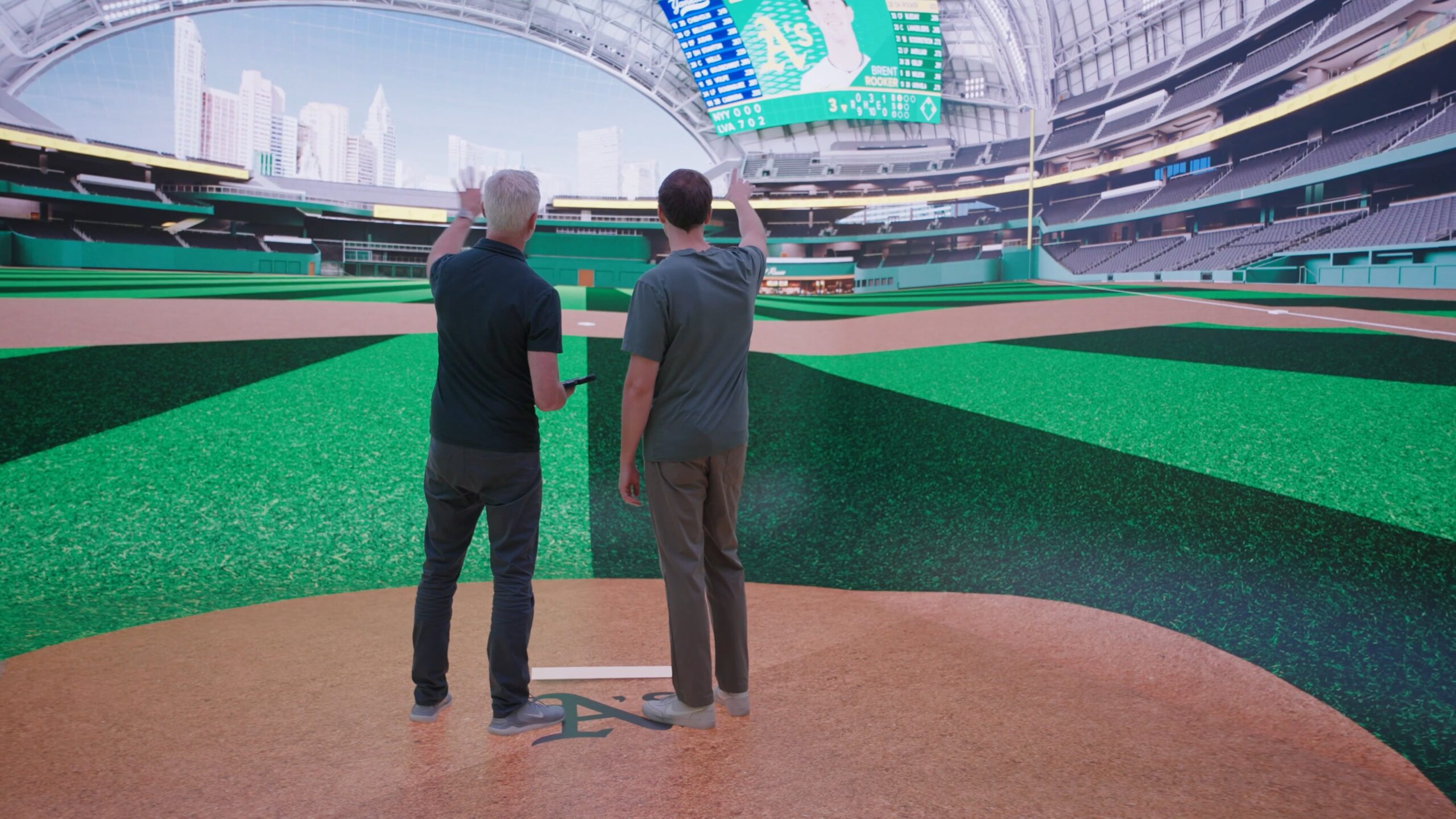
Experiential technology transforms abstract concepts into experiences prospects can feel. The Immersive Cube™ and similar installations aren’t created to show potential sponsors what the venue will look like. Instead, they place prospects inside the experience, allowing them to feel the energy of game day, understand the scale and impact of the venue, and visualize how their brand participates in moments that matter to fans.
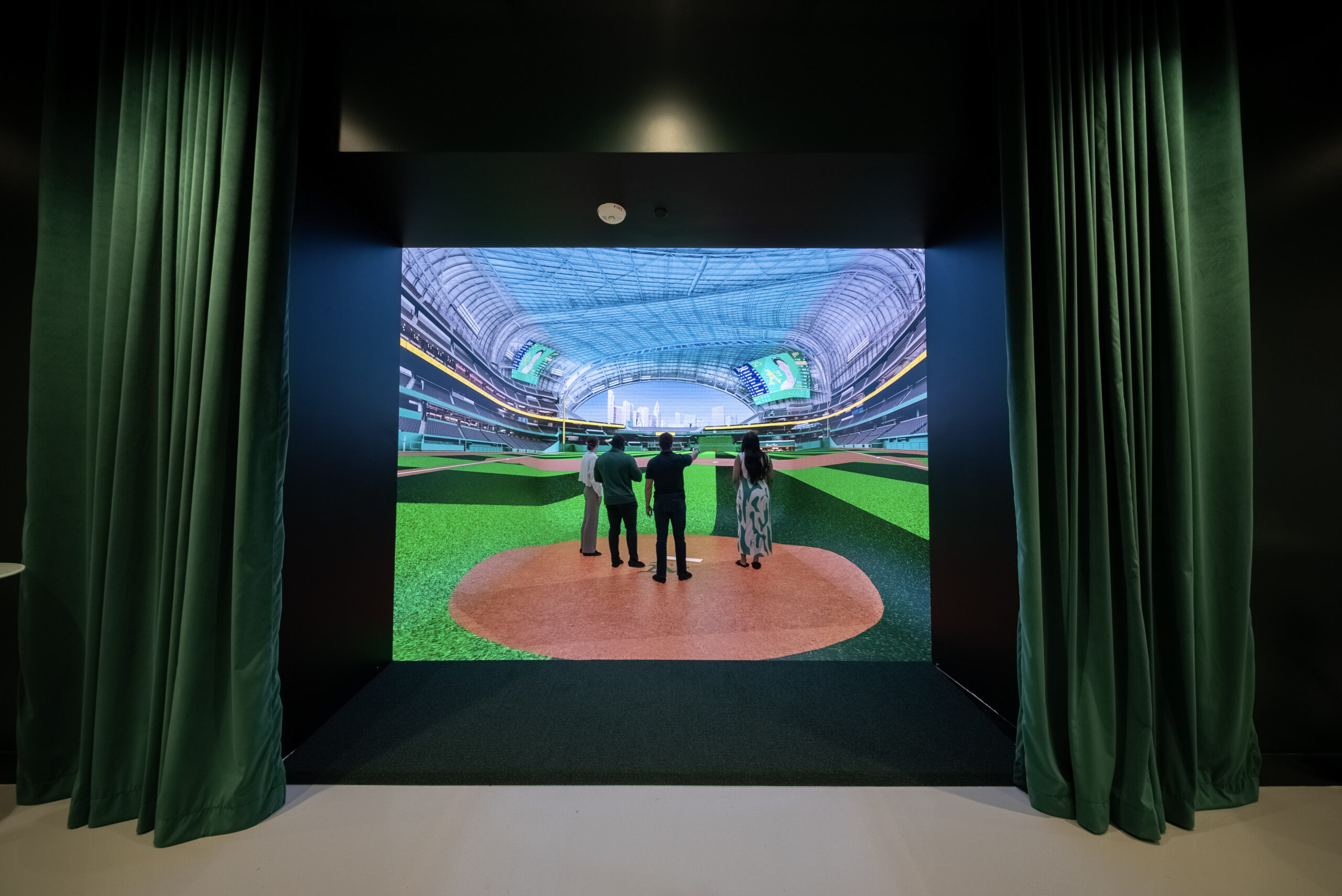
Projection mapping that simulates the view from various sponsorship locations helps executives understand exactly what they’re buying. Rather than describing how visible a brand position will be, prospects stand in the mapped space and experience the sightlines themselves. Rather than explaining the energy of the crowd during crucial moments, they hear and feel that energy recreated around them.
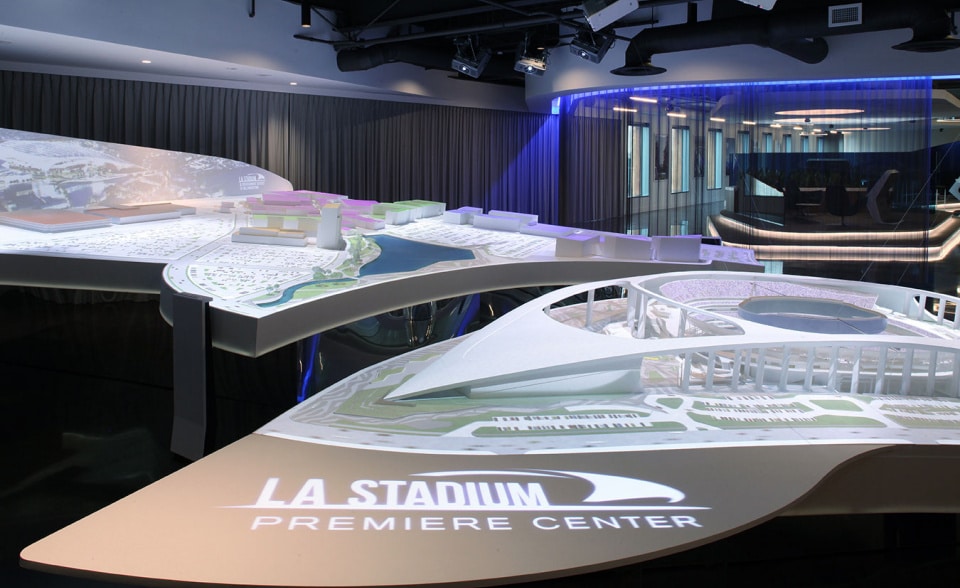
Interactive displays that allow prospects to explore different activation possibilities transform passive presentations into active discovery. When an executive can touch, manipulate, and explore various partnership configurations themselves, they develop ownership over the concept. It becomes their vision rather than something being sold to them.
Why this matters for closing deals: Corporate executives are risk-averse, particularly when committing seven or eight figures to partnerships that won’t deliver value for years. Experiential technology reduces perceived risk by making the future feel present. When prospects can experience rather than imagine their partnership, the decision shifts from speculative to strategic.
Organizations should evaluate whether their planned sales center simply shows information or creates experiences. There’s a significant difference between watching a video about the venue and standing inside a projection-mapped environment that recreates the scale, energy, and emotional impact of the space. Only the latter consistently moves cautious executives toward commitment.
4: Structure the Sales Center Journey to Build a Natural Sense of Sponsorship Urgency
Premium sponsorships often involve long sales cycles with multiple meetings, internal discussions, and competitive evaluations. Sales centers must create urgency without appearing desperate, moving prospects toward decisions while respecting their deliberation process.
The most effective approach involves narrative progression that naturally builds toward commitment. Should their journey through the sales center randomly showcase various features? No. It should tell a story that logically concludes with partnership.
This might begin by establishing context: the market opportunity, the competitive landscape, why this venue represents a strategic moment. Early zones ground prospects in the business rationale for consideration.
The journey then transitions into vision, showcasing what the venue will become and how it will transform the fan experience. This is where emotional engagement begins, helping executives see beyond construction timelines to the cultural impact the venue will create.
Next comes possibility. Demonstrating how your partners can participate in that transformation. Rather than immediately discussing specific sponsorship packages, this zone explores the breadth of activation opportunities, hospitality benefits, and brand integration possibilities available.
The progression then moves toward specificity, showing exactly how the prospect’s brand could integrate into premium spaces, activation zones, and fan touchpoints. Personalization technology makes this transition from general possibility to specific visualization.
Finally, the journey arrives at decision. This is where value propositions are quantified, competitive alternatives are addressed, and the path to partnership is clarified. By this point, the narrative has logically built toward commitment rather than abruptly demanding it.
Why narrative progression matters: Corporate executives can sense when they’re being manipulated versus when they’re being guided through a logical decision process. Sales centers that feel like high-pressure environments create resistance. Those that feel like educational journeys that happen to conclude with partnership opportunities create conviction.
The physical space should make this progression feel natural. When prospects are walked backward through spaces, repeatedly doubling back, or experiencing disconnected zones, the narrative fractures and urgency dissipates. When the space flows logically from context through vision to decision, the sales process feels inevitable rather than forced.
Organizations should ask sales center designers to walk through the narrative progression their design creates. If they focus on features rather than story, the space may impress visitors without moving them toward commitment.
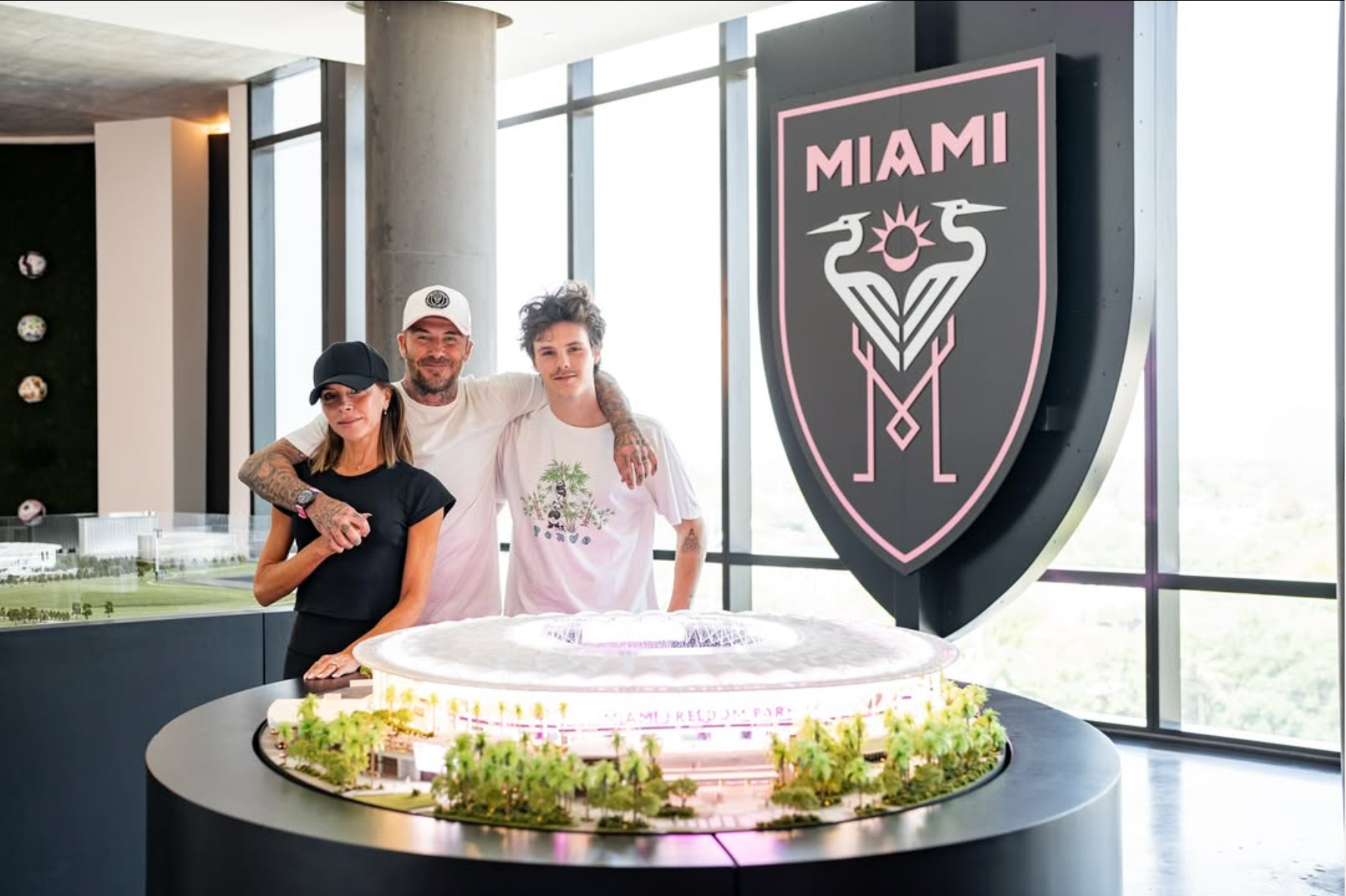
5: Include Private Areas for Budget, Approval, and Internal Alignment Conversations
Corporate sponsorship decisions involve sensitive discussions about budget, internal politics, competitive considerations, and concerns that executives won’t voice in open spaces or with the full sales team present.
Sales centers designed exclusively for presentation miss opportunities for the real conversations that determine whether deals close. The most effective spaces include private areas where smaller groups can have frank discussions, where executives can confer with their team members without sales staff present, and where decision-makers can process what they’ve seen before re-engaging with the sales team.
Afterthoughts? No, they’re strategically designed spaces that serve specific functions in the sales process. A comfortable, well-appointed room where an executive can take a phone call with their board while considering the partnership. A collaboration space where a prospect’s team can discuss the opportunity privately before making commitments. A café-style area where informal conversations happen after the formal tour concludes.
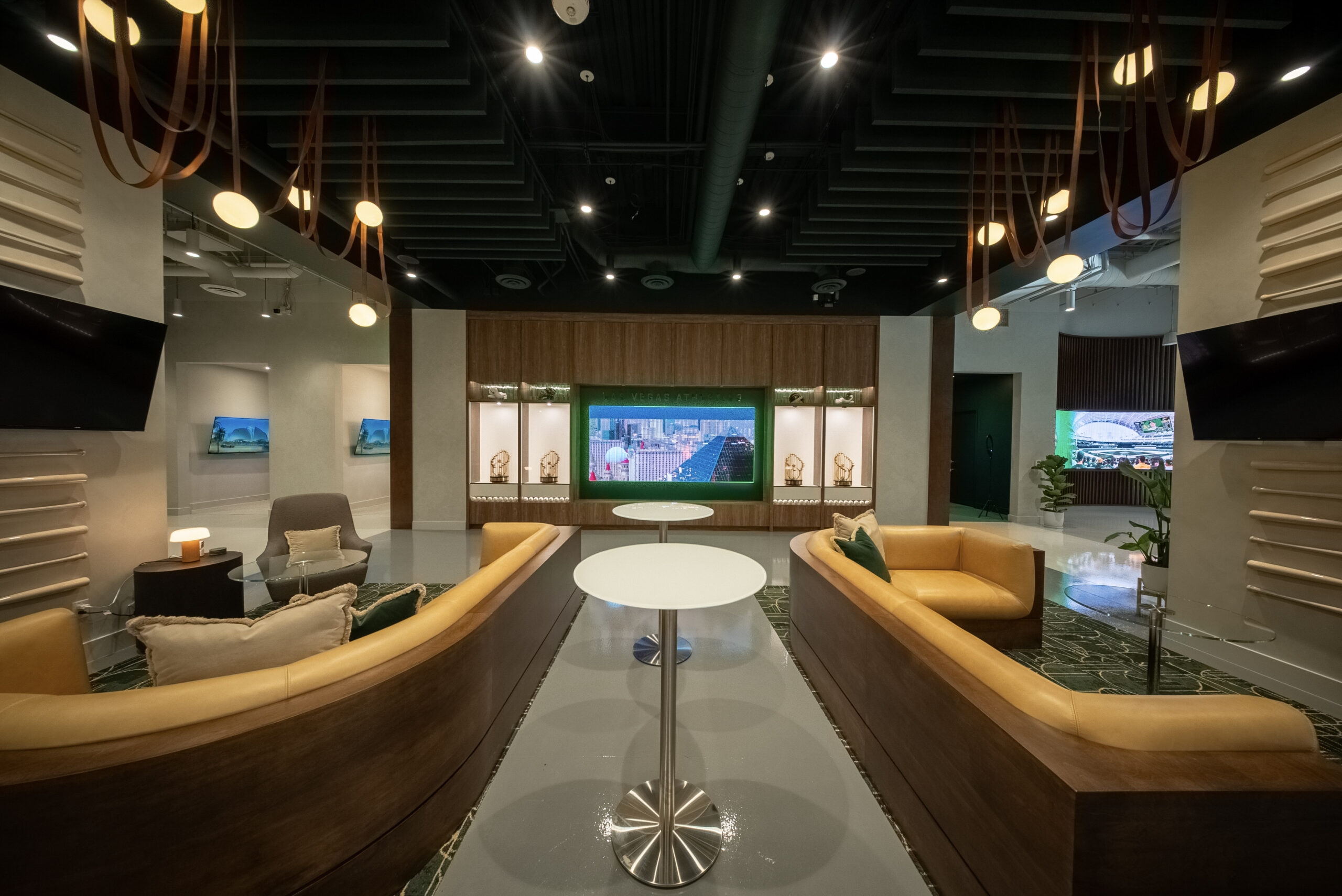
What this looks like in practice: After walking through the immersive experience, sales teams might suggest prospects take a few minutes in a private space to discuss what they’ve seen. A well-timed pause in the sales process? Not one bit. It’s a critical moment when executives process information, voice concerns to each other, and begin forming conviction. When they re-emerge, the questions they ask reveal whether they’re moving toward commitment or identifying barriers.
These spaces also allow sales teams to adjust their approach. When a prospect’s team splits off for private discussion, sales directors can confer about what’s working, what concerns have surfaced, and how to address specific objections when the conversation resumes.
Some organizations worry that providing private spaces allows prospects to talk themselves out of deals. The opposite is true. Executives who don’t have space to process and discuss privately will simply defer the decision until after they leave. Those who can work through concerns in the moment are far more likely to move toward commitment before leaving the building.
Organizations evaluating sales center designs should look for these supporting spaces. If every square foot is dedicated to presentation technology with no room for the human conversations that actually close deals, the design prioritizes spectacle over effectiveness.
6. Make the Experience Valuable Across Multiple Sponsor Visits Without Feeling Repetitive
Corporate sponsorship sales cycles often involve multiple visits as prospects bring different stakeholders, reconsider options, or need reinforcement before making final commitments. Sales centers must remain compelling across multiple encounters without feeling repetitive.
This requires designing experiences that can be adapted for return visits. Technology systems that allow sales teams to emphasize different content, showcase new renderings as design progresses, or demonstrate alternative activation concepts keep the space fresh for prospects who have seen it before.
Interactive elements that allow self-directed exploration ensure that even when prospects revisit, they can discover new details or explore aspects they didn’t focus on during initial visits. Rather than passively watching the same presentation again, they can dig deeper into areas most relevant to their current questions.
The physical space should also support different types of meetings. Initial tours for large groups require different spatial configurations than intimate follow-up meetings with decision-makers ready to discuss terms. Spaces that can transform from presentation mode to collaboration mode to hospitality mode support the entire sales cycle without requiring prospects to visit multiple locations.
Why this matters: Corporate executives are busy. If returning to your sales center means experiencing exactly what they saw previously, they’ll decline additional visits and make decisions based on potentially stale information. When each visit can be tailored to address their current phase in the decision process, they’re more likely to engage throughout the extended sales cycle that premium sponsorships require.
Content refresh capabilities are particularly important. As stadium construction progresses, new renderings become available, design details are finalized, and early partner commitments are announced. Sales centers that can quickly integrate this new content maintain relevance and energy. Those that remain static feel outdated, raising questions about whether the project is actually progressing.
Organizations should ask potential partners about their content management systems and update processes. How easily can new content be integrated? Can sales teams make adjustments themselves or does every update require calling in technicians? The answers reveal whether the space will remain dynamic or become stale.

7: Design Shareable Moments and Materials That Help Prospects Sell the Sponsorship Internally
Corporate sponsorship decisions often require internal socialization and approval from executives who won’t visit the sales center personally. The CEO, board members, or regional leaders who must approve the investment may never experience the space firsthand.
The most effective sales centers create moments that prospects naturally document and share with internal stakeholders. This isn’t about encouraging social media posts, it’s about giving prospects compelling content they can use to advocate for the partnership within their own organizations.
High-impact visualizations that prospects can photograph become presentation materials they show their teams. Data displays that quantify partnership value can be captured and included in internal memos. Immersive experiences create stories that prospects recount to colleagues, building internal enthusiasm for the opportunity.
Some organizations explicitly support this by providing prospects with customized take-away materials that incorporate their brand into partnership visualizations. When an executive leaves with a professionally produced booklet showing their company integrated into premium spaces throughout the venue, they have a powerful tool for internal advocacy.
Why internal advocacy matters: The executive who visits your sales center may be convinced, but they still need to convince their colleagues, board members, or regional leadership. If they leave with nothing but memories and a generic brochure, internal advocacy is difficult. If they leave with compelling materials and shareable moments, they become evangelists for the partnership within their organization.
The design should make compelling moments obvious and accessible. When everything is impressive, nothing stands out enough to be worth sharing. When specific moments are designed as natural highlight points… the moment when the Immersive Cube reveals the full venue scale, the visualization showing their brand integrated throughout the space, the data display that quantifies competitive advantage… prospects know what’s worth documenting and sharing.
Organizations should think about the journey their prospects will take after leaving the sales center. What materials will they have? What stories will they tell? What evidence will they present to skeptical colleagues? Sales centers that answer these questions through intentional design convert individual prospects into internal champions who close deals from within.
Measure Sales Center Impact Using Sponsorship Conversion and Deal‑Value Metrics (Not Just Impressions)
The true test of a sales center designed for corporate sponsorship revenue is to show how many deals close and at what values.
Organizations should establish clear metrics before their sales center opens.
- What percentage of prospects who visit should convert to commitments?
- How does deal size correlate with sales center visits?
- How many visits does the average closed deal require?
- What feedback differentiates prospects who commit from those who decline?
These metrics reveal whether the space actually serves its revenue generation purpose or simply provides an expensive amenity that impresses without converting.
Organizations that track conversion rates often discover that seemingly minor design elements significantly impact results. The addition of private discussion spaces might correlate with higher conversion rates, or the ability to personalize brand visualization might reduce the number of visits required to close deals.
Sales teams should be involved in post-opening evaluation. What works? What doesn’t? Where do prospects lose interest? Where do they become most engaged? The most effective sales centers evolve based on this operational feedback, with content and experiences adjusted to address the actual dynamics of corporate sponsorship sales.
Is Your Sales Center Design Truly Engineered for Sponsorship ROI?
Corporate sponsorships often represent eight-figure commitments spread across multiple years. A sales center that successfully closes even one additional premium partnership typically pays for itself several times over.
Organizations evaluating sales center investments should frame the question not as “how much does this cost” but as “how much revenue will this generate.” A modestly designed space that converts 30% of prospects may seem cost-effective until compared to a strategically designed environment that converts 60% of prospects and closes deals at higher values.
Summary: 7 Sales Center Design Principles That Drive Premium Sponsorship Revenue
- Personalization that shows rather than tells
- Multi-stakeholder journey design
- Experiential technology that makes the intangible tangible
- Narrative progression that builds urgency
- Private spaces for difficult conversations
- Repeatability without repetition
- Shareable moments that enable internal advocacy
All directly impact conversion rates and deal values.
Organizations working with designers who don’t understand these principles may end up with attractive spaces that fail to generate the revenue premium sponsorships require. Those partnering with firms experienced in sponsorship sales environments create revenue engines that transform skeptical executives into committed partners.
The question isn’t whether your organization can afford to design a sales center according to these principles. It’s whether you can afford not to when millions in potential sponsorship revenue hang in the balance.
What principles have you seen most effectively move corporate prospects toward commitment? What barriers have you encountered in sponsorship sales that the right environment might address?

Will Roberson
Director of Client Engagement | “Client Champion”
At Advent, we specialize in creating integrated fan experiences that honor legacy while embracing innovation. Our team combines expertise in physical design, digital integration, and sports culture to build recognition spaces that move people; emotionally, physically, and digitally. Let’s create your next chapter together.