

Technology
How an Immersive Real Estate Sales Center Works for New Residential Developments

If you’re responsible for selling residential units before they’re built, you already know the central problem: You’re asking buyers to commit hundreds of thousands or millions of dollars to something they can’t see, touch, or walk through.
Traditional sales centers try to bridge this gap with architectural models, high-resolution renderings, material sample boards, and sometimes VR headsets. These tools help, but they still require buyers to make a significant leap of faith. They’re visualizing, not experiencing.
After 25+ years creating branded environments for companies like AT&T, Fanatics, and the Dallas Cowboys, I’ve learned that the gap between visualization and experience is where deals stall. Buyers need confidence, not just information. They need to feel what living in your development will be like, not just understand it intellectually.
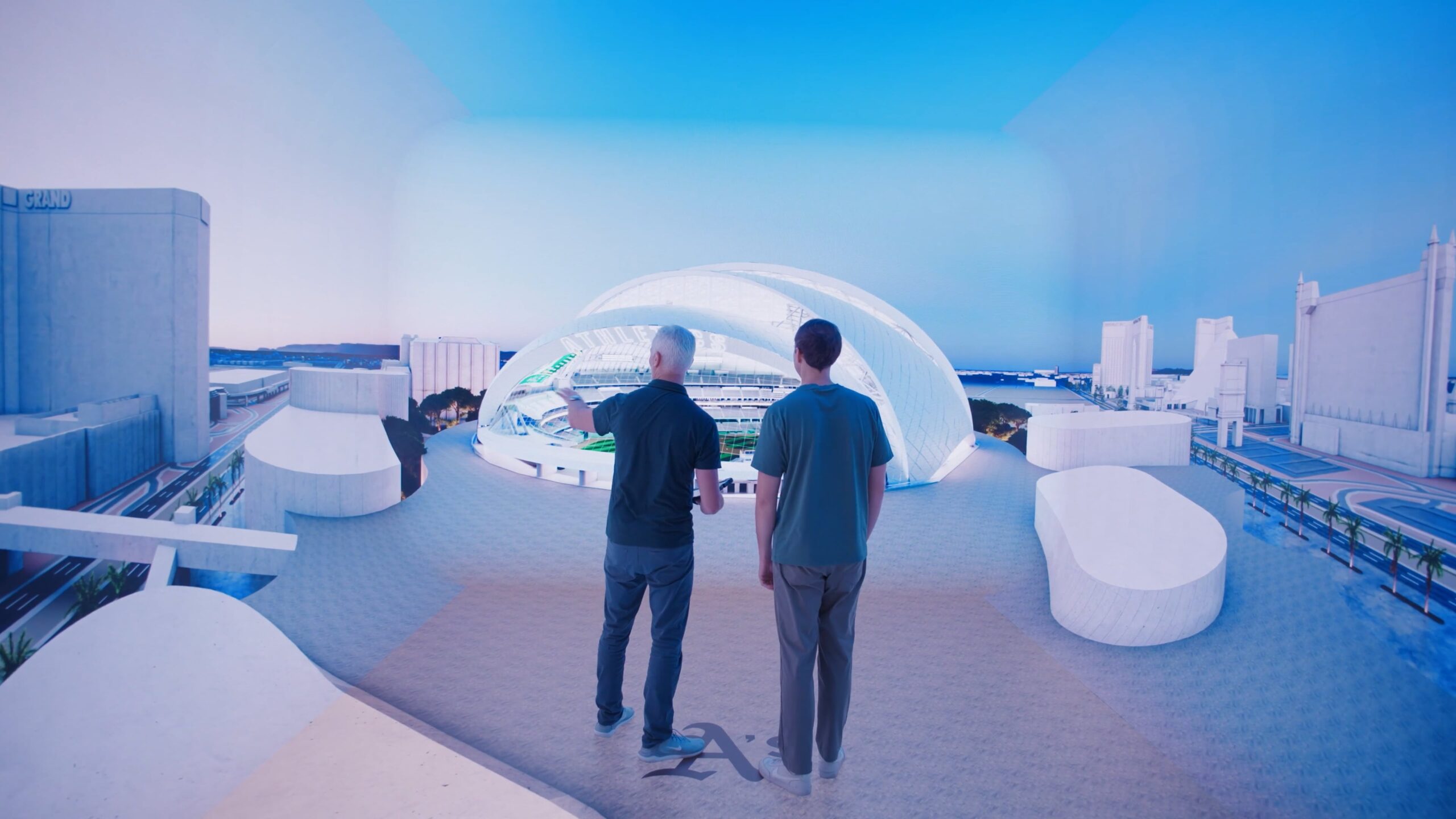
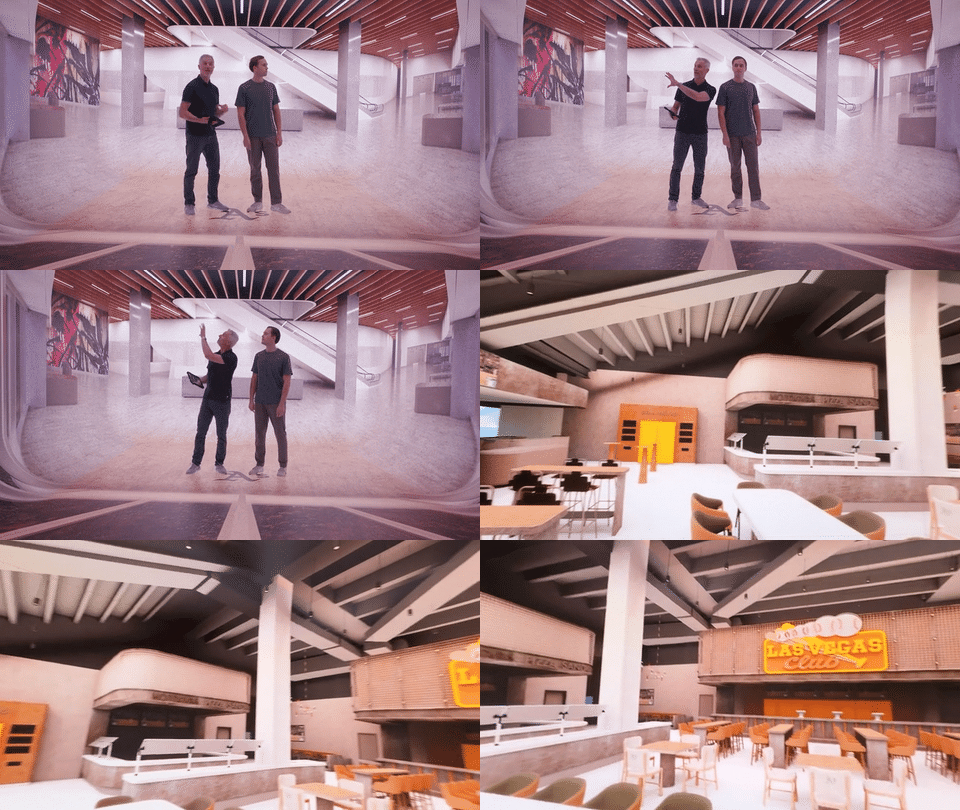
At Advent, we recently built the Immersive Cube® for the A’s Ballpark Experience Center, a Major League Baseball franchise that needed to sell luxury suites and sponsorships for a stadium that won’t open until 2028. The challenge was identical to what residential developers face: sell an experience that doesn’t physically exist yet.
The Immersive Cube® solved this by creating a 270-degree immersive environment where prospects don’t just see the future stadium, they experience it. They stand on the concourse. They sit in their seats. They feel the game day atmosphere.
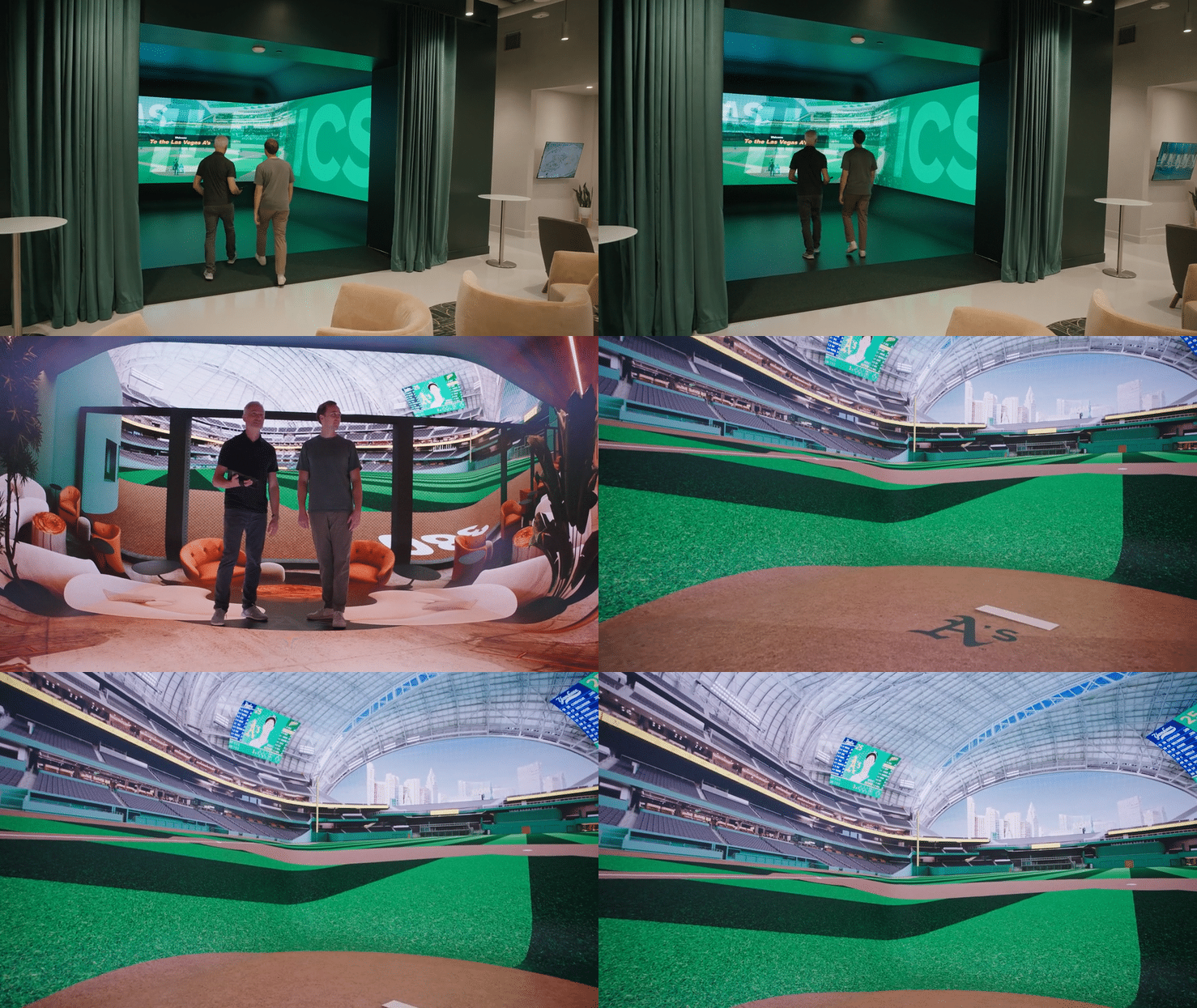
The same technology that’s selling baseball suites can transform how you sell residential units. This isn’t about adding another gadget to your sales center. It’s about fundamentally changing how prospects evaluate and commit to pre-construction purchases.
What Is an Immersive Real Estate Sales Center?
An immersive sales center replaces passive observation with active experience. Instead of prospects looking at your development on screens or in brochures, they step inside it.
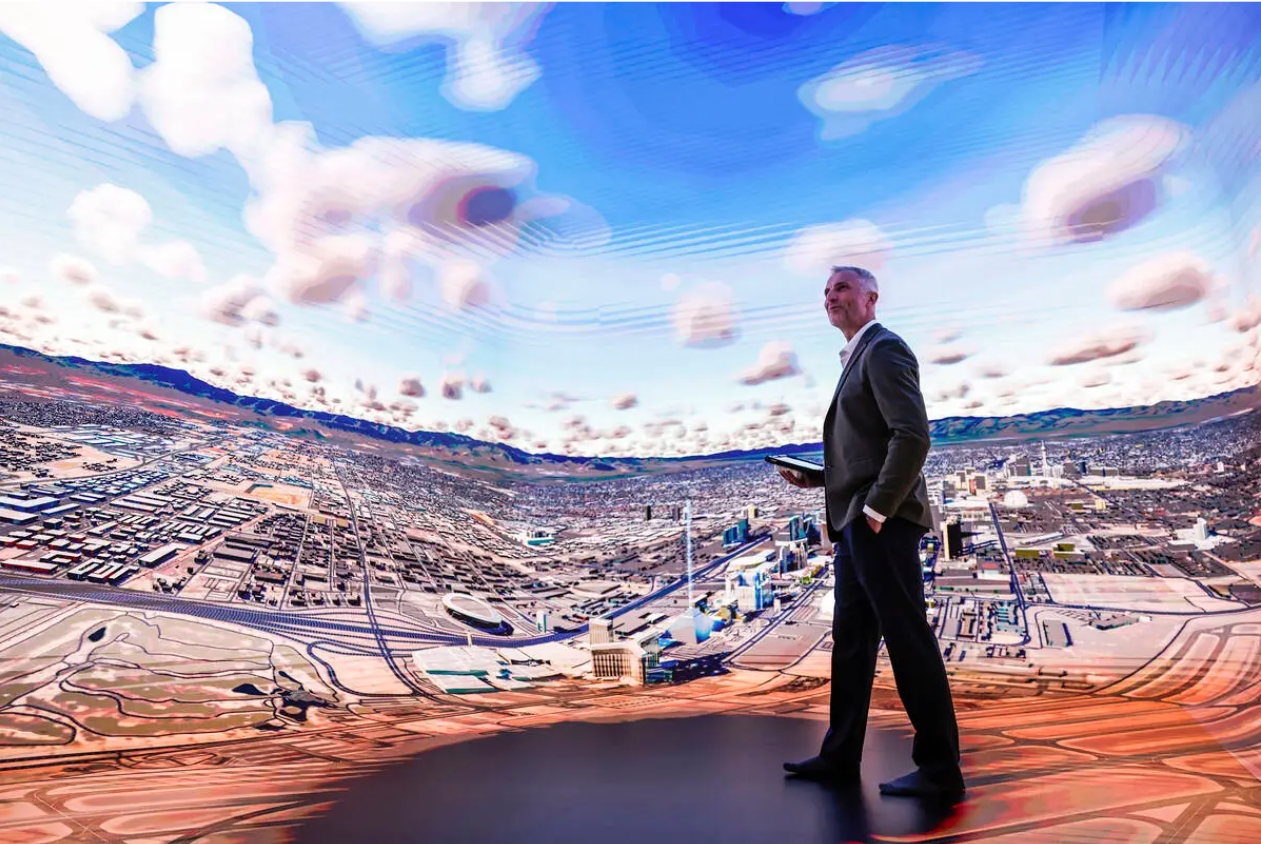
The Immersive Cube® is a 13-foot permanent installation with four synchronized projection surfaces that create a 270-degree immersive environment. But technology is just the enabler. What matters is what happens inside: prospects experience their future home and lifestyle in a way that static marketing materials simply cannot deliver.
Here’s what makes it different from traditional sales tools:
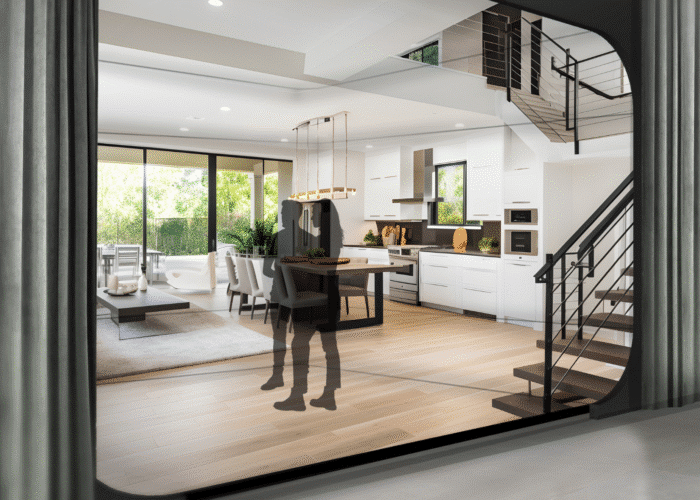
- Scale and Presence. The Cube® surrounds prospects with imagery at actual scale. When they’re standing in a living room, the ceiling height, window proportions, and spatial relationships are accurate. Their brain processes this as real space, not abstract information.
- Synchronized Storytelling. All four walls work together to create a cohesive narrative. As prospects move through a unit walkthrough, the environment changes around them seamlessly. They’re not clicking through slides; they’re moving through space.
- Emotional Engagement. When you’re surrounded by an experience (sunrise views from your balcony, your children playing in the amenity spaces, evening entertaining in your great room), the emotional connection is immediate and visceral. This isn’t intellectual evaluation. It’s feeling what your life could be like.
Flexibility Without Physical Constraints. Traditional show homes lock you into specific configurations. The Immersive Cube® lets you show every floor plan, every view orientation, every finish package, and every customization option without building a single physical mock-up.
Inside the Immersive Cube: Step-by-Step Prospect Experience
Understanding how the Immersive Cube® transforms your sales process requires walking through the actual buyer journey.
Initial Qualification and Interest. When prospects visit your sales center, your team qualifies their needs: unit size, floor preferences, view priorities, budget range. This happens before they enter the Cube®, ensuring the immersive experience is relevant and personalized.
Entry and Orientation. Prospects step into the Cube®. The space is deliberately intimate, typically accommodating 4-6 people comfortably. This creates a private, focused experience rather than a crowded presentation. Your sales professional remains with them, guiding the journey.
The Unit Walkthrough. The experience begins at the building entrance. Prospects see the lobby, understand the arrival experience, and move to the elevator bank. As they “rise” to their floor, the environment transitions to their specific unit entry.
The front door opens (virtually), and they step into the foyer. The space unfolds around them: living areas to the right, kitchen ahead, bedrooms down the hall. They’re not imagining scale; they’re experiencing it. The ceiling height is accurate. The window proportions are correct. The sightlines between rooms are precisely represented.
View Presentation. This is where the Immersive Cube® delivers something no other tool can match. As prospects move to the living area, the view from their specific floor and orientation surrounds them. Not a photo on a monitor. The actual panoramic view, at scale, with accurate perspective.
If they’re considering a unit on the 15th floor facing west, they see that exact view. If they’re compared to a 25th floor unit facing south, you can switch instantly and show them the difference. They understand immediately which view resonates emotionally.
Time-of-Day Variation. Views aren’t static. You can show the same unit at sunrise, midday, sunset, and evening. Prospects see how natural light moves through the space. They experience what weekend mornings will feel like, what coming home after work looks like, what entertaining at dusk offers.
This addresses a question that renderings can never answer: What will it actually feel like to live here throughout the day?
Customization Exploration. Once prospects have experienced the base unit, you can show customization options in real-time. Switch from standard flooring to hardwood and watch the entire space transform. Change kitchen cabinetry from light to dark. Modify countertop selections. Add the optional fireplace surround or built-in entertainment center.
Prospects see these upgrades in context, not as isolated samples on a table. They understand the visual impact and can make confident decisions about which upgrades justify the investment.
Lifestyle Integration. The experience doesn’t end with the unit tour. Transition to the building’s amenity spaces. Show prospects the rooftop terrace where they’ll entertain friends. The fitness center where they’ll start their mornings. The residents’ lounge where their family will gather. The pool deck where their children will spend summer afternoons.
This shifts the conversation from square footage and finishes to lifestyle and daily experience. You’re not selling a unit; you’re selling what their life becomes when they move in.
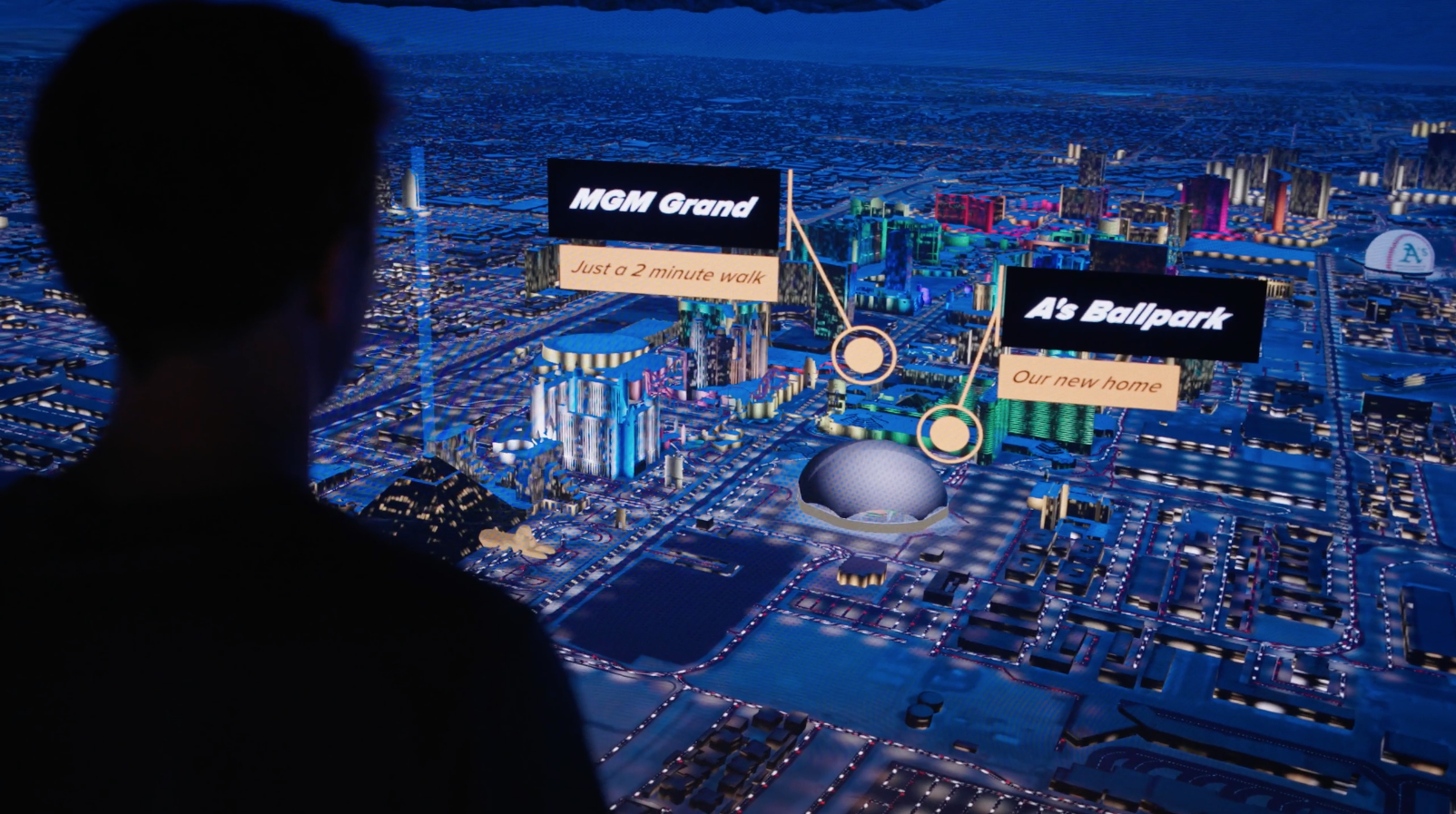
Neighborhood Context. For developments in emerging neighborhoods or destination locations, extend the immersive experience beyond your building. Show the walk to nearby restaurants, parks, or transit. Display the neighborhood at different times of day and different seasons. Give prospects confidence not just in the unit but in the location.
Exit and Follow-Up. When prospects step out of the Cube®, they’re not leaving with questions about what the development might be like. They’re leaving with a clear, emotionally connected memory of what living there will feel like. Your sales conversation shifts from education to addressing logistics and closing details.
How to Integrate The Immersive Cube® into Your Sales Gallery and Workflow
The Immersive Cube® doesn’t replace your current sales infrastructure. It enhances it strategically as a permanent anchor to your sales center.
Sales Gallery Layout. Most developers position the Cube® as the centerpiece of their sales gallery. Prospects enter, review traditional materials (site plans, floor plan tear sheets, material samples), meet with your sales team for qualification, and then experience the Cube® as the anchor presentation.
After the immersive experience, prospects return to your sales area with context. They can review specific materials, discuss pricing and incentives, and explore contract details. But they’re doing this with experiential knowledge rather than trying to imagine what you’re describing.
The permanent nature of the installation allows you to design your entire sales center around it, creating a natural flow that builds anticipation as prospects move through your space toward the immersive experience.
Appointment Scheduling. Some developers use the Cube® exclusively for scheduled appointments with qualified prospects. Others offer walk-in access during specific hours. The right approach depends on your sales volume and staffing model.
Scheduled appointments allow your team to customize the content for each prospect’s priorities. Walk-in access creates buzz and draws traffic to your sales center, particularly early in your sales cycle when building awareness is critical.
Broker and Agent Enablement. Before your brokerage community can effectively sell your units, they need to understand and believe in your product. The Immersive Cube® becomes a powerful training tool.
Host broker events where agents experience multiple unit types, understand the lifestyle positioning, and see customization options. When they leave, they’re not just carrying brochures; they’re carrying personal experience they can authentically communicate to their clients.
VIP Preview Strategy. When launching sales, create exclusive preview events for qualified buyers, existing residents (for phased developments), or broker partners. The Immersive Cube® transforms a standard preview event into a memorable experience that generates word-of-mouth and creates urgency.
Sales Center as Destination. Because the Cube® is a permanent installation, you can market your sales center itself as a destination worth visiting. This is particularly valuable for developments in competitive markets where buyers are evaluating multiple projects. The promise of an immersive experience gives prospects a compelling reason to prioritize your sales center visit.
Best Practices for Developing Immersive Real Estate Content for the Cube
The effectiveness of your immersive sales center depends entirely on the quality of content you create. Here’s what we’ve learned works best:
Start With Your Story, Not Your Technology. The Immersive Cube® is a storytelling platform. Before developing content, define the narrative: What transformation are you promising buyers? What lifestyle are you enabling? What makes your development meaningfully different?
At Advent, we use a proprietary process called StoryMining to uncover the authentic story that will resonate with your target buyers. The technology comes second; the story comes first.
Prioritize Emotional Resonance Over Technical Specifications. Buyers can read square footage and bedroom counts in your brochure. Use the Cube® to show them what waking up in their unit feels like. What hosting their parents for the holidays looks like. What quiet evening moments on their balcony offer.
Create Modular Content for Flexibility. Rather than creating one fixed presentation, develop modular content blocks: individual unit walkthroughs, amenity experiences, view presentations, neighborhood contexts, customization options. Your sales team can then assemble these blocks based on each prospect’s priorities.
A retired couple might spend more time on quiet outdoor spaces and walkability to dining. A young family might focus on children’s play areas and proximity to schools. Modular content lets you personalize the experience without creating dozens of separate presentations.
Show Time Progression and Seasonal Variation. Static renderings show a single moment in time. Immersive content should show how spaces change throughout the day and across seasons. This addresses unspoken buyer concerns about whether natural light will be sufficient, whether views remain appealing year-round, whether outdoor amenities will be usable beyond summer months.
Include Subtle Motion and Ambiance. The most effective immersive experiences include subtle environmental elements: trees moving in the breeze, water rippling in the pool, distant traffic sounds from the street below, birds in the morning. These details create presence and make the experience feel authentic rather than artificial.
Update Content as Development Progresses. As construction advances, update your immersive content to reflect actual progress. Show prospects the real building facade as it’s being completed. Integrate photos of actual amenity buildouts. This builds confidence that what they’re experiencing in the Cube® matches what’s being delivered in reality.
Plan for Full Sales Cycle Coverage. Since the Cube® is a permanent installation in your sales center, plan content that serves your entire sales timeline. Early content might emphasize the vision and lifestyle positioning. As you approach sellout, content can highlight remaining inventory, available view premiums, or last opportunities for specific floor plans.
Tracking Prospect Engagement in the Cube® and Optimizing Sales with Data
One advantage of immersive technology over traditional sales tools is the ability to track engagement and optimize based on data.
Session Duration and Completion Rates. Track how long prospects spend in the Cube® and whether they complete the full experience or exit early. Shortened session times might indicate content that’s too long or sections that don’t resonate. High completion rates suggest strong engagement.
Content Segment Performance. Which parts of the experience capture attention? Do prospects spend more time exploring amenity spaces or unit interiors? Do they request to see view variations multiple times? This data tells you what drives emotional connection and purchase decisions.
Customization Preferences. When prospects explore upgrade options in the Cube®, you’re gathering valuable data about which finishes and features generate interest. This can inform your broader marketing strategy and help you predict which upgrade packages will have the highest attachment rates.
Correlation With Sales Outcomes. Track which prospects experienced the Cube® and compare their conversion rates, time-to-contract, and upgrade attachment rates to prospects who didn’t. This quantifies the ROI of your immersive sales center and helps you optimize how you integrate it into your sales process.
A/B Testing Content Approaches. With modular content, you can test different narrative approaches. Does leading with lifestyle and amenities drive higher engagement than leading with unit tours? Do seasonal variations in outdoor spaces increase buyer confidence? Use data to continuously refine your approach.
Common Implementation Questions About Installing and Using The Immersive Cube®
When marketing directors evaluate the Immersive Cube® for their developments, several questions consistently arise:
How long does content development take? Typically 8-12 weeks from kickoff to launch, depending on complexity and the number of unit types. This includes our StoryMining discovery process, content strategy development, 3D modeling and rendering, audio design, and testing. Rush timelines are possible when needed for accelerated sales launches.
Can we update content ourselves after launch? We offer different engagement models. Some clients prefer full-service support where we manage all updates. Others want the ability to make minor edits internally. We can train your team on content management and provide you with the tools to make updates, while remaining available for more complex revisions.
What if our architectural plans change during development? This happens frequently in real estate development. The Immersive Cube®‘s digital nature makes updates far easier than reprinting brochures or rebuilding physical models. We can revise unit layouts, update finishes, modify amenity spaces, or adjust views as your plans evolve.
How does this integrate with our website and digital marketing? The Immersive Cube® is designed for in-person sales center experiences, but we can create companion digital content for your website. This might include 270-degree tours, interactive floor plans, or video excerpts from the Cube® experience. The goal is consistency: prospects should see the same story online and in your sales center.
What’s the physical footprint and installation requirements? The Cube® itself is 13 feet tall and 19 feet wide to occupy up to 6 people. Electrical requirements are standard, ceiling height needs to accommodate the structure, and we handle all installation and calibration.
What happens after we sell out? The permanent installation can continue serving multiple purposes after your initial inventory sells. Use it to showcase available resale units as they come on the market. Demonstrate renovation or customization options to existing residents considering upgrades. For phased developments, update the content to market your next phase or next project in the same location.
How do we maximize the investment over time? Since this is a permanent installation, think strategically about its full lifecycle value. Beyond direct sales applications, consider using it for resident events, community programming, or as a unique amenity that differentiates your building even after sellout. Some developers have used it to host neighborhood events, creating goodwill and community engagement that benefits long-term property values.

The Investment Case: Costs, Savings, and ROI of an Immersive Sales Center
Understanding the financial case for an immersive sales center requires looking beyond the upfront cost to the impact on sales velocity and pricing.
Traditional Sales Center Costs. A typical luxury residential sales center includes architectural models ($100,000 to $500,000), high-end renderings and marketing materials ($200,000+), and potentially full-scale show homes or mock-ups ($200 to $400 per square foot to build out). You’re often investing $1 million or more before selling a single unit.
Immersive Cube® as Capital Investment. The Cube® represents a permanent capital investment in your sales infrastructure that replaces or significantly reduces several traditional line items. One installation delivers unit walkthroughs, amenity experiences, view presentations, customization visualization, and lifestyle storytelling. Rather than building three physical show homes to represent different unit types, you create digital versions of every unit in your building.
Carrying Cost Avoidance. Every month that a show home sits furnished but unsold represents lost revenue. If you avoid building two show homes that would otherwise remain off the market for 18 months, what’s that worth in carrying costs and lost sales proceeds? For many developments, this alone justifies the Cube® investment.
Sales Velocity Impact. The real value isn’t in cost avoidance but in revenue acceleration. If the Immersive Cube® helps you reach your presale threshold 60 days faster, what’s that worth? Earlier construction financing. Reduced risk of market changes. Faster path to stabilization and potential sale or refinancing.
Price Premium Realization. When buyers experience their unit rather than imagining it, confidence increases. Confident buyers negotiate less aggressively. They’re more willing to pay for premium floor levels, preferred views, and upgrade packages. A modest increase in average transaction value across your unit mix can generate returns that dwarf the Cube® investment.
Competitive Differentiation Value. In markets where multiple developments compete for the same buyer pool, the sales center experience becomes a critical differentiator. The Immersive Cube® signals innovation, financial strength, and attention to buyer experience. This intangible positioning advantage is difficult to quantify but drives traffic, generates referrals, and influences buyer decisions before price discussions even begin.
Long-Term Asset Value. Unlike temporary marketing materials or leased VR equipment, the Immersive Cube® is a capital asset that can serve your development throughout its entire sales cycle and beyond. This extended useful life amplifies the return on your investment compared to disposable marketing expenditures.
Why Do Immersive Sales Centers Matter Now? Market Shifts and Buyer Expectations
The residential real estate market is evolving, and buyer expectations are shifting faster than most developers recognize.
Generational Change in Buyer Demographics. Younger high-net-worth buyers (late 30s and 40s) represent an increasing percentage of luxury purchases. These buyers grew up with immersive digital experiences and have fundamentally different expectations about how information should be presented. Traditional sales centers with static models feel dated to them.
Increased Competition for Attention. Buyers research more properties online before visiting sales centers. When they do visit, they’re comparing multiple developments. You have one chance to create an impression that stands out. The Immersive Cube® transforms a routine sales center visit into a memorable experience that prospects talk about and remember.
Risk Aversion in Uncertain Markets. In markets where buyers are cautious about pre-construction purchases (due to economic uncertainty, oversupply concerns, or high interest rates), tools that reduce perceived risk become more valuable. The Immersive Cube® gives buyers experiential confidence that helps them move past fear and commit.
The Premium Sales Center Expectation. Luxury buyers increasingly expect sales centers to match the quality and innovation of the product being sold. A cutting-edge residential development marketed through a dated sales environment creates cognitive dissonance. The Immersive Cube® ensures your sales presentation matches the sophistication of what you’re building.
Getting Started: Step-by-Step Implementation Process for the Immersive Cube
If you’re considering an immersive sales center for your development, here’s how the implementation process typically works:
Discovery Session. We start by understanding your development, target buyers, competitive positioning, and sales timeline. What’s your story? Who are you selling to? What concerns do they have? What emotional drivers influence their decisions? This isn’t about technology; it’s about strategy.
Content Strategy Development. Based on our discovery, we create a content strategy that maps to your sales process. Which unit types should we prioritize? How do we showcase amenities? What lifestyle narrative resonates with your buyers? How do we address common objections or concerns?
StoryMining Workshop. We facilitate a workshop with your sales, marketing, and development teams to uncover the authentic story of your project. This proprietary process ensures the immersive experience reflects what makes your development meaningfully different, not just what makes it similar to competitors.
Sales Center Design Integration. Because the Cube® is a permanent installation, we work with your sales center designer or architect to ensure optimal placement, traffic flow, and integration with your overall sales environment. The goal is creating a cohesive experience where the Cube® feels like a natural centerpiece rather than an awkward addition.
Content Production. Our team develops the 3D environments, rendering, motion graphics, audio design, and integrated content. You review and approve at key milestones. This typically takes 8-12 weeks depending on complexity.
Installation and Calibration. We handle physical installation of the Cube® in your sales center, technical integration, projection calibration, and audio optimization. Installation typically takes 5-6 weeks.
Sales Team Training. Before launch, we train your sales team on how to use the Cube® effectively. This isn’t just technical operation; it’s how to integrate the experience into your sales conversations, how to customize presentations for different buyer profiles, and how to follow up afterward.
Launch and Optimization. After launch, we monitor performance and gather feedback. Based on what we learn, we can refine content, adjust pacing, add new modules, or modify the experience to better serve your sales objectives.
Why Immersive Sales Center Experiences Are Shaping the Future of Residential Sales
I’ve been creating branded environments for over 25 years. I’ve seen technology trends come and go. What makes the Immersive Cube® different isn’t the projection technology or the synchronized displays. It’s that we’ve reached the point where the technology serves the story effectively without overwhelming it.
You’re not asking buyers to commit to your development because of impressive technology. You’re using technology to help them experience your story in a way that builds confidence and emotional connection.
The residential developers who are adopting immersive sales centers aren’t doing it because they’re technology enthusiasts. They’re doing it because they recognize that in a competitive market where product differentiation is difficult, experience differentiation becomes the determining factor.
The A’s understood this when they came to us. They’re competing against established teams with decades of loyalty. They needed to create an experience so compelling that it overcame natural skepticism about a new franchise in a new stadium. The Immersive Cube® gave them that edge.
Your challenge as a marketing director is similar. You’re competing against existing inventory that buyers can tour today, against established neighborhoods with proven track records, against other pre-construction projects with similar features and finishes.
The Immersive Cube® gives you a way to compete on experience when you can’t yet compete on physical product availability. It transforms “come see what we’re building” into “come experience what your life will be like.”
This is a strategic investment in your sales infrastructure, not a temporary marketing tactic. It’s a permanent installation that anchors your sales center, differentiates your development, and serves your entire sales timeline from launch through sellout and beyond.
If you’re ready to transform your sales center from information delivery to experiential immersion, let’s talk. Because the future of residential sales isn’t about better renderings or more detailed models. It’s about creating experiences that move prospects from intellectual interest to emotional commitment.

For over 25 years, Advent has been creating emotionally resonant experiences for leading brands including AT&T, Fanatics, the Dallas Cowboys, and Stanford University. Our proprietary StoryMining methodology ensures that every project starts with the story, not the technology.