

Beyond Architectural Visualization: Why Property Developers Need Immersive Environments, Not Just Better CGI
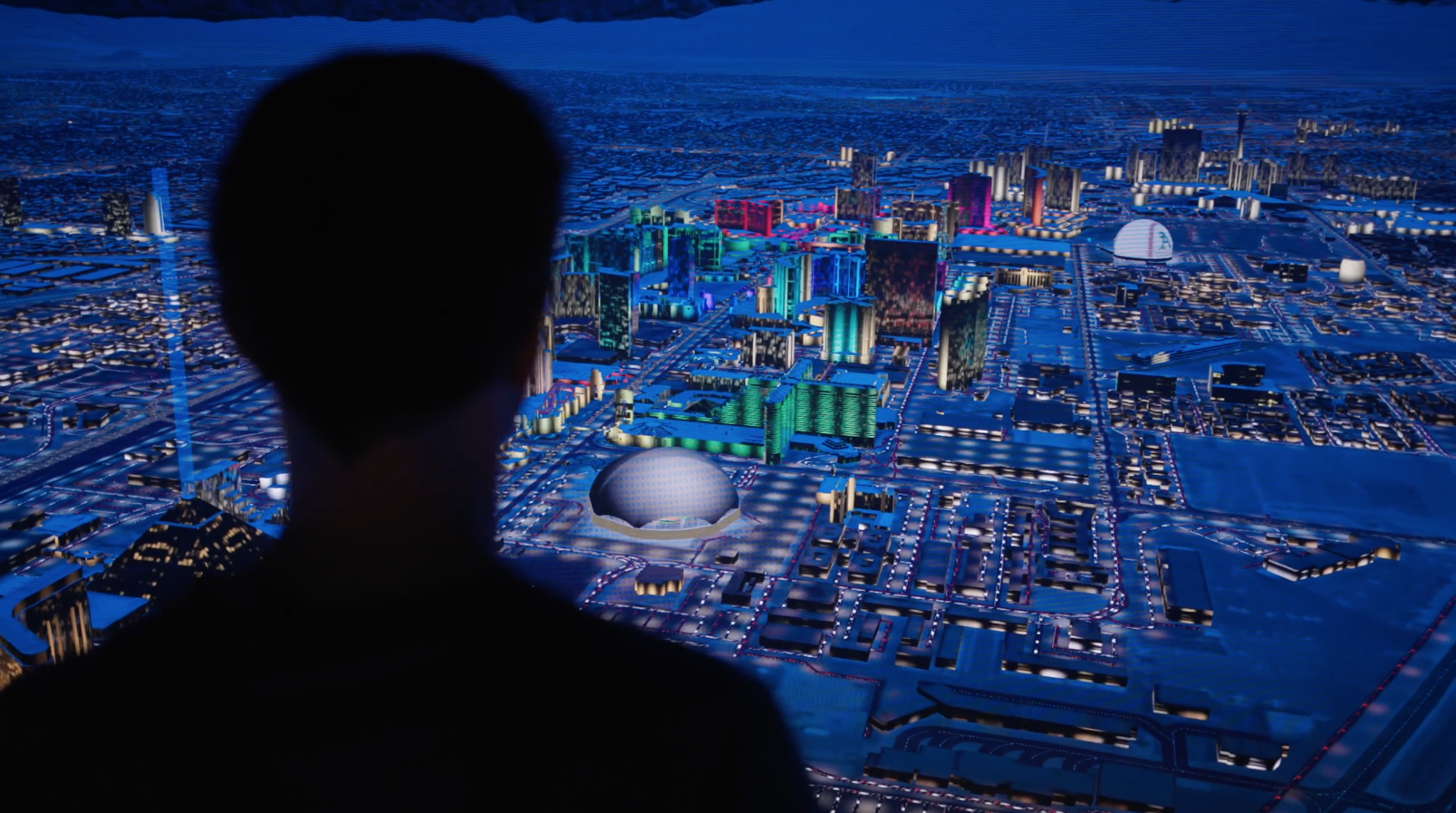
The architectural visualization industry has spent the past decade perfecting photorealistic renderings. Studios compete on pixel density, lighting accuracy, and material authenticity. Property developers commissioning these services can now choose between renders priced anywhere from $400 to $3,000 per image, with animations running $5,000 to $20,000 per minute.
Something I’ve discovered working with organizations from the Dallas Cowboys to the Athletics: no matter how photorealistic your CGI becomes, you’re still asking investors and buyers to imagine themselves in a space that doesn’t exist.
That fundamental gap between promise and experience? It’s costing the property development industry billions in lost pre-sales, extended marketing timelines, and decision friction that shouldn’t exist in 2026.
The Architectural Visualization Plateau
Don’t misunderstand me. Architectural visualization has transformed property marketing. Developers using comprehensive CGI packages report pre-sale rates improving dramatically compared to working from blueprints and floor plans alone. The technology works.
The problem isn’t quality anymore. The problem is that we’ve reached diminishing returns on incremental improvements in image fidelity.
Consider what happens when a potential buyer or investor evaluates an off-plan property through traditional architectural visualization:
They view static renders on a screen, perhaps scroll through an animation, maybe experience a virtual tour on their device. They’re processing information intellectually. They understand the layout. They can see the finishes. They know what the developer promises to build.
But do they feel it? Do they experience what it’s like to stand in that lobby? To understand the scale of that atrium? To sense the energy of that mixed-use development?
In almost every case, the answer is no. And that hesitation, that inability to truly experience the space, creates decision friction that extends sales cycles and reduces conversion rates.
What Property Marketing Actually Needs to Solve
Through our research-driven approach, we’ve studied how people make decisions about physical spaces. Whether it’s a fan committing to season tickets in a stadium that won’t open for three years, or an investor evaluating a commercial development opportunity, or a buyer considering a luxury residence, the decision-making process follows predictable patterns.
People don’t commit based on intellectual understanding alone. They commit when they can envision themselves in the experience. When they can feel the scale. When they can share the excitement with others who matter to them.
Traditional architectural visualization, for all its photorealistic polish, fundamentally operates in two dimensions. You’re showing people images and videos. Even when you add interactivity through virtual tours on tablets or VR headsets, you’re isolating the viewer in a solitary digital experience.
Real estate decisions rarely happen in isolation. Buyers tour properties with partners. Investors evaluate developments with their teams. Corporate tenants explore spaces with decision committees. The communal aspect of experiencing a space matters tremendously.
This realization led us to develop The Immersive Cube® for the Las Vegas Athletics, and it’s transforming how we think about property marketing entirely.
The Immersive Cube®: Architectural Visualization’s Next Evolution
When Marc Badain, President of the Las Vegas Athletics, described our Immersive Cube® as “the greatest piece of technology ever seen to promote a ballpark,” he captured something that applies far beyond sports venues.
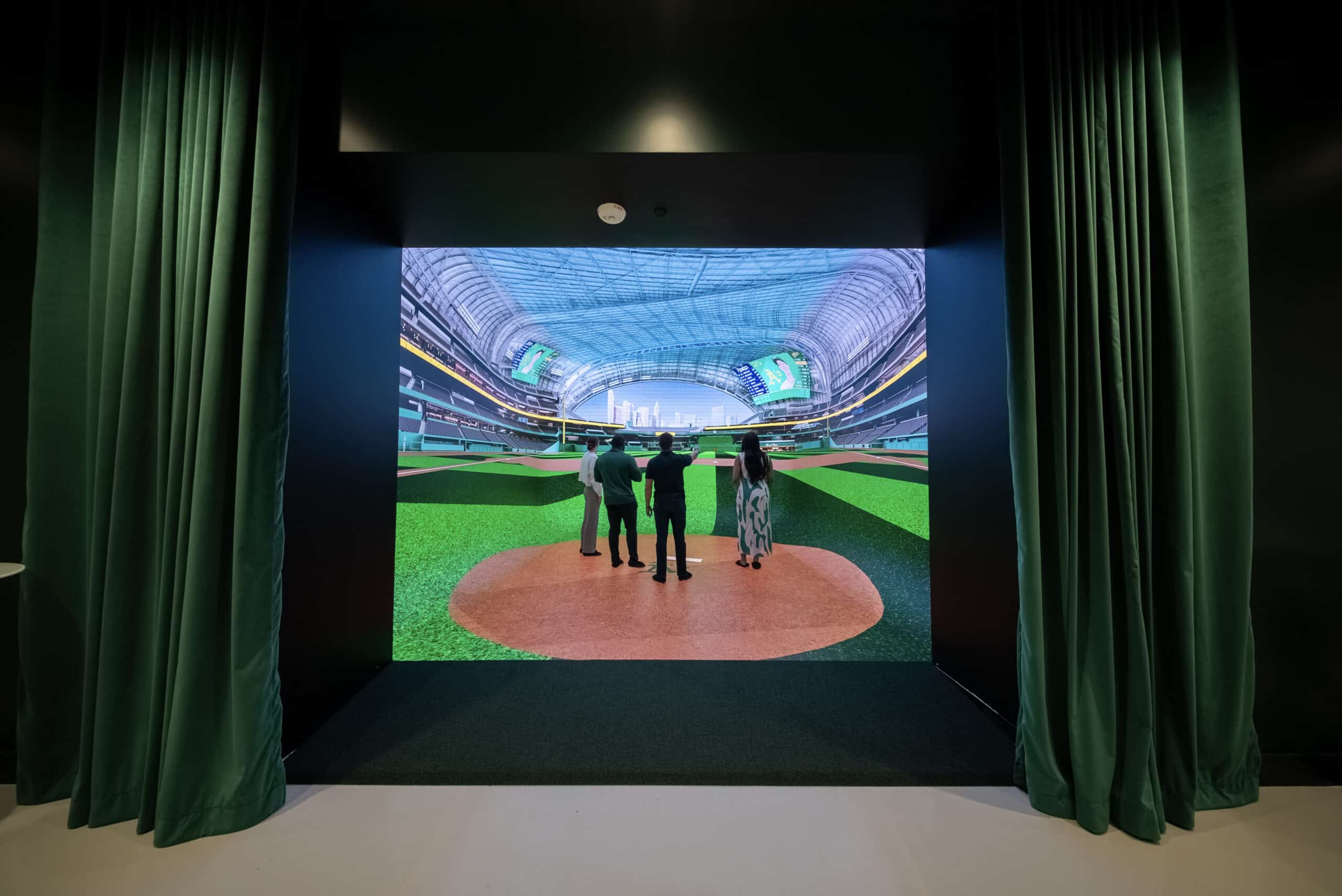
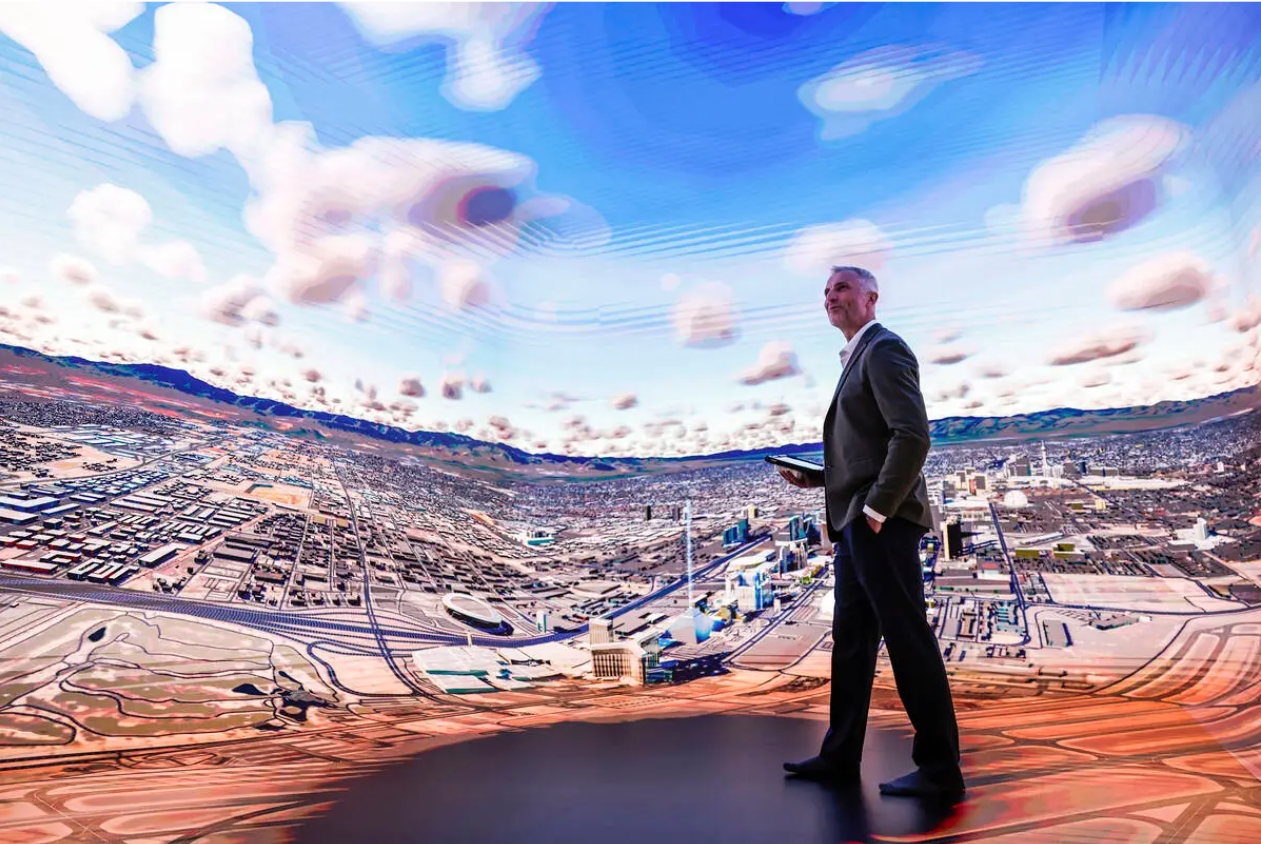
The Cube® measures over 13 feet tall, 19 feet wide, and nearly 20 feet deep, creating a 270-degree visual environment powered by 26.5 million pixels. But those specifications, while impressive, aren’t what makes it revolutionary for property marketing.
What makes it transformative is how it collapses the gap between architectural visualization and actual experience.
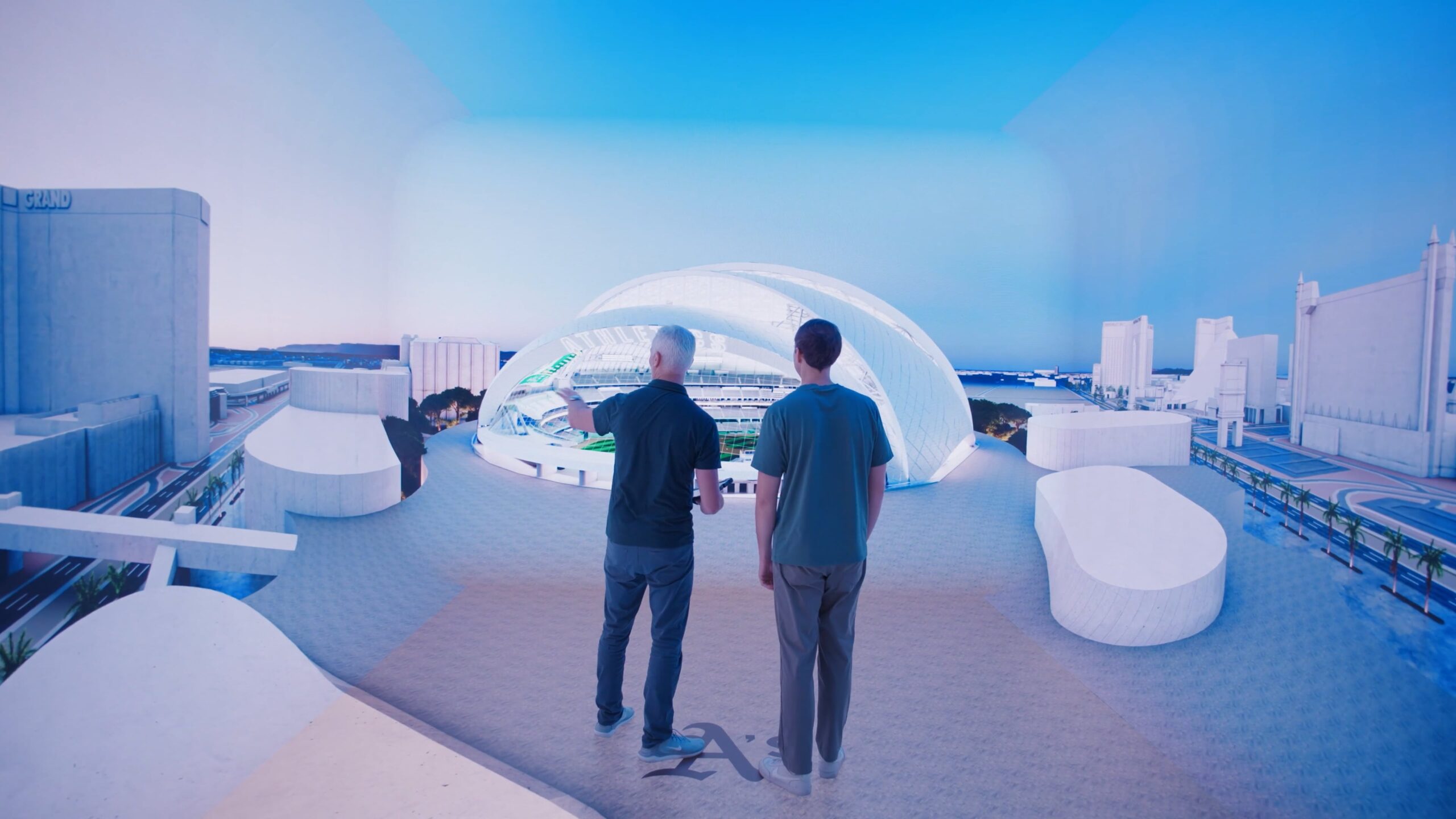
Instead of viewing renders on screens, potential buyers and investors step inside the property. The walls, floor, and ceiling become a seamless canvas displaying photorealistic environments at room scale. Up to twelve people can experience the space simultaneously, no headsets required.
Sports Illustrated described it as a space where visitors “don’t just see the A’s future; they step into it, exploring the new ballpark in vivid, dynamic 3D.”
That same principle applies to any property development worth marketing properly.
Why This Matters for Off-Plan Property Sales
Property developers marketing off-plan developments face a specific challenge: you’re asking significant financial commitments for buildings that won’t exist for months or years. Traditional architectural visualization provides intellectual understanding. Immersive environments provide conviction.
Consider the typical property marketing workflow. You commission CGI at an average cost of $1,500 per image. You might invest $15,000 in animations. You create virtual tours accessible on devices. You produce brochures, websites, and sales presentations.
All of that content operates within the same limitation. It asks viewers to imagine themselves in spaces they can’t actually experience.
Now consider an alternative approach: Create an immersive sales environment where prospects don’t imagine the property; they experience it. Where viewing lobbies, amenities, and unit interiors happens at human scale in a shared, social context that mirrors how people actually make real estate decisions.
The investment shift from creating dozens of individual CGI assets to creating immersive experiences changes the fundamental economics of property marketing.
The Technology Behind Effective Immersive Environments
Creating truly effective immersive environments requires more than impressive display technology. At Advent, we built our proprietary Experiential Management System (XMS) to power the Cube® specifically because off-the-shelf solutions couldn’t deliver what property marketing actually needs.
The system enables instant scene transitions, so moving from exterior views to interior spaces to amenity areas happens seamlessly. It supports multiple content types simultaneously, from photorealistic architectural renders to dynamic lighting demonstrations to material finish comparisons.
Most critically, it’s designed for narrative control. Property marketing isn’t about showing random views of a development. It’s about telling a story that moves people from curiosity to conviction.
Through our research partnerships with institutions like Samford University, we’ve studied how physical environments influence decision-making. The findings directly inform how we structure immersive experiences. Pacing matters. Emotional progression matters. The ability to demonstrate scale and context matters tremendously.
Traditional architectural visualization lets you show these elements. Immersive environments let you orchestrate them.
Cost Considerations: Investment vs. Endless Asset Production
The immediate question from property developers evaluating this approach: “How does this compare to our current CGI budget?”
The comparison requires reframing. Traditional architectural visualization operates on a per-asset model. You pay $800 to $4,000 per render. You commission animations at $5,000 to $20,000 per minute. You might spend $50,000 to $150,000 creating comprehensive marketing assets for a major development.
Then you use those assets across brochures, websites, presentations, and sales centers. They’re fixed. They show one lighting condition, one seasonal context, one design option.
Immersive environments shift that model entirely. The initial investment creates an adaptive platform. Want to show how the development looks at sunrise versus sunset? Instant transition. Want to demonstrate different interior finish packages? Real-time switching. Want to highlight specific amenities for different buyer demographics? Customizable on demand.
For developments with extended sales timelines, particularly luxury properties or large mixed-use projects, the economics favor adaptive environments over fixed asset production.
Beyond Visualization: Creating Conviction
So, what have we learned from deploying immersive environments across athletics, academia, and now real estate? The goal isn’t better visualization. The goal is creating conviction.
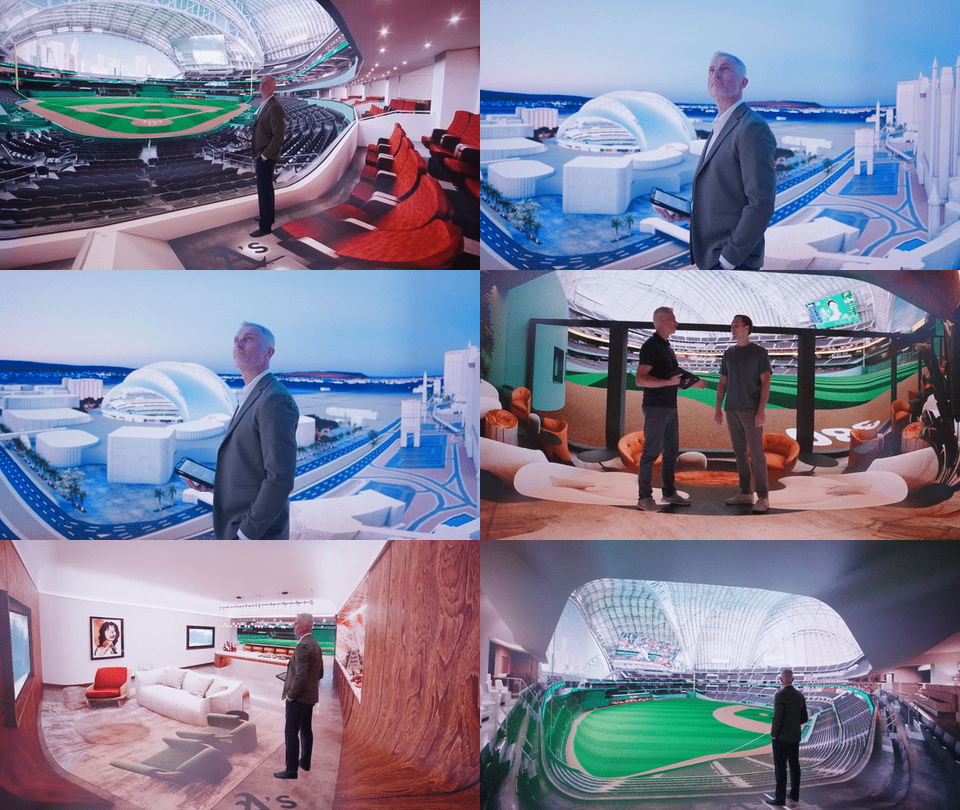
When potential buyers step into the Cube® at the A’s Experience Center, they’re not viewing renderings of a future ballpark. They’re experiencing what game day will feel like. They’re standing on the field. They’re seeing views from premium seating. They’re feeling the energy of a space that won’t physically exist until 2028.
That same principle applies to property development. Investors evaluating a commercial project don’t need incrementally better CGI. They need to experience the scale of the lobby, the flow of the floor plates, the impact of the architecture in context.
Buyers considering luxury residences don’t need more photorealistic renders of kitchen finishes. They need to feel what it’s like to stand in that space, to understand the light quality, to envision their life in that environment.
The Las Vegas Review-Journal captured this perfectly when they quoted A’s owner John Fisher explaining why this approach matters: traditional methods of showing ballpark plans on small computer screens simply don’t create the same level of engagement or conviction.
Integration With Traditional Marketing: Not Replacement, But Evolution
I’m not suggesting property developers abandon traditional architectural visualization entirely. High-quality renders, animations, and virtual tours remain valuable for websites, brochures, and initial prospect engagement.
What I’m suggesting is that for significant developments, for projects where pre-sales drive viability, for properties where investor confidence determines timeline success, immersive environments should become the centerpiece of your marketing strategy, not an afterthought.
The most effective approach we’ve seen combines both: Traditional CGI for broad awareness and digital channels. Immersive environments for serious prospects ready to make decisions.
This hybrid model addresses different stages of the buyer journey. Someone browsing properties online needs accessible digital content. Someone ready to commit to a seven-figure purchase or a major investment needs an experience that creates conviction.
The Multi-Use Value Proposition
One aspect of immersive environments that property developers frequently overlook: they’re not single-use assets.
The same environment showcasing a property to potential buyers can host investor presentations, broker events, media launches, and community engagement sessions. It can demonstrate sustainable design features to planning authorities. It can facilitate design reviews with corporate tenants.
We’ve deliberately designed our approach around multi-use flexibility. The organizations that gain the most value from immersive environments are those that treat them as revenue hubs, not just sales tools.
For property developers with ongoing pipelines, this matters enormously. An immersive sales environment created for one development can be adapted for future projects, creating a lasting asset rather than a one-time marketing expense.
Practical Implementation: What Property Developers Should Consider
For property developers considering this approach, several factors determine success:
Timeline Alignment: Immersive environments deliver maximum value during pre-sales phases. Plan implementation to coincide with your critical marketing windows.
Content Strategy: Work with partners who understand storytelling, not just rendering quality. The most photorealistic assets become ineffective if they’re not orchestrated into compelling narratives.
Space Requirements: Unlike traditional sales centers displaying static materials, immersive environments need dedicated physical footprints. Budget 400-600 square feet for effective installations.
Technical Partnership: This isn’t technology you can deploy and ignore. Success requires ongoing content updates, narrative refinement, and technical support.
The Competitive Advantage Window
Here’s my final observation from watching this technology transform sports venue marketing: the competitive advantage belongs to early adopters.
When we launched the first Immersive Cube® installations, they generated coverage from the Associate Press, Yahoo! Sports, FOX Sports, and other national media outlets because the approach was genuinely novel. Organizations using them gained not just better sales tools, but market differentiation.
That window exists in property development right now. The developers who adopt immersive environments while they’re still emerging will gain both functional advantages and brand positioning that matters.
As this approach becomes standard, the advantage shifts from differentiation to table stakes. Better to be among the pioneers setting expectations than playing catch-up to maintain competitiveness.
Moving Beyond the Rendering Wars
The architectural visualization industry’s focus on incremental image quality improvements has created diminishing returns for property marketing. We’ve reached a plateau where better pixels don’t translate to better sales performance.
The future belongs to environments that don’t just show properties, but let people experience them. Where prospects don’t imagine spaces intellectually, but feel them emotionally. Where decision-making happens in shared, social contexts that mirror how real estate decisions actually unfold.
At Advent, we’ve spent over two decades creating experiences that move people across athletics, academia, and corporate environments. The Immersive Cube® represents our most significant innovation yet, and watching it transform how the Las Vegas Athletics sell a stadium that won’t open for years has reinforced everything we’ve learned about the power of experience over visualization.
For property developers still investing in traditional architectural visualization alone, the question isn’t whether this approach represents the future. The question is whether you’ll lead that future or scramble to catch up to it.
If you’re marketing properties that deserve more than static renderings, let’s talk about what immersive environments can do for your development. Because at a certain level of investment and ambition, your buyers and investors deserve to experience what you’re building, not just view images of it.
Key Statistics on the Architectural Visualization Market:
From University of Texas at Dallas / Information Systems Research (2025):
- VR tours reduce time on market from 34 days to 19 days on average (44% reduction)
- Based on analysis of 43,000 properties from China’s leading real estate platform
From National Association of Realtors (NAR) Survey:
- Homes with virtual tours or high-quality visualization can sell for up to 9% more than properties with plain photography
From Multiple Industry Studies (Source 1, Source 2, Source 3):
- 75% of prospective buyers consider virtual tours a key decision-making tool
- Listings with virtual tours receive 87% more views than those without
- Properties with virtual tours sell 20-31% faster
- 95% of buyers prefer listings with virtual tours
- Properties promoted with 3D rendering sell 20-30% faster than traditional listings (Source)
From Luxury Real Estate Market Analysis:
- Properties marketed with advanced visualization technologies experience price premiums of 3-7%
- Selling cycles compressed by 20%
From VRAR Survey:
- 40.4% of apartment buyers attributed the success of their purchase to the virtual experience
Goldman Sachs Market Projection:
- Real estate VR market projected to reach $2.6 billion by 2025

For over 25 years, Advent has been creating emotionally resonant experiences for leading brands including AT&T, Fanatics, the Dallas Cowboys, and Stanford University. Our proprietary StoryMining methodology ensures that every project starts with the story, not the technology.