

Sponsorship Activation
Technology
What Does the Future of Fan Engagement Look Like?
And why the teams who get this right now will own the next decade.
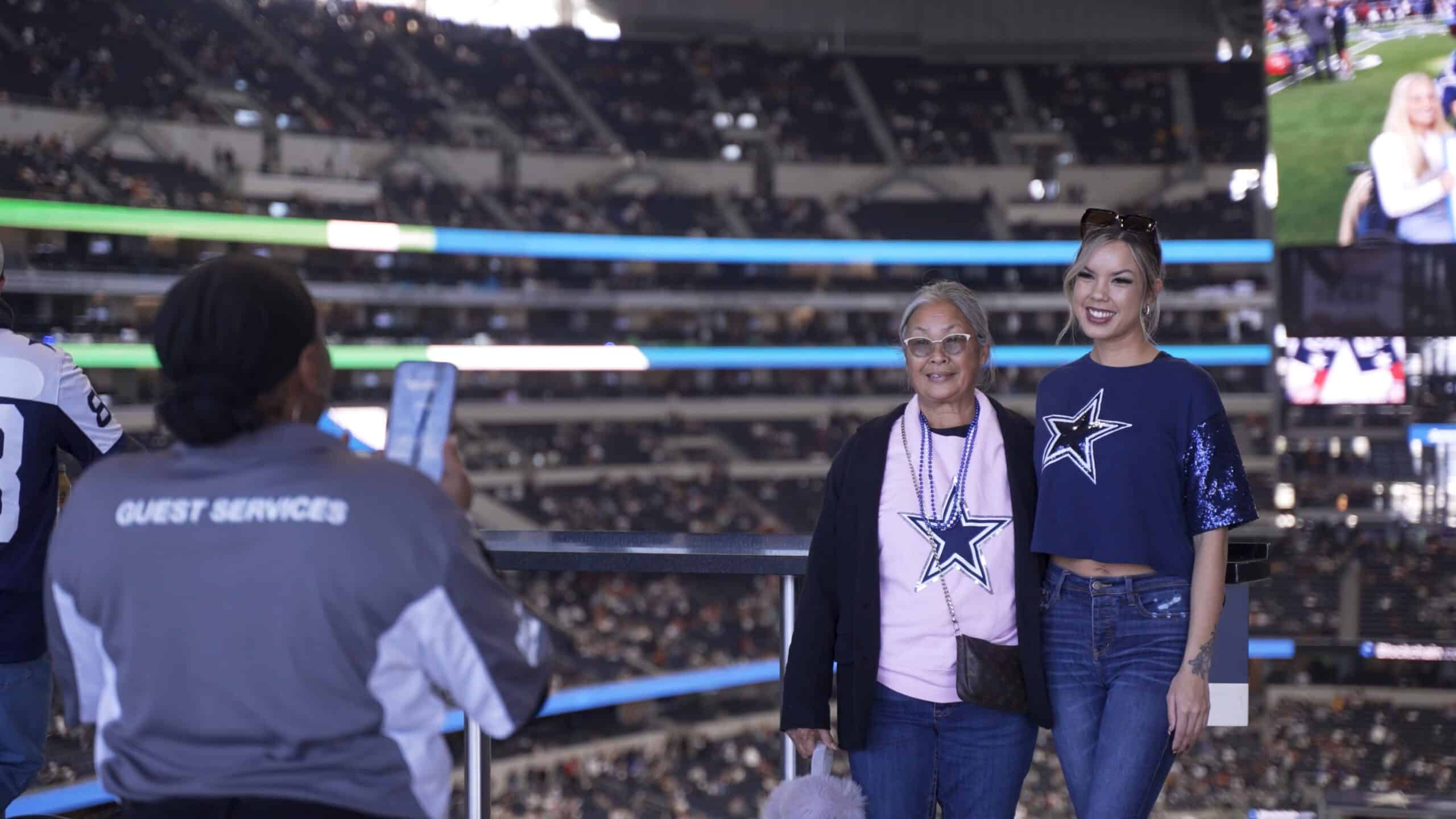
I’ve spent the better part of two decades walking into sports facilities, corporate headquarters, university welcome centers, and brand experience spaces, and I always come back to one question that not many seem prepared to answer: What does it actually feel like to be one of your fans ?
Not a customer. Not an attendee. A fan. Someone who wakes up thinking about your team, your brand, your story. Someone who drives two hours to be “in the room”, not because they have to, but because they can’t imagine being anywhere else.
That distinction matters more today than it ever has. As we move deeper into 2026, the teams and organizations that understand the difference between passive attendance and genuine fandom are pulling away from everyone else, and the gap is widening.
The Ground Has Shifted, Again
The COVID-19 era changed the relationship between fans and sports franchises in ways most organizations still haven’t fully reckoned with. When the gates closed and the seats emptied, fans discovered they could survive without the live experience. And what did we do to make them want to come back when freedom of movement was restored?
The industry has largely responded with technology. Bigger LED boards, faster Wi-Fi, frictionless entry systems. Those things matter, and the smart stadium market is exploding because of it. Venues like the Intuit Dome in Los Angeles are setting new benchmarks for seamless, connected experiences. Facial recognition entry. Cashless concessions. Real-time data overlays. These are table stakes now, not competitive advantages.
From Gameday to Year-Round: The New Fan Relationship
One of the most significant shifts we’re watching right now is the move from transactional, gameday-centric fan engagement to a year-round relationship model. The organizations winning this game, teams like the San Francisco 49ers, leagues investing in owned digital platforms, brands building community hubs, understand that fandom is not an event. It’s a relationship.
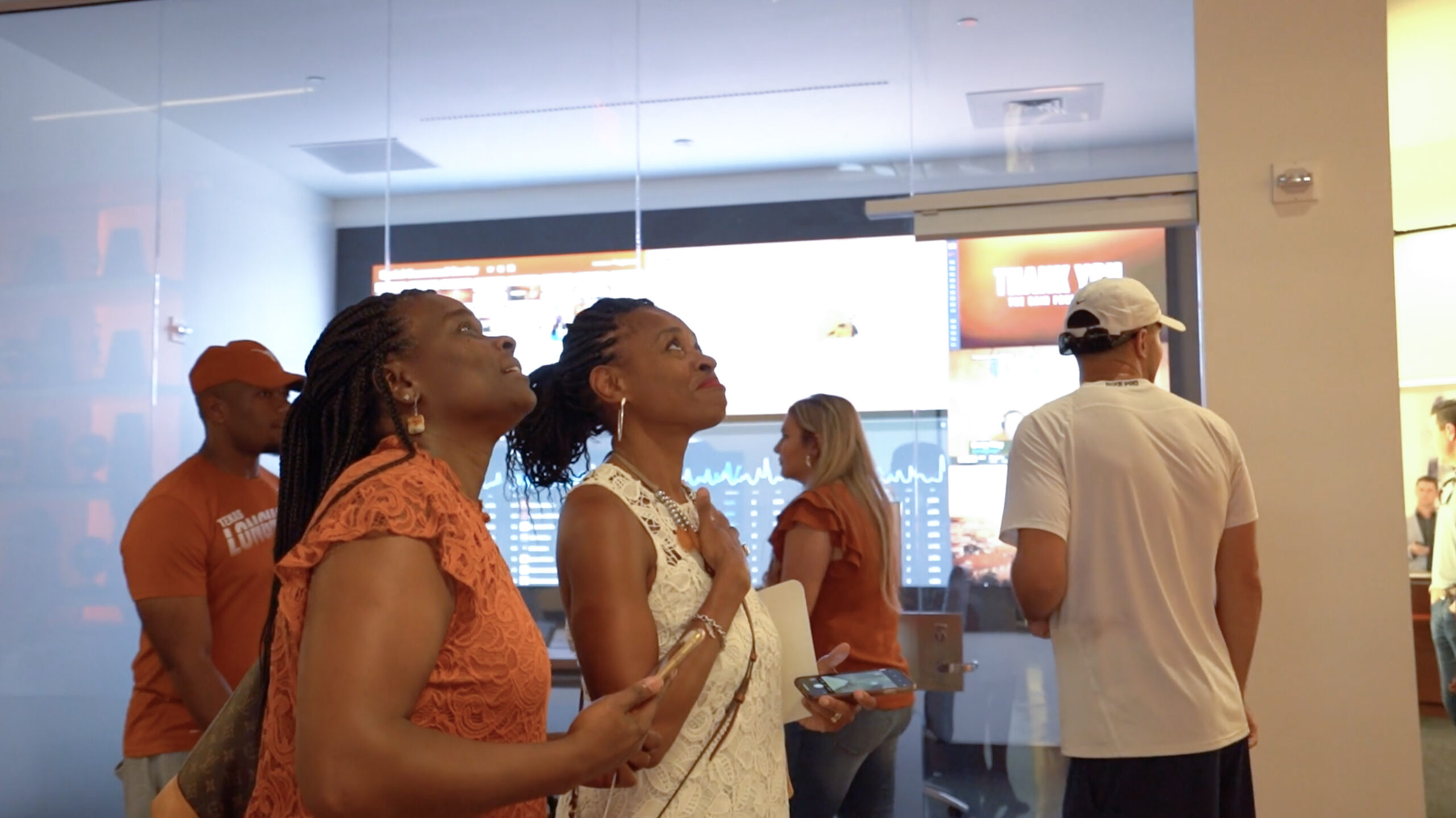
Digital ecosystems are collapsing the friction between tickets, content, community, and commerce. But what creates the emotional glue that holds all of that together? Physical space. The moment when a recruit walks into your facility for the first time. The second a corporate visitor steps into your brand experience center and their jaw drops. The instant a fan enters your venue and feels the story of who you are before a single word is spoken.
That is what we build at Advent. We call it StoryMining, a research-driven process that goes deep into the DNA of an organization to surface the authentic narrative that deserves to live in the physical world. Because before any technology can do its job, the story has to be right.

The Personalization Imperative
We are now firmly in the era of hyper-personalized fan engagement. AI-powered platforms are generating personalized highlight reels, delivering real-time offers, and predicting attendance patterns with remarkable accuracy. A Forrester Consulting study commissioned by Adobe found that experience-driven businesses grew revenue 1.4 times faster than their peers and saw customer lifetime value improve 1.6 times more.
Personalization in a digital feed is increasingly expected. The organizations thinking several moves ahead are asking a harder question: how do we personalize the physical experience? How do we make someone feel, from the moment they arrive, that this place was built with them in mind?
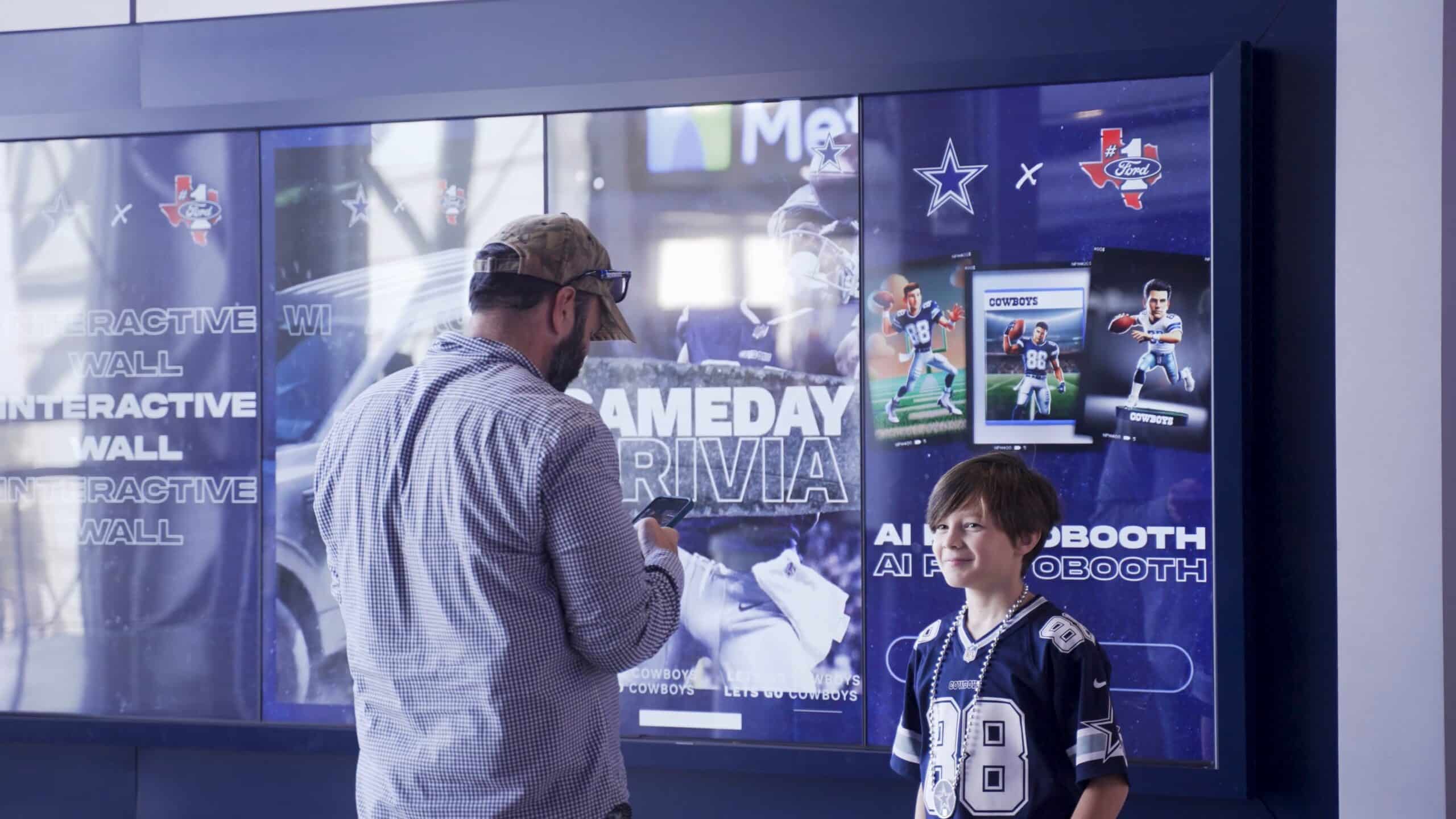
At Advent, we’ve seen what happens when you get this right. When the Dallas Cowboys walk a major sponsor through a space that tells the story of their legacy with the same emotional intensity as any great film. When a university welcome center makes a prospective student feel, in their bones, that they belong here. When a professional sports facility communicates to an A-star recruit that this organization is different, serious, and worthy of their best years.
The conversion that happens in those moments is not the result of a screen. It’s the result of intentional, research-backed, emotionally intelligent design.
The Stadium is No Longer Just a Stadium
The venue of the future is not a venue. It’s a destination ecosystem. The model has shifted from building a stadium to building a neighborhood, and within the next decade, we expect to see the majority of major league franchises operating within or anchoring some form of mixed-use district.
When your facility is the anchor of a year-round destination, the story your space tells isn’t just about gameday. It’s about your organization’s place in the community, your values, your legacy. The walls of your building have to carry that weight every single day, not just on game days.
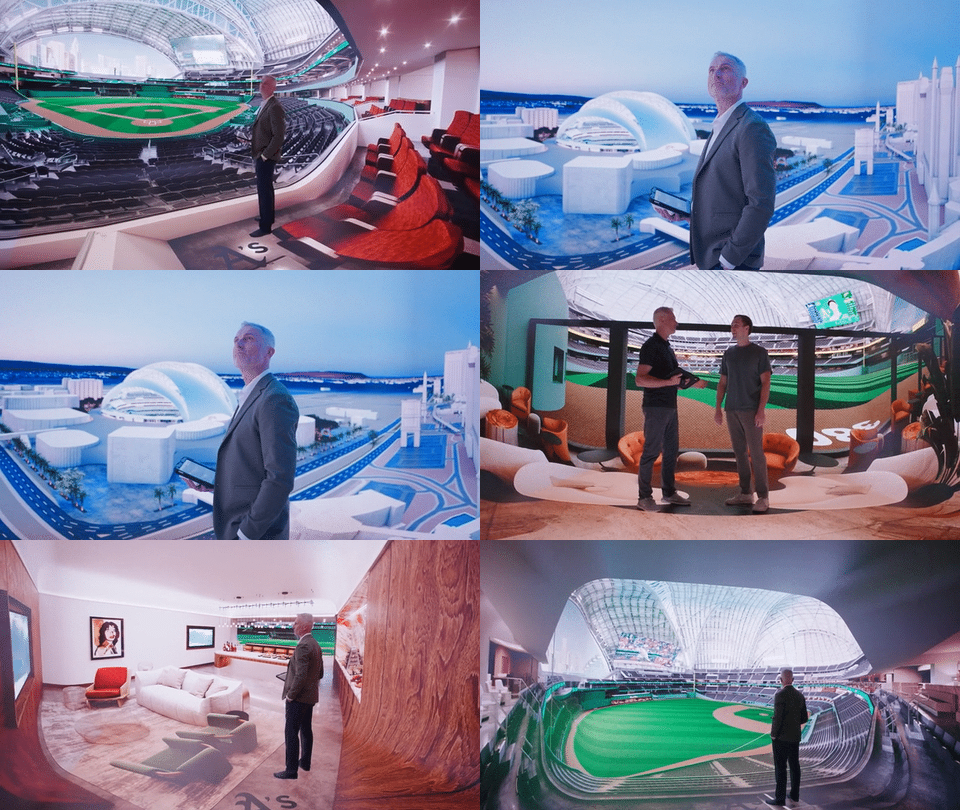
We recently deployed our Immersive Cube™ technology with the Athletics, and what struck me about that project wasn’t the technology itself. It was the way the technology served a larger storytelling mission. The A’s aren’t just building a team in a new market; they’re building a community relationship from scratch. Every touchpoint in that experience has to communicate trust, excitement, and belonging simultaneously. That’s a storytelling problem before it’s a technology problem.
What About the Fans You’re Losing?
I want to address something that doesn’t get discussed enough in conference rooms: the growing casual fan problem. Gen Z audiences are less likely to self-identify as loyal, single-team fans. They’re platform-native, content-first, and experience-driven. They’re not going to show up because it’s what you do on a Sunday. They’re going to show up because your organization gave them a genuine emotional reason that they can’t find anywhere else.
This generation is not disengaged from sports. They’re deeply engaged with the sports experiences that move them. Creator-driven content, interactive broadcasts, community-first digital platforms are powerful tools for building that initial relationship. The organizations that will win the long game are the ones who convert that digital interest into a physical experience so compelling it creates lifelong allegiance.
That conversion doesn’t happen by accident. It happens by design.
The Question Every Sports Leader Should Ask Right Now
Here is the question I bring into every client conversation: If a first-time fan walked into your facility today, with no prior knowledge of your team, your history, or your culture, what would they feel? What story would your walls, your corridors, your locker rooms, your club spaces tell them?
If the honest answer is ‘not much,’ or worse, ‘nothing consistent,’ then you have a significant opportunity in front of you. Your competitors are waking up to this reality. The arms race in sports isn’t just happening on the field. It’s happening in the facilities, the fan experience centers, the sponsor activation spaces, and the recruiting environments that define what your brand actually is.
The organizations that invest in that story now, deeply, thoughtfully, with research and craft, will own fan loyalty for the next generation. The ones who treat it as an afterthought will spend the next decade wondering why the seats aren’t filling up and the sponsorship renewals are getting harder.
The Future Belongs to the Bold.
At Advent, we’ve completed more than 2,500 projects for over 260 clients globally, from AT&T and Oracle to Stanford University and the Dallas Cowboys. Every single one of them started with the same belief: that the physical spaces where your brand lives are your most powerful storytelling asset.
Sure, the technology will keep evolving. The platforms will keep shifting. The demographics will keep changing. What won’t change is the fundamental human need to feel something, to walk into a place and know, without being told, that you belong.
If you’re ready to think seriously about what your fan experience should look like in five years, let’s talk. The best time to build the future was yesterday. The second-best time is right now.

For over 25 years, Advent has been creating emotionally resonant experiences for leading brands including AT&T, Fanatics, the Dallas Cowboys, and Stanford University. Our proprietary StoryMining methodology ensures that every project starts with the story, not the technology.