

Experience Design
Higher Education
Technology
The 82% Reality: Why Your “Classic College Experience” Narrative is Failing
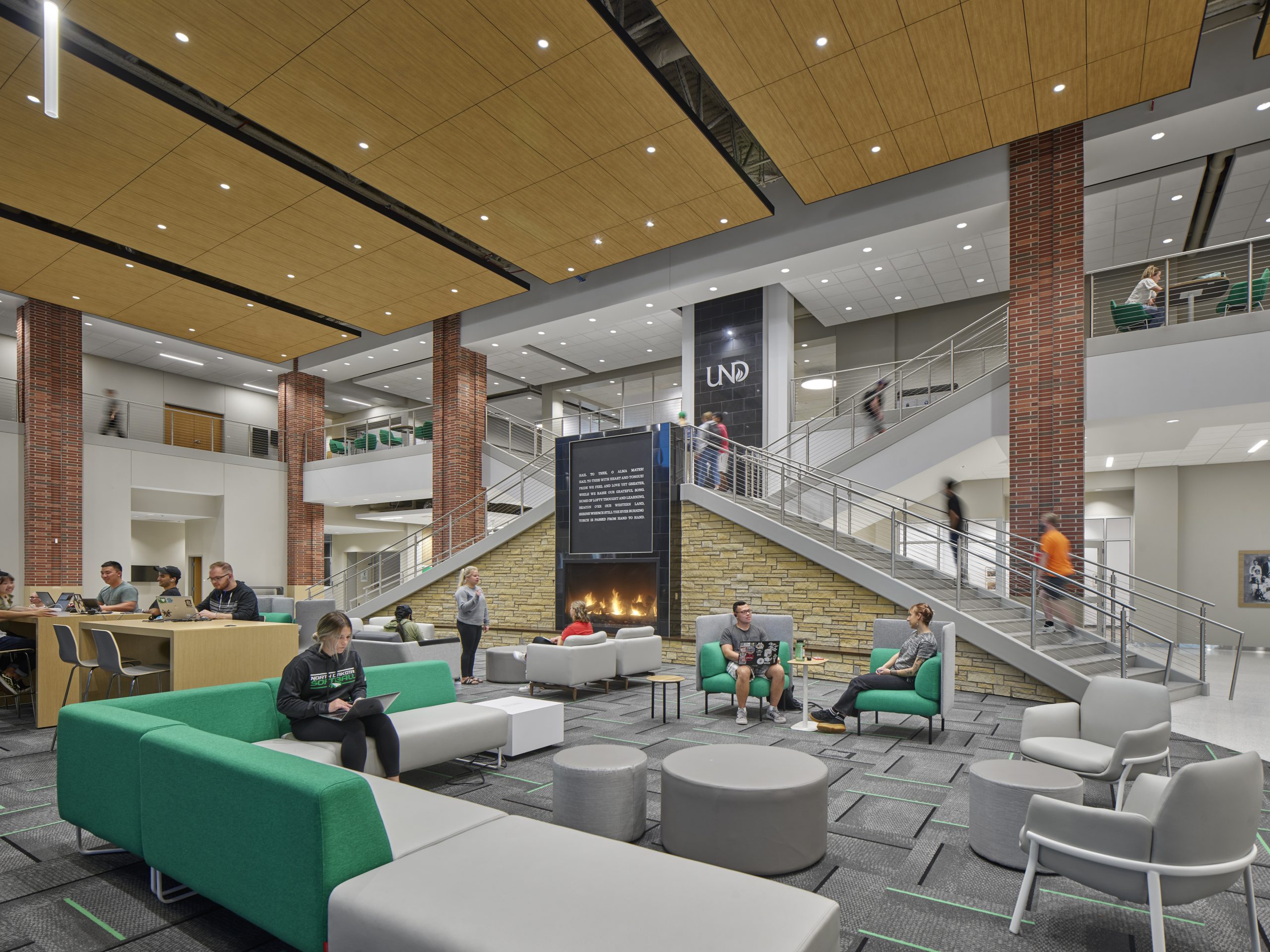
In the hyper-competitive 2026 higher education landscape, the “sea of sameness” is a real and present danger. For decades, the college welcome center has been a predictable stop on a “death march” campus tour: a place of brochures, rotating monitors, and standard founding-year facts. But the data from Advent’s latest College Choice Study tells a different story. Students are looking for evidence of their future.
Exceptional welcome centers today are critical conversion tools. To move a prospective student from “considering” to “committing,” your space must transition from a lobby that merely welcomes to a storytelling canvas that persuades.
The CARE Framework for Recruitment
Apply the CARE Framework to every experience design, ensuring the space does more than just look nice. It moves people to action.
1. Captivate: Break the Script
The average visitor forms a lasting impression in the first 5 to 10 minutes on campus. If you meet their expectations, you’ve confirmed their autopilot. To truly captivate, you must break their mental model.
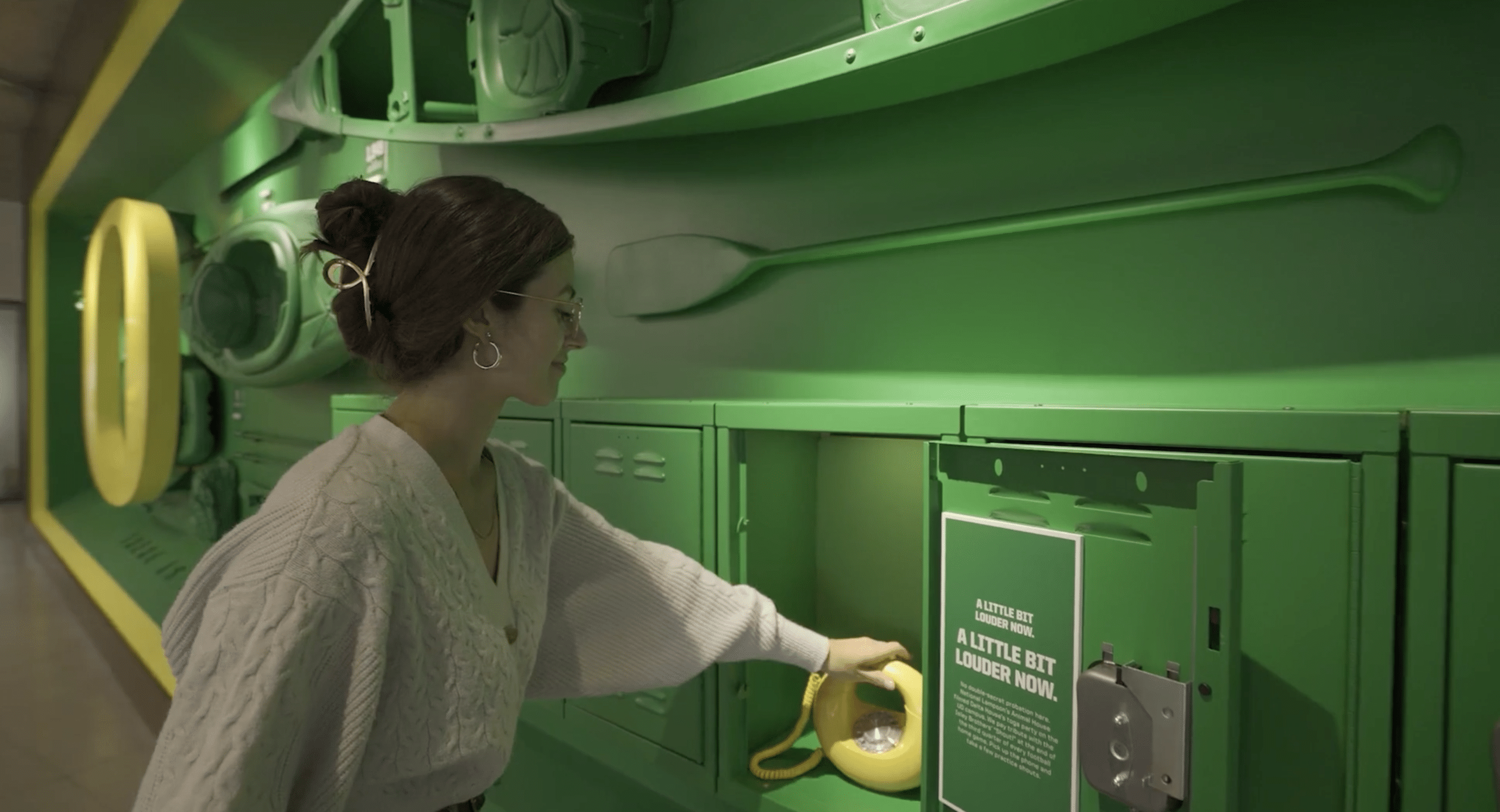
The “Curiosity” Lead: At the University of Oregon, we installed 15 instruction-less lockers. When students open them to find a vintage phone playing the fight song or gameday audio, they aren’t just seeing a display; they are demonstrating the very trait Oregon values: curiosity.
2. Amplify: Make Heritage Relevant
Don’t just amplify history; amplify relevance. Prospective students aren’t comparing founding dates; they are asking, “Can I survive here? Will I belong?”
The Journey Hero: Design themed storytelling zones that highlight the student journey, academic excellence, and community impact. When visitors see themselves in a long line of people who didn’t quit, your heritage becomes their inspiration.
The Gateway Center at the University of Wyoming demonstrates how a “front door” can transition from a simple office building into a high-performing strategic asset. By leveraging architectural materials, lighting, and sculptures, the space creates an immersive experience that differentiates the university in a commodified market. It moves beyond static history to show visitors the pride of the entire state, using a user-centric journey that allows families to interact with the university’s story in a way they never have before.
3. Resonate: The Intergenerational Bridge
Campus visits now frequently include three generations: students, parents, and grandparents. A strategic welcome center must address all three simultaneously:
- Students seek energy, pride, and “shareable” social spaces.
- Parents need reassurance regarding safety, career preparation, and ROI.
- Grandparents connect through legacy, tradition, and long-term impact. By addressing these distinct priorities in one cohesive space, you build an intergenerational bridge that drives enrollment.
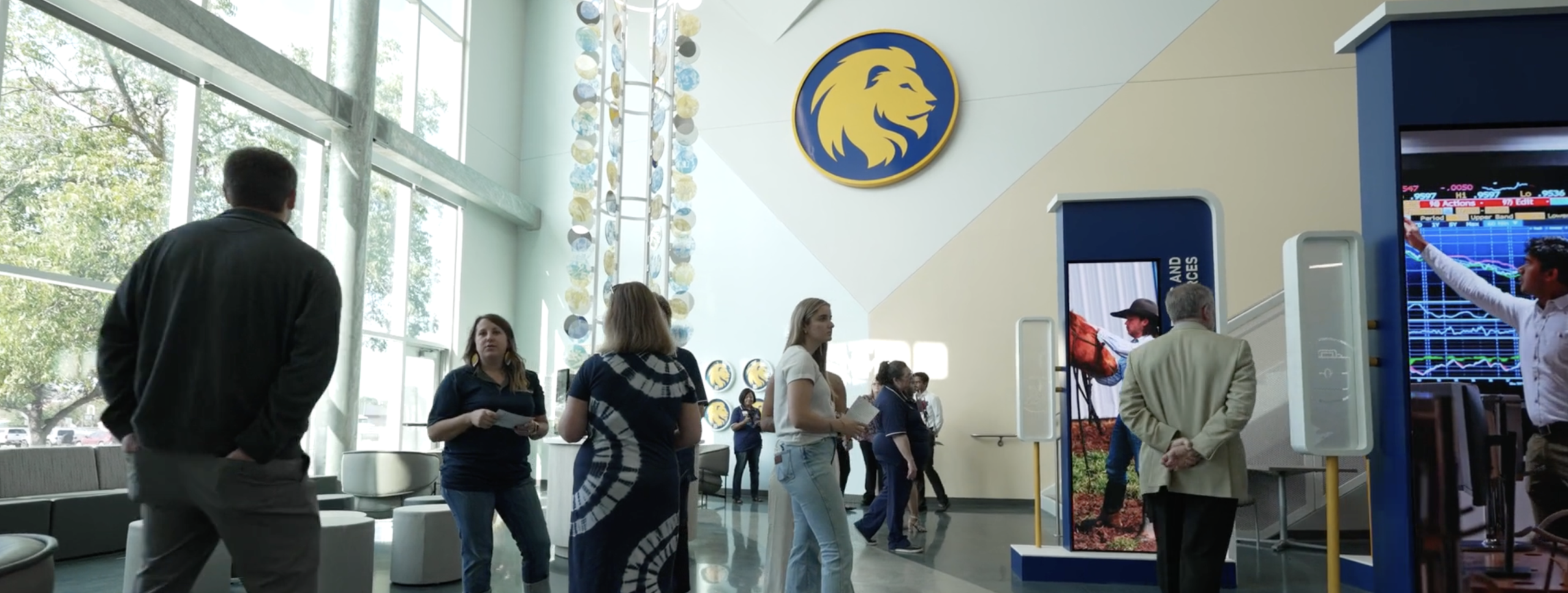
East Texas A&M uses its space to help students discover where they fit and what is possible for their future through interactive “pillars” and environment. By designing the space around story and people rather than just square footage, the center becomes a powerful tool for driving enrollment and pride across all visitor demographics.
4. Empower: Let Them Co-Own the Story
The most valuable stories are the ones visitors tell themselves. Stop scripting every moment and start providing the stage for co-creation.
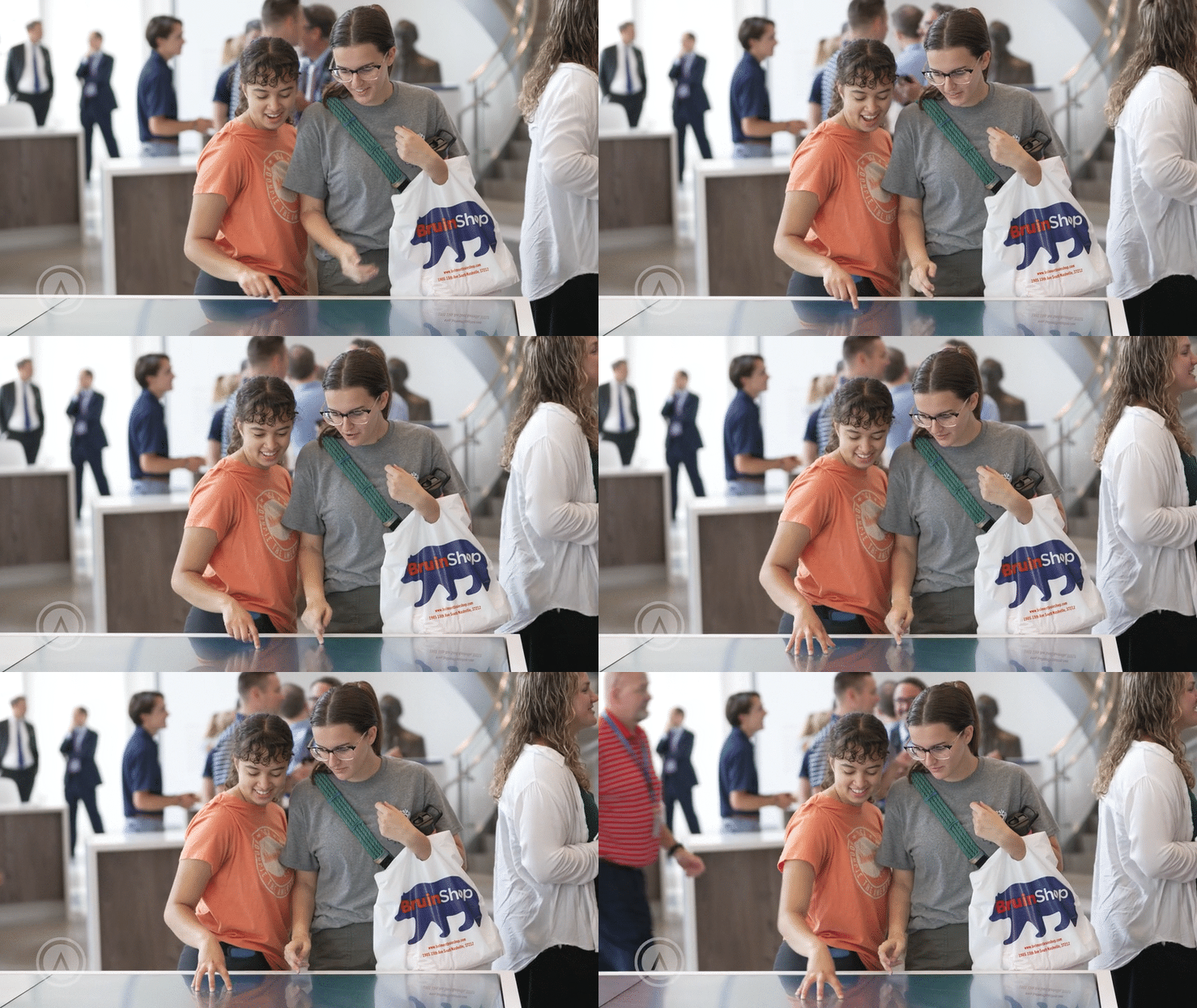
The Canvas Approach: At Belmont University’s Jack C. Massey Center, guests can scan QR codes to bring a projection-mapped statue to life or use a recording booth to leave their own mark. When guests co-own the moment, they co-own the brand.
The 82% Reality: Designing for Outcomes
Our 2025 research reveals that 82% of students are “ROI Maximizers” who view college primarily as a career investment. Just 1 in 8 students prioritizes the “classic college experience” alone.
Strategic experience design means your welcome center must physically manifest these outcomes. Use technology to visualize salary data, alumni networks, and employer partnerships.
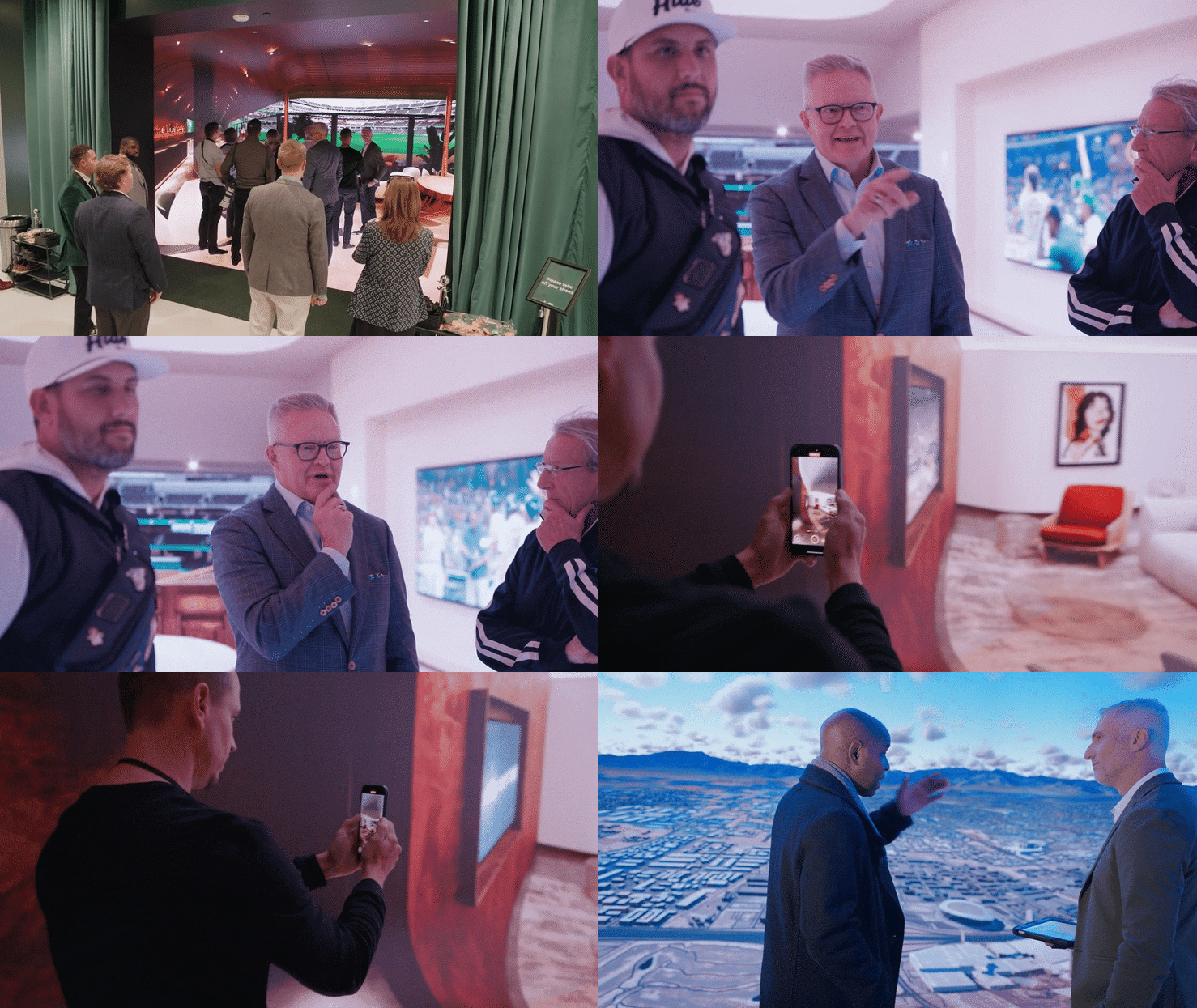
Integrating technology like the Immersive Cube® allows institutions to bridge the gap between abstract data and lived reality. While spreadsheets can list placement rates, the Cube® lets a prospective student step inside their future career.
By leveraging this platform, you can transform high-level ROI data into personalized, immersive experiences:
- Personalized Career Pathing: The Cube® can feature personalized storytelling that displays a student’s name alongside real-time data for their specific major of interest, such as average starting salaries and top regional hiring partners.
- Virtual Alumni Mentorship: Instead of just reading a testimonial, visitors can experience 360-degree immersive “day-in-the-life” glimpses of life beyond the brochure, showing alumni thriving in high-impact corporate or research environments.
- Visualizing Unbuilt Innovation: For universities undergoing expansion, the Cube® acts as a powerful visualization tool to walk prospective students and faculty through future labs, classrooms, and collaboration spaces before the first shovel hits the ground.
- Dual Recruitment Journeys: It serves the “82% reality” by providing the data-rich, outcome-oriented content that digital-first deciders crave, while simultaneously delivering the emotional “sense of fit” required by on-campus visitors.
By using the Immersive Cube® to show students where they are going, rather than where they are, you move the conversation from “what does this cost?” to “what is this worth?”
Future-Proofing Your Narrative
In higher education, as in life, you never get a second chance to make a first impression. Too many institutions treat their welcome center as an afterthought, or a generic space of brochures and monitors rather than a strategic conversion tool. Yet, our research consistently shows that students often make their enrollment decision in the first five to ten minutes they are on campus. If that critical window is spent in a space that doesn’t resonate, you aren’t just losing a visitor; you are potentially losing a future advocate, donor, and alumnus.
A transformative welcome center inspires. It acts as your institution’s physical brand manifesto, ensuring that every family pulling into the parking lot immediately begins to feel your story. By moving beyond the “sea of sameness” and anchoring your space in authentic storytelling and high-impact technology like The Immersive Cube®, you ensure your first impression is the one that counts.
Buildings age, but stories evolve. Design with adaptability in mind, utilizing digital layers and cloud-based systems, like our Experience Management System (XMS). This allows your staff to refresh the narrative instantly, ensuring the environment grows alongside your institution without requiring a new capital campaign every time a major achievement occurs.
The institutions that will thrive in the coming decade are those that recognize these facilities are not just amenities, but strategic investments in their future.

For over 25 years, Advent has been creating emotionally resonant experiences for leading brands including AT&T, Fanatics, the Dallas Cowboys, and Stanford University. Our proprietary StoryMining methodology ensures that every project starts with the story, not the technology.