

Experience Centers
Pro Sports Built the Preview Center. College Sports Built the Loyalty Engine.
Of my nearly 32 years on earth, 29 of them have been spent on a college campus. As the daughter of a sports information director, I was raised roaming the halls of an athletic department, dreaming of the day when I’d get to go off to college and be an actual, card-carrying member of the school and team that I loved.
After spending four years living out that dream, I had the special honor of serving my alma mater in a professional capacity, leading our Visitor Center and on-campus recruitment for the next generation of undergraduates. Safe to say, I get it. I get the pressures facing leadership across our campuses – both academic and athletic.
It’s no secret our colleagues in college athletics are in a particularly strange yet exciting season. In the wake of the historic House v. NCAA settlement, athletic departments face unprecedented pressure to unlock massive new revenue streams. Between revenue-sharing models, NIL support, and multi-million dollar facility upgrades, programs must fund stadium and arena capital campaigns faster than ever. To reach these milestones without alienating their fanbases, programs are turning to a play borrowed directly from professional sports: the Preview and Experience Center.
While professional sports teams build experience centers to persuade hesitant premium and corporate buyers to buy in, college athletics operate with a fundamentally different context: built-in, generational loyalty. The high-stakes challenge facing university leaders today isn’t convincing fans to love their brand – it’s designing physical narrative spaces that convert that lifelong devotion into immediate capital investment, without reducing a deeply personal connection to a sales pitch.
The Loyalty Engine: Why Connection Beat Persuasion
Treating a college fanbase like a professional sports audience is a costly mistake. While experience centers in the professional sport space often have to do heavier lifting of persuasion or convincing to get potential ticket or sponsorship buyers to BECOME fans of the organization, colleges have built-in loyal fanbases who want to see their options for becoming a more ingrained part of their team’s story. The challenge isn’t convincing fans to care; it’s giving them a tangible, personalized vision of how they fit into the program’s next chapter.
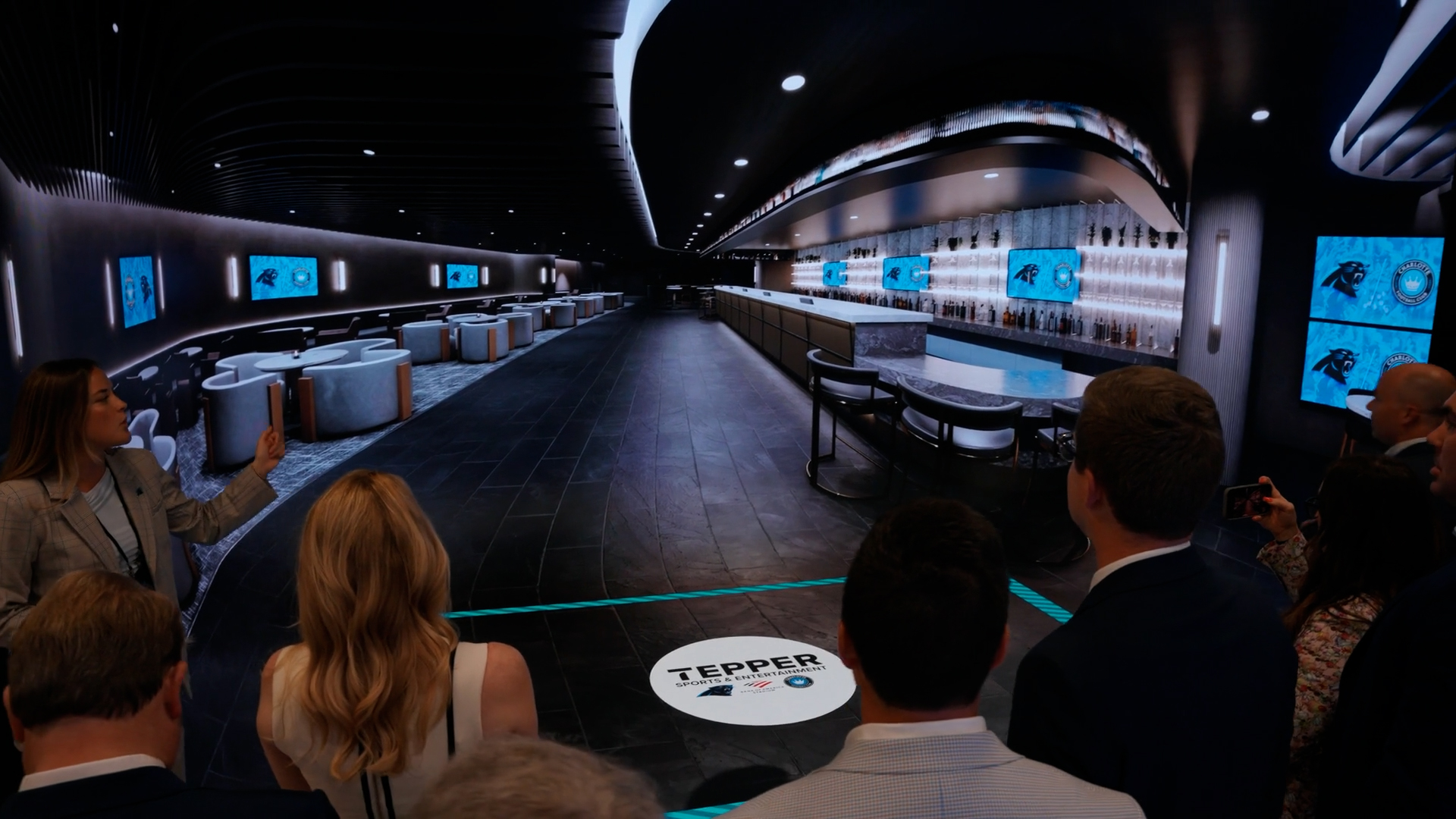
Now if you follow NFL football, you might have seen our latest Immersive Cubes® with the Panthers and Browns. If you haven’t, Tepper Sports and Entertainment is undergoing a $1.3 billion – yes, B as in BILLION – dollar renovation for the new Bank of America Stadium. Their experience center uses our Immersive Cube® to give prospective suite owners, partners, and fans an authentic 1:1 scale preview before the stadium is even built. Up in Cleveland, we built our widest Immersive Cube® to date – spanning nearly 21 feet across a 270-degree canvas – allowing Haslam Sports Group to give fans a real-time, digital-twin walkthrough of their massive 25-square-mile masterplan.
In the pros, high-powered spatial technology like this is built to eliminate hesitation and bring total confidence to multi-million dollar corporate pitches. But when you bring that exact same caliber of technology onto a college campus, magic happens. You aren’t just selling a suite or a sponsorship asset; you’re honoring an emotional investment.
Inside The Immersive Cube®, coaching staffs can give prospective student-athletes a 1:1 preview of their future- placing them inside a simulated game-day huddle, surrounding them with the energy of the locker room, and letting them see their name illuminated on a locker before they ever sign a National Letter of Intent. The possibilities are really endless.
At Advent, we transform standard sales rooms into dynamic narrative hubs. Instead of a transactional showroom, we design emotionally resonant environments that cast a vision, deepen affinity, and showcase future possibilities—ensuring your space works smarter for the long haul.
4 Principles for Designing High-Impact College Experience Centers
1. Shift from Persuasion to Connection: Design for identity, not just a sales pitch. College donors and ticket buyers don’t need to be convinced to love the brand—they already do. Focus the experience on elevating their legacy, highlighting their personal role in the program’s evolution, and making them feel like co-builders of the team’s future.
2. Deploy Flexible, High-Impact Spatial Tech: Leverage adaptable, modular environments like The Immersive Cube® to visualize physical spaces long before groundbreaking. Interactive models and virtual views allow donors to feel the impact of a suite perspective or premium club finish.
This turns a blue-sky campaign pitch into an unforgettable personal milestone. Instead of trying to decode a flat 2D floor plan, a multi-generational alumni family can step inside The Immersive Cube® and physically experience the exact sightlines from their future club seat, walk through the proposed donor lounge, and see their family’s legacy woven directly into the architectural fabric of a new stadium.
3. Design for “Day Two” Versatility From Day One: Avoid building a single-use room destined for demolition once construction ends. Plan the architectural footprint and digital assets so the space can seamlessly transition into permanent sponsor activations, recruiting and vision-casting experiences, or ongoing game-day fan engagement.
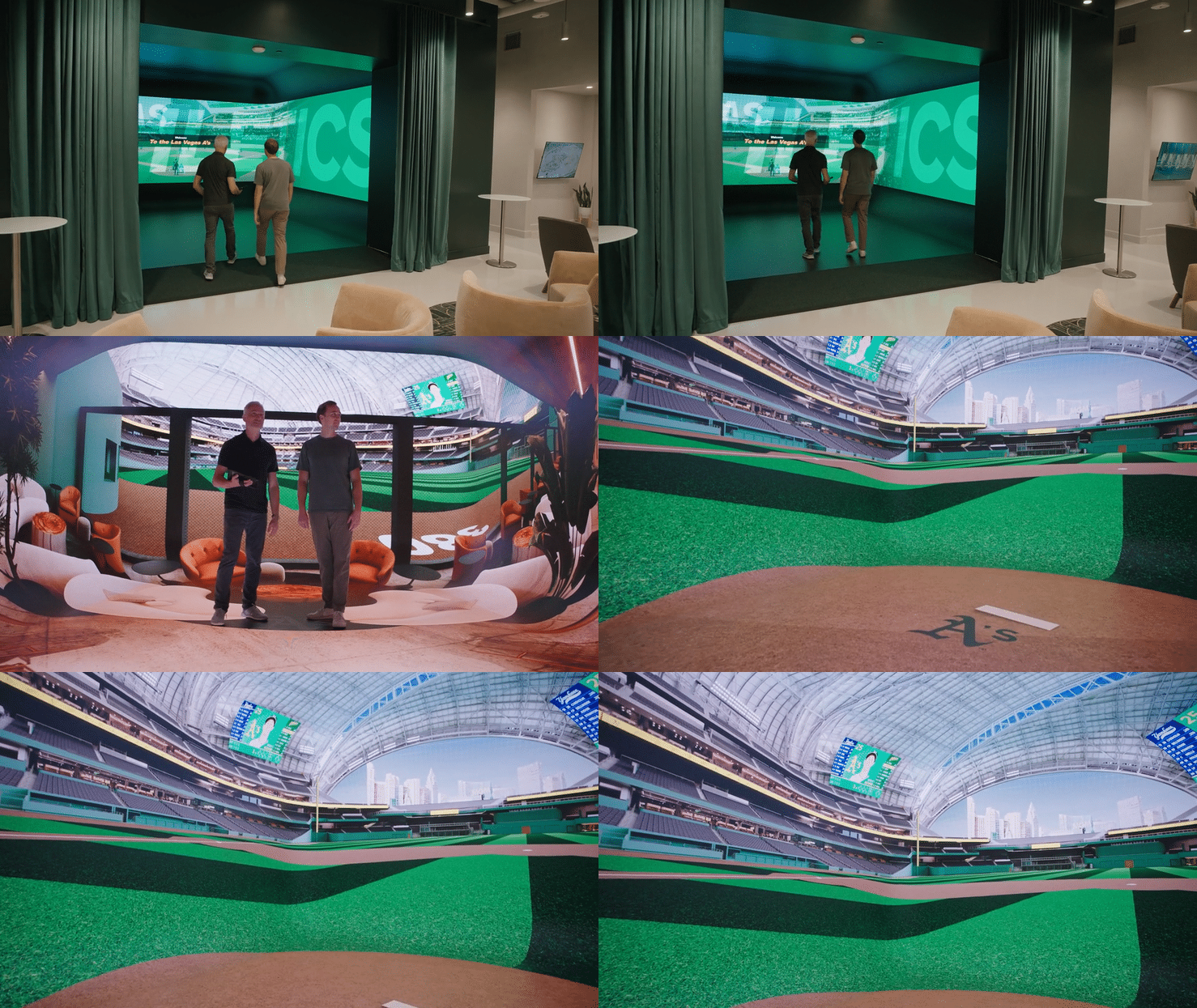
Our friends over in the MLB, the Athletics, are using the same immersive technology to sell premium suites and sponsorships for a $2 billion ballpark that doesn’t exist yet.
But once the ballpark opens, The Immersive Cube® won’t become obsolete. The Athletics plan to bring it into the stadium, where it can continue creating value through sponsorship activations, recruiting, and fan experiences.
4. Integrate Academic and Athletic Alignment: Map out cross-campus utility early. A capital campaign preview center can double as a powerful storytelling asset for university advancement, major donor stewardship, or an institution-wide Welcome Center for campus admissions—maximizing the return on initial capital investment across the entire university.
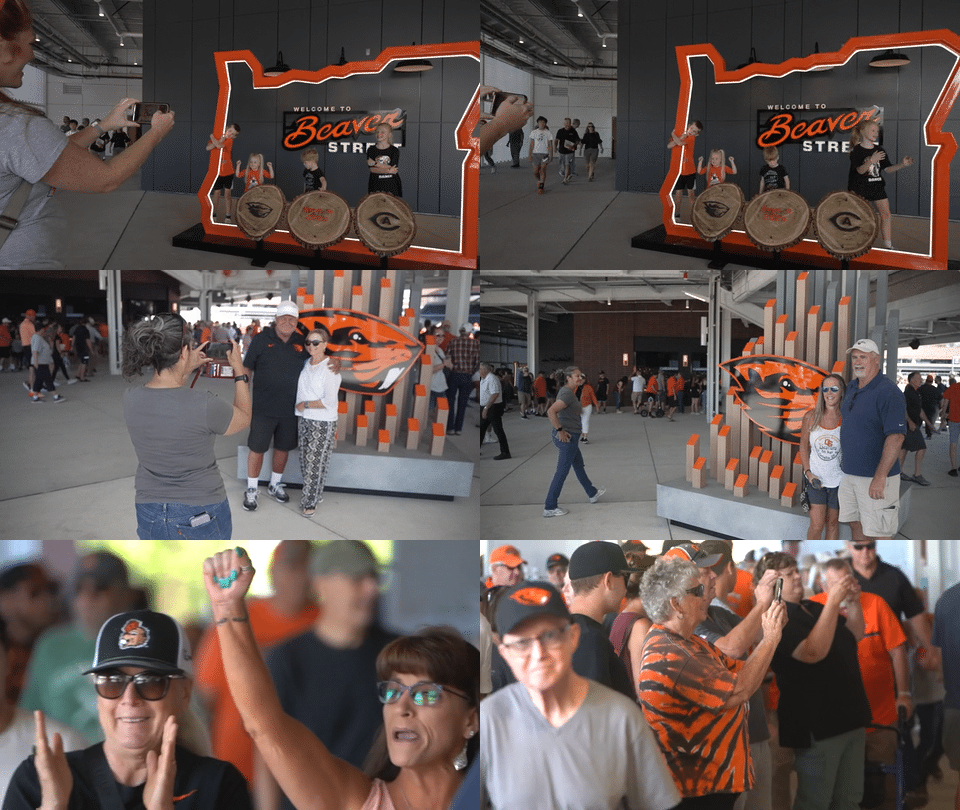
Our work on Oregon State University’s Reser Stadium is a prime example of this multi-use philosophy: on Saturdays, it offers first-class game-day amenities for fans, but every other day of the week, it transforms into a Welcome Center for prospective students and their families. With interactive displays, instagrammable moments, and curated storytelling, visitors step directly into the OSU student experience.
The Advent Takeaway
The preview center in college athletics isn’t just about selling future premium seats—it’s about honoring the emotional investment of a built-in community. As the industry professionalizes, athletic departments that treat experience centers as long-term storytelling engines will not only hit their capital campaign milestones faster, but they will also retain a flexible, high-impact asset that serves their fans, recruits, and campus community for years to come.
At Advent, we don’t just build sales centers; we craft immersive brand homes that turn institutional vision into immediate, lasting investment.

Written by Grace Johnson, Senior Client Engagement Manager
For over 25 years, Advent has been creating emotionally resonant experiences for leading brands including AT&T, Fanatics, the Dallas Cowboys, and Stanford University. Our proprietary StoryMining methodology ensures that every project starts with the story, not the technology.