

Experience Design
Halls of Fame
Higher Education
The Ultimate Donor Recognition Guide: Winning Principles & Ideas for Colleges & Athletics Programs

We often give university clients a piece of humble advice: people don’t spend their whole careers building wealth so that, at the end of it, their name can go on conference room 212.
Donors give because a place changed their life. A professor believed in them. A scholarship arrived at the right moment. A team gave them somewhere to belong. The best donor recognition tells that story, and it does it in a way that makes the next donor want to be part of it.
At Advent, we’ve spent nearly 30 years designing spaces that move people, with more than 2,500 projects across college campuses, athletic facilities, pro sports venues and corporate headquarters. Many of those projects included donor recognition. This guide covers the principles behind donor recognition that works, 30 ideas we’ve seen succeed (from interactive digital donor walls to story-driven displays), real examples, and answers to the questions we hear most from advancement and athletics leaders.
The Principles Behind Great Donor Recognition
Think about what the word “recognize” means. It’s what a witness does in a police lineup: yes, that’s the one. A yes or a no. Zero or one.
Donors don’t need to be recognized that way. They need to know that their story intersects with yours, and that their gift (and their participation) changes the story for everyone who comes next. When an organization shifts from recognizing donors to making them feel like they belong, giving follows.
Take Lloyd Greif, one of USC’s most generous benefactors. He didn’t give because of a naming opportunity or a tax strategy. He gave because a professor once pulled him aside, told him he was smarter than his grades, and tutored him for free on Tuesday and Thursday nights for three months. Every gift since has been a thank-you for those nights.
That’s the first principle, and the standard for every idea in this guide. A name on a wall is a fact. A story on a wall is a reason to give.
Three common traps to avoid as you plan:
- Information over emotion: listing every name in alphabetical order tells visitors who gave, but not why it mattered
- Fairness over impact: giving every donor the same size, the same font and the same placement feels fair, but when everyone is featured, no one is remembered
- Preservation over participation: a display nobody can touch, add to or explore becomes background within a year

Digital and Interactive Donor Recognition Ideas
A digital donor wall solves the two biggest problems with traditional recognition: space runs out, and content goes stale. Done well, it also lets visitors go deeper than a name.
1. An interactive donor kiosk
Give visitors a touchscreen where they can search for a donor and explore the story behind the gift. Outside the Hesburgh Library, the University of Notre Dame Donor Kiosk takes visitors through the stories of donors and their ties to Notre Dame, with an interface built around the university’s brand.
2. A “leave your mark” signature feature
The Notre Dame kiosk also lets visitors sign their name, which then lives on a dedicated page. It turns a passive display into a moment of participation, and it gives every visitor a small taste of what it feels like to be part of the story.
3. A digital donor wall your team can update from an iPad
The most common worry we hear about digital donor recognition is “who’s going to keep it updated?” With the Advent Operating System™, your staff can add new donors, swap in stories and update content from a tablet, with hands-on training and support from the Advent DX team. If you can use a phone, you can run the wall.
4. A digital layer inside a static donor wall
You don’t have to choose between physical and digital. At the Colorado School of Mines, we nested an interactive piece inside a static donor wall in the Starzer Welcome Center, so visitors can drill into deeper layers of information on donors, the school’s history and events.
5. Donor quotes on named spaces
A named room says who gave. A quote says why. At Kansas State University’s College of Business Administration, digital donor recognition features quotes from donors about their named spaces and meeting rooms, adding a personal connection to what is often a cold form of recognition.
6. Donor recognition built into wayfinding
That same K-State project combined wayfinding, history and donor recognition in one set of digital kiosks. Visitors use them to find their way, and along the way they see the college’s timeline and how today’s donors fit into it. Recognition gets seen because it lives where people already stop.
7. Donor recognition alongside large-format LED
In high-traffic spaces like athletic facilities, donor recognition can share the stage with the content people come to see. At the WYO Sports Ranch in Casper, Wyoming, large-format LED screens, interactive kiosks and donor recognition displays work together so the community that built the facility is part of every tournament weekend.

Story-Driven Donor Recognition Ideas
These ideas start with the reason behind the gift, not the amount. They take more listening up front, and they’re the ones donors talk about for years.
8. Founders’ stories, told with real weight
At the University of Washington’s Foster School of Business, Founders Hall honors the nine couples who made the building possible. Our team met with almost 20 deans, faculty, alumni and students to understand what sets Foster apart, then connected the founders’ stories to the students who walk the halls every day.
9. A design that reflects the donor’s values
The best recognition doesn’t just name the donor. It looks like what they care about. At USC Viterbi’s Ginsburg Hall, supported by a landmark gift from Alan and Charlotte Ginsburg, we designed donor-centric displays around the building’s theme of convergence, so the donors’ values and the university’s research tell one story.
10. The “why I give” story wall
Ask donors one question: why this place? Then put their answers where students and visitors will read them. A first-generation graduate who came back to fund scholarships is a more powerful recruiting message than any brochure.
11. Impact stories next to the names
Show what the gift made possible. Pair a donor’s name with the scholarship recipient, the research breakthrough or the championship season it helped fund. Donors see that their money was well spent, and future donors see what their gift could do.
12. A legacy question, asked out loud
In a recent StoryMining session for a large capital project, we skipped our usual list of questions and asked major donors just one: “What will your legacy be?” Many sat in silence for minutes before answering. One told us the question made him remember why he was there. The answers to questions like that are the best content a donor wall can hold.

Physical and Architectural Donor Wall Ideas
Physical donor walls still matter. Visitors can touch them, they photograph well, and they signal permanence. The key is making them feel designed for your institution instead of ordered from a catalog.
13. Giving tiers with a story of their own
Giving levels don’t have to be bronze, silver and gold. The Colorado School of Mines tiers its donors by precious gems and metals (sapphire, emerald, diamond, platinum, gold, silver and copper), a natural fit for a school built on mining and engineering. We engraved and printed names on tiles and color-coded the corners to mark each tier subtly but clearly.
14. A tiered wall where every gift is visible
Honoring major donors without overlooking everyone else is a delicate balance. At the University of North Dakota’s Nistler College of Business & Public Administration, we designed a “shareholder ring wall” with rings in different colors and sizes, each representing a donor by giving level. It recognizes nearly 80 donors in one display that reads as a single, connected community.
15. Updatable physical nameplates
A physical wall that can’t change is a wall that ages fast. The Mines donor wall uses magnetized nameplates, so new donors can be added and tiers updated without rebuilding the display.
16. Recognition placed where the impact happens
Put donor recognition in the spaces the gift built, not in a hallway nobody walks. At California Baptist University’s baseball and softball facility, recognition sits near key moments like the interactive digital experience. CBU’s VP of Athletics, Dr. Micah Parker, told us donors can see their money is being invested wisely, and that it motivates them to give more.
17. A landmark legacy space
For transformational gifts, recognition can become the heart of a building. Belmont University’s Massey Center was a chance for the Massey family to create a legacy project at the center of campus, celebrating the vision of entrepreneur Jack C. Massey in a space students use every day. We cover the Massey Center in more detail in our welcome center design guide.

Participatory Donor Recognition Ideas
When people can add to a space, they feel ownership of it. These ideas hand donors and visitors part of the story.
18. Let donors and alumni add their own memories
On one project, our first design was a carefully scripted journey that got polite applause. So we rebuilt it as a framework: student groups could claim space for their own exhibits, athletes could add records to the digital walls, and alumni could upload their own memories. Same budget, same square footage. The first version was visited. The second was inhabited.
19. An experience that lets visitors feel the impact
The charity: water Experience Center in Franklin, Tennessee, puts visitors inside the mission. An interactive well pump is connected to a sensor, and as visitors pump, the screen fills with rising water, symbolizing the moment another person gets clean water thanks to the generosity of donors. It’s donor recognition and donor cultivation in one gesture.
20. Photo moments that put donors in the picture
Design at least one spot where donors, their families and the students they support will want to take a photo. Every shared photo carries your story, and the donor’s, far beyond the building.
21. Recognition that includes everyone who contributed
Sometimes the most meaningful recognition celebrates the whole community instead of only the biggest names. At the Kansas City Chiefs’ Hall of Honor at Arrowhead Stadium, we created “Every Player, Every Game,” a digital experience that includes every player in franchise history, whether they won a Super Bowl or rode the bench. The same idea works for a giving society, where every member, at every level, has a story worth finding.

Campaign, Event and Cultivation Ideas
Donor recognition doesn’t have to wait until the ribbon cutting. Some of the most effective ideas happen before the first dollar comes in.
22. Show donors their recognition before they give
Major donors want more than a nameplate on conference room 231B at the end of a project. With donor engagement packets, we create custom sketches early in the process so donors can see how they’ll be honored from the start. The relationship becomes a partnership instead of a transaction.
23. Concept renderings that help donors catch the vision
Half the battle in fundraising is helping donors see what doesn’t exist yet. At Stanford, we created images the athletic department could take to donors and former student-athletes to bring the story they wanted to tell to life. Read more in Help Donors Catch Your Vision.
24. An immersive campaign launch event
When the University of Arizona Foundation launched the public phase of the largest capital campaign in university history, we helped turn its “Fuel Wonder” theme into an interactive Homecoming 2023 experience. Alumni and donors explored the discoveries of U of A students and faculty, and saw the programs their support could fuel next.
25. A naming plan built around donor stories
Naming opportunities work best when they’re mapped to the stories behind them. At Nistler, our team collaborated with college leadership on tiered naming opportunities as part of the overall story, so each named space connects to the larger history of the college instead of standing alone.
Alumni and Legacy Recognition Ideas
Today’s honored alumni are tomorrow’s donors. Recognition that makes graduates feel like they still belong is one of the best long-term investments an advancement team can make. (For a deeper look, see our guide to alumni recognition technology, and for athletics, our hall of fame design guide.)
26. An interactive alumni hall of fame
At USC’s Fertitta Hall, home of the Marshall School of Business, interactive displays on a wall honoring the Entrepreneurs Hall of Fame recognize alumni, inspire current students and recruit prospective ones, all at the same time.
27. A legends walk
At USC, we installed bronze plaques of every All-American along a walk players pass on the way to practice. At one unveiling, a first-generation college student whose parents are deaf said his parents could never hear the crowd cheer his name, but now they could see it on the wall and touch it. That’s not a donor story yet. Twenty years from now, it probably will be.
28. A tribute to someone who shaped the program
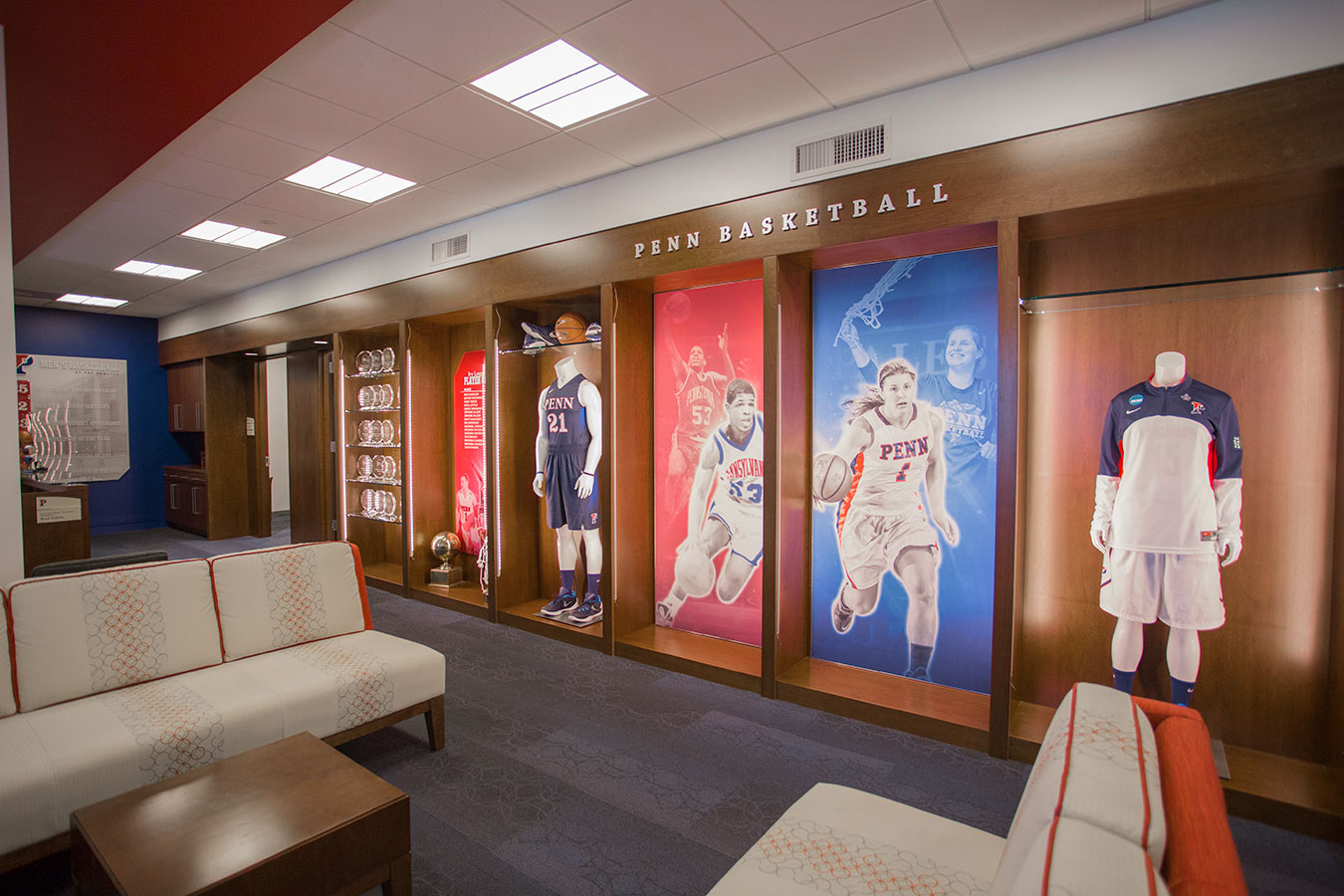
Recognition doesn’t always honor a donor. Sometimes it honors the person donors remember. At Penn Football, a concourse walk highlights program legends, and a dedicated tribute honors Dan Staffieri, known as “Coach Lake,” whose spirit of togetherness still resonates with the program. Alumni who feel their legacy is connected to the program’s legacy stay connected to it.
29. A military service tribute
At the University of North Dakota’s Memorial Union, a tribute honors UND alumni who served in the military, shaped by StoryMining interviews with alumni, lead donors, administrators and students.
30. Connections, not just names
When the International Tennis Hall of Fame wanted living legends to feel like they’d arrived somewhere worthy of their careers, we skipped another bronze plaque. Instead, we designed an augmented reality sculpture of floating tennis balls that connects the dots between players whose careers intersected over time. The same idea works for donors: show how one gift connects to the people and moments it made possible.
Donor Recognition Frequently Asked Questions
What is donor recognition?
Donor recognition is how an organization honors the people who support it, through donor walls, named spaces, displays, events and digital experiences. The most effective donor recognition goes beyond listing names to tell the story of why donors gave and what their gifts made possible.
What is a digital donor wall?
A digital donor wall uses screens, touchscreens or interactive kiosks to honor donors instead of (or alongside) engraved plaques. Because it’s digital, it never runs out of room, it can be updated anytime, and visitors can search for donors and explore the stories behind their gifts.
What should interactive donor recognition include?
At minimum: a way to search for donors, the story behind each gift and content that matches your brand. The strongest interactive donor recognition also shows the impact of giving (the students, programs or facilities it supported) and gives visitors a way to participate, like Notre Dame’s feature that lets visitors sign their name.
How do you recognize donors at different giving levels?
Use a tier system that fits your institution’s identity, like the gems and metals at Colorado School of Mines, and design so every level is visible. UND’s shareholder ring wall uses rings of different colors and sizes, so major gifts stand out while every donor is part of the same display.
How do you keep donor recognition up to date?
Plan for updates from day one. Physical walls can use magnetized or interchangeable nameplates. Digital donor walls powered by a content system like the Advent Operating System™ let your own staff add donors and update stories from an iPad, with support from the Advent DX team.
Where should donor recognition go in a building?
Put it where people already stop and where the gift had its impact: entrances, lobbies, welcome centers and the spaces the gift built. Recognition tucked into a quiet hallway rarely gets seen.
When should donor recognition planning start?
As early as possible, ideally during fundraising. Showing donors sketches of how they’ll be honored before they commit strengthens the relationship and helps close gifts. Planning early also lets donor recognition be built into the architecture instead of added afterward.
Is donor recognition only for colleges and universities?
No. Athletic departments, youth sports facilities, nonprofits, hospitals, museums and pro sports organizations all use donor and supporter recognition. The same principles apply anywhere a community of supporters made something possible.

Make Your Donors Part of Your Story
Every idea on this list comes back to one question donors are quietly asking: do you see me? Not just my check, but me. Not just my pledge, but my story.
When your donor recognition answers yes, it stops being a wall of names and starts doing real work. It thanks the people who gave, it shows students and visitors what generosity makes possible, and it gives the next donor a reason to join them.
At Advent, every donor recognition project starts with StoryMining, our process for uncovering the stories that connect your donors to your mission. Whether you’re planning a digital donor wall, recognition for a new building or a campaign launch, we’d love to help you find those stories and bring them to life.

Written by John Roberson, CEO
For over 25 years, Advent has been creating emotionally resonant experiences for leading brands including AT&T, Fanatics, the Dallas Cowboys, and Stanford University. Our proprietary StoryMining methodology ensures that every project starts with the story, not the technology.