

Experience Design
Pro Sports
Technology
From the A’s to the Browns: What NFL and MLB Teams Are Learning From Each Other’s Sales Centers
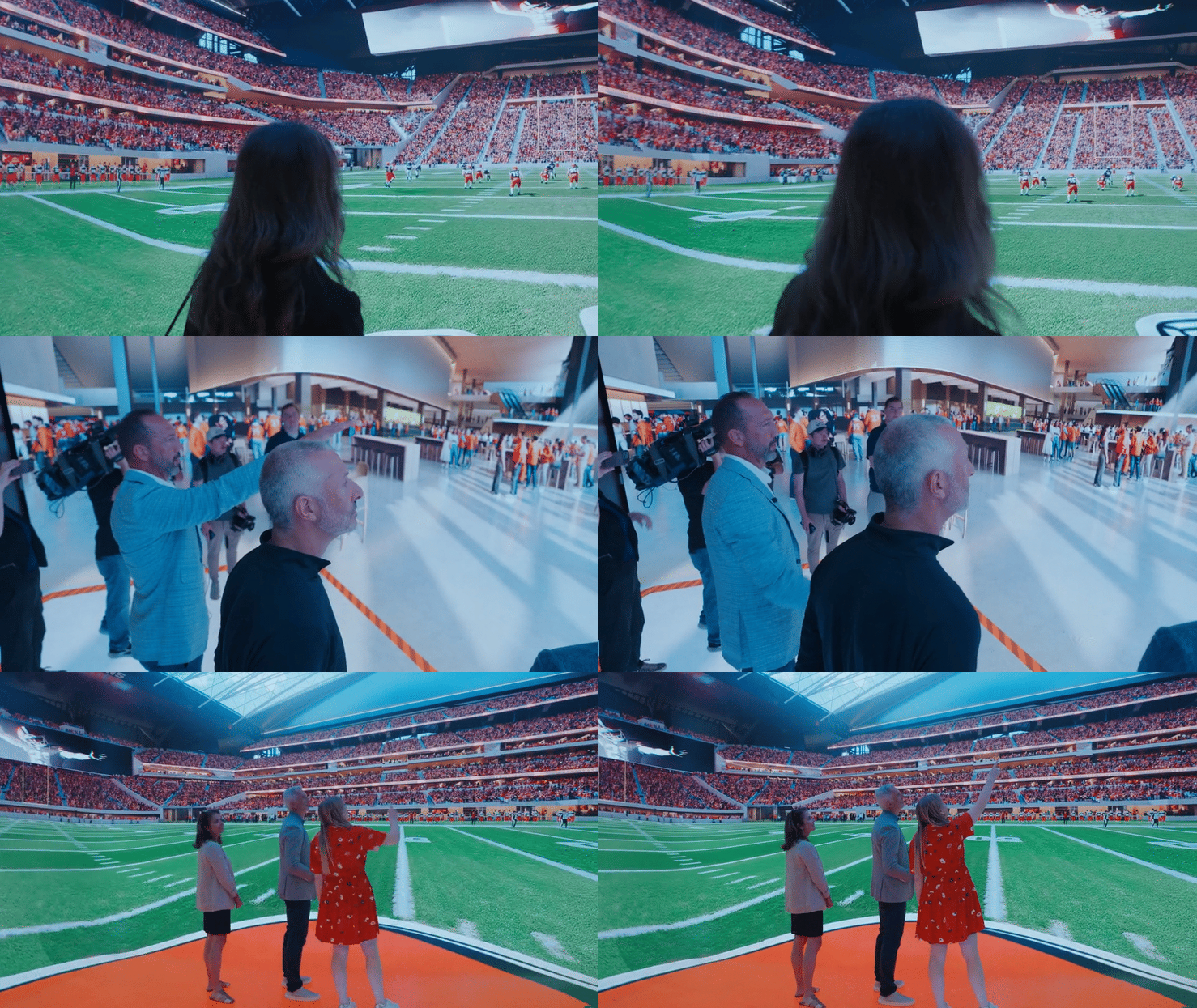
When professional sports executives evaluate how to build momentum for a multi-billion-dollar venue project, the stakes couldn’t be higher. Selling premium seating, corporate suites, and long-term fan commitments for a ballpark or a stadium that does not exist yet is one of the most nerve-wracking exercises in modern sports business.
That challenge is what led JW Johnson, Executive Vice President and Partner for the Cleveland Browns and Haslam Sports Group, to pick up the phone and call his peer, Ross Bowen, Vice President of Ballpark Development for the Athletics.
The Browns were staring down the same challenge that the A’s had already faced in Las Vegas: how do you sell premium seating, suites, and long-term commitments for the new Huntington Bank Field, a $2.6 billion stadium project that’s still a construction site in Brook Park, with an opening date years away?
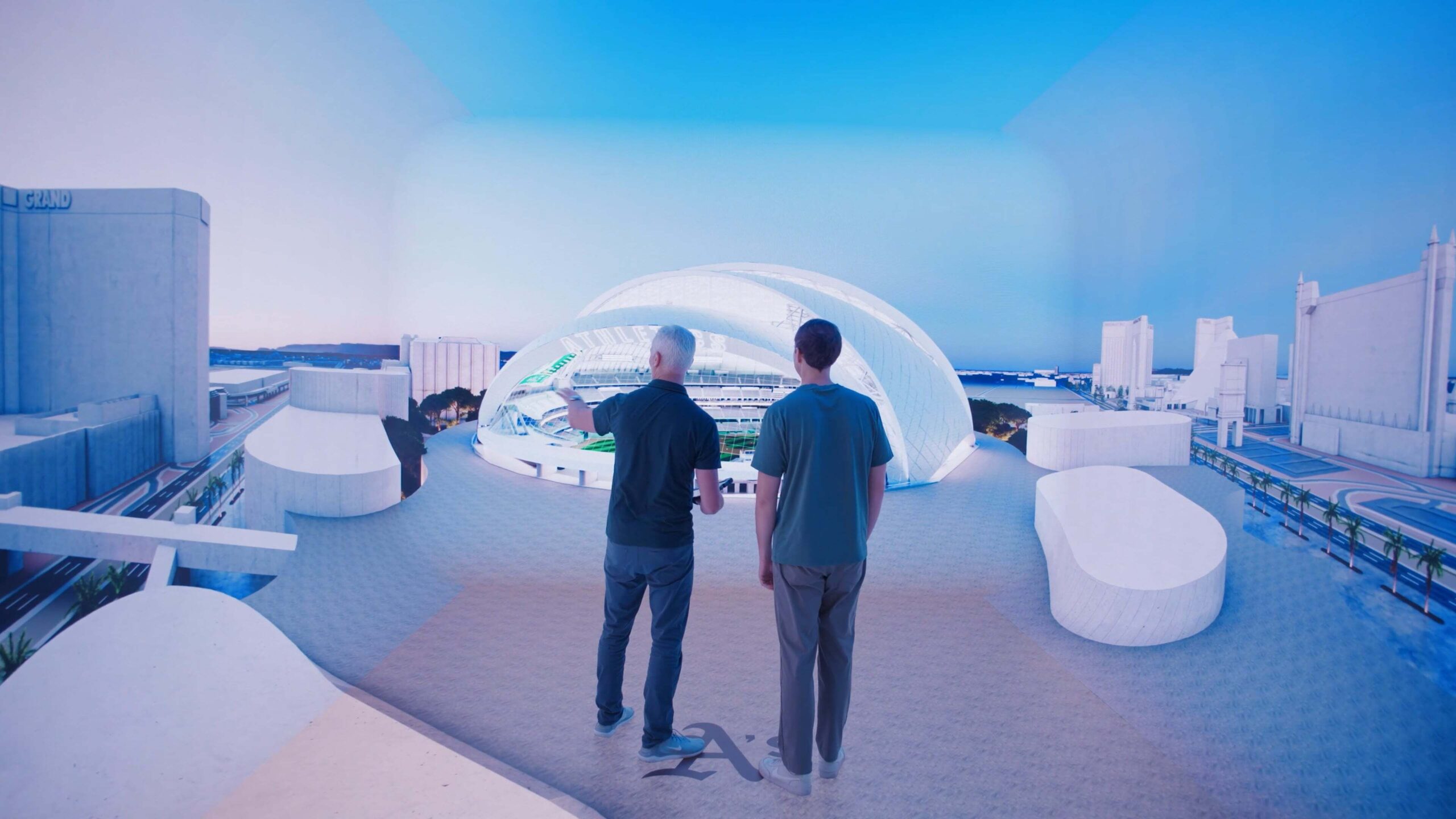
Johnson didn’t need a hypothetical case study. He needed to know how a franchise with no local track record had already convinced buyers to commit real money to a building nobody could walk into yet, and Bowen’s team in Vegas had done just that, utilizing an Advent-designed sales center with The Immersive Cube® as its revolutionary centerpiece.
The Browns weren’t chasing a compliment. They were chasing results, which the A’s sales center had in spades.
Weeks earlier, word had spread that the A’s Athletic Club, the 294 premium seats behind home plate, had crossed 90 percent sold, driving more than $50 million in Season 1 revenue from that tier alone. The newly launched Dugout Club presale was seeing similar success, passing 25 percent sold in its first two weeks on the market.
Johnson made the call.
“Hearing him, and then having some of our team go see [the A’s Ballpark Experience Center], it was kind of one of those things,” Johnson told Advent at Cleveland’s Experience Center ribbon cutting last month. “It [was a] no-brainer; we have to do this.”
Why MLB and NFL Execs Are Borrowing Each Other’s Playbooks
Sports leagues have historically operated in silos: football teams study football teams, baseball clubs study baseball clubs. That’s been changing for decades, deliberately. Sports Business Journal’s National Sports Forum was built in 1996 specifically to break down walls between leagues like the NFL, NBA, and NHL, and has grown into an event that now draws more than 1,000 team, league, and agency professionals to compare notes across league lines every year.
That cross-pollination matters more now because the dollars at stake have grown so large. The Browns’ new Brook Park stadium is now projected at $2.6 billion, up from an original estimate of $2.4 billion. The A’s Las Vegas ballpark now sits at roughly $2.1 billion. When a franchise is asking suite buyers, PSL and season-ticket holders to commit years before a single seat exists, the competition isn’t the team down the highway anymore. It’s every high-end experience that a buyer has ever paid for, in any sport, anywhere.
This is why cross-league pollination has become the secret weapon for forward-thinking executives. MLB front offices are studying how NFL franchises create game-day energy, and NFL leaders are adopting MLB’s strategies for driving high-frequency, year-round sales engagement. By tearing down traditional league walls, sports executives are recognizing the mechanics of moving a human heart don’t change based on the sport played on the field.
Whether you are placing dirt on an infield diamond or painting end zones on turf, the goal is identical: creating a shared, unforgettable experience that makes writing a multi-million-dollar check feel like a “no brainer.”
What the Best Pro Sports Sales Centers Have in Common
The A’s and the Browns may play very different games, but the challenge facing their sales teams is remarkably similar: How do you get someone to emotionally commit to something they cannot see, touch, or experience yet?
The answer is not building a better showroom. It is creating a sales environment that behaves more like the experience you are selling. Here’s what we’ve learned building effective sales and experience environments across professional sports:
First, put the prospect in control.
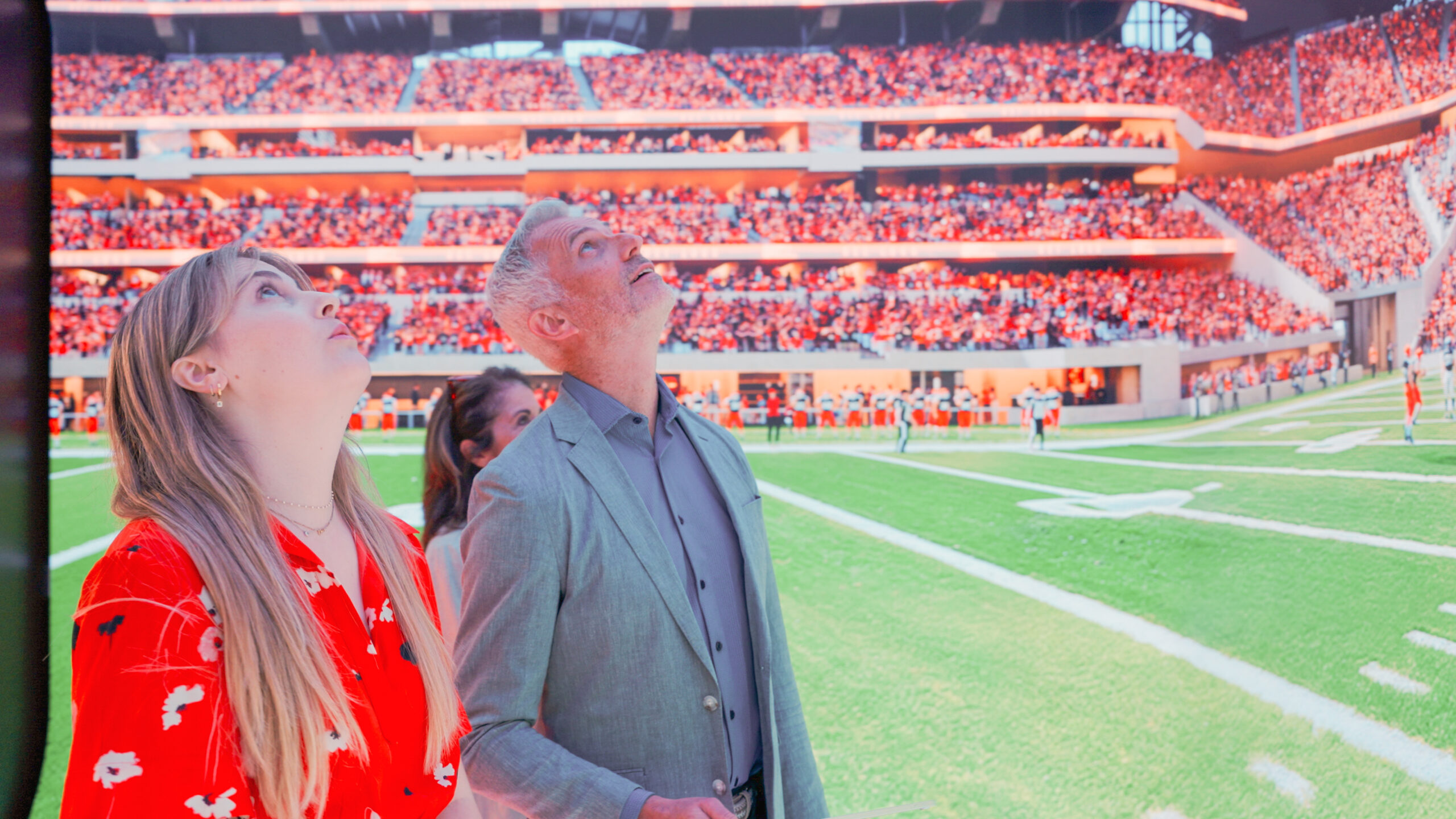
Instead of walking every buyer through the exact same presentation, sales executives can respond to what matters to that individual prospect. Maybe they want to see their suite. Maybe they want to understand the view from a particular section. Maybe they want to see how the stadium connects to the surrounding district. The best sales technology lets the salesperson follow the conversation rather than force the conversation to follow the technology.
Second, make the future feel real.
A rendering can show you what a stadium might look like. An immersive environment can give you a sense of what it will feel like. That distinction matters when you are asking someone to make a significant financial commitment years before the doors open, and it’s exactly what The Cube® was built for.
Third, design your sales center as a business tool, not a showroom.
The experience has to work for the salesperson as much as it works for the prospect. It should help tell the story, answer questions, create confidence, and ultimately make the sales conversation easier. When the technology is connected to the team’s data, stories, history, and future plans, it becomes part of the sales strategy rather than something that looks impressive.
That is where the biggest lesson from the A’s to the Browns comes in. The innovation is not really about the sport. It is about recognizing a better way to sell the future, and being ready to borrow that idea from whoever is doing it best.
The Advent Takeaway
The bottom line for sports executives preparing to construct, renovate, or finance a venue is that static brochures no longer suffice. A franchise brand does not live on a blueprint; it lives as a collection of perceptions in the mind of their audience. The closer a team brings a prospect’s actual encounter to their highest expectations, the greater the return on investment.
With the widest Immersive Cube® now live at the new Browns Experience Center in Berea, Johnson offered direct advice for other pro sports executives staring down similar challenges:
“For anybody that’s out there that’s in the process of building a new stadium, I highly recommend that one, you reach out to us,” Johnson said. “And two, I think the Advent team will help you sell along the way.”
Interested in learning more about Advent’s proven recipe for successful pro sports sales centers? Let’s chat.

Written by John Roberson, CEO
For over 25 years, Advent has been creating emotionally resonant experiences for leading brands including AT&T, Fanatics, the Dallas Cowboys, and Stanford University. Our proprietary StoryMining methodology ensures that every project starts with the story, not the technology.