

Corporate Offices
Experience Centers
Experience Design
Premium Experiences
What Does “Branded Visitor Experience Center” Mean for Corporate Headquarters?
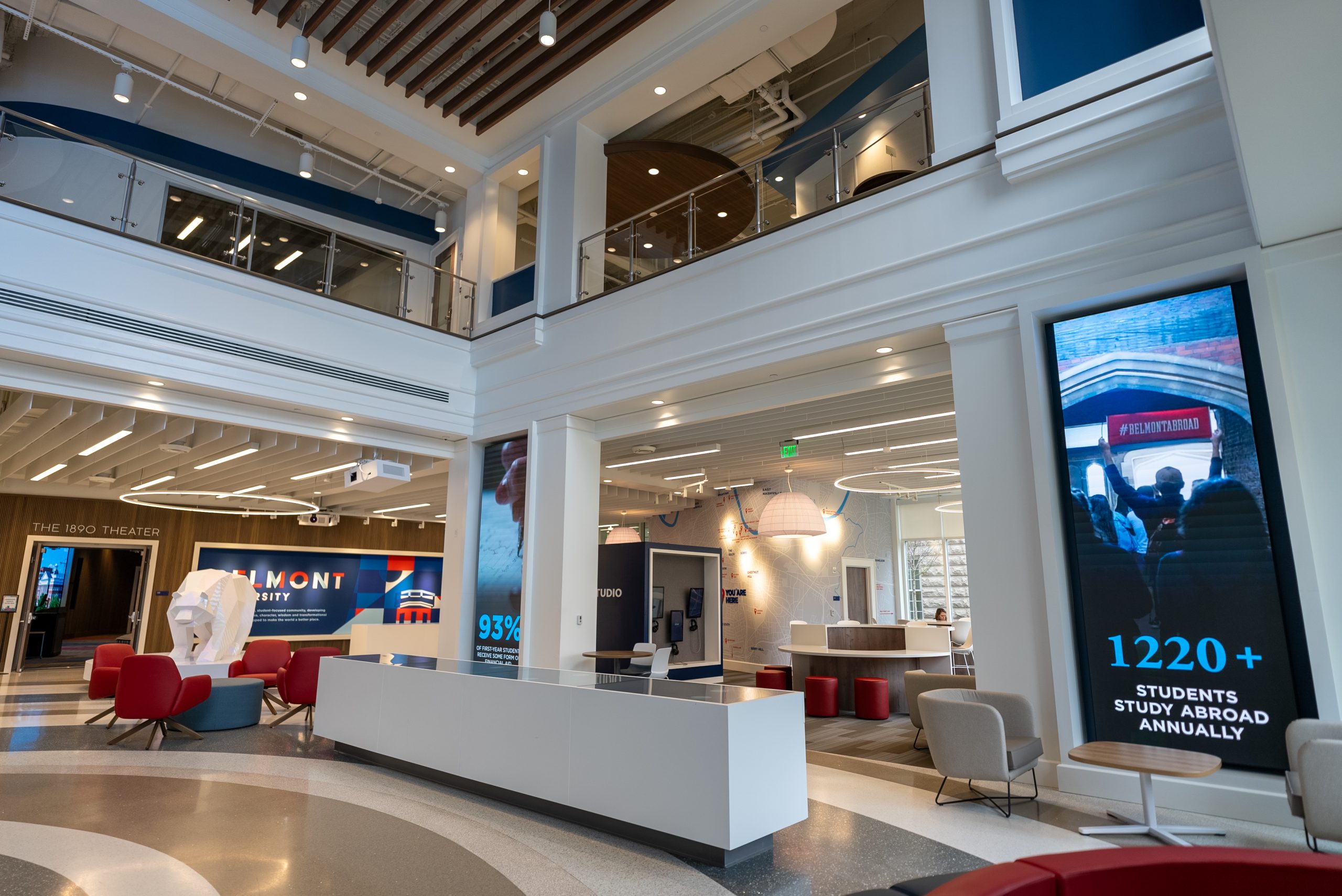
I’ve been in this business long enough to remember when corporate lobbies were just… lobbies. You’d walk in, check in with security, sit on a leather couch, and wait. Maybe there was some abstract art on the walls. Maybe a flatscreen showing stock tickers. That was pretty much it.
Now? Everything’s changed. And frankly, it needed to.
How Smarter B2B Buyers Changed the Role of Your Headquarters Lobby
Here’s what happened: B2B buyers got smarter. Way smarter. They started doing their homework before ever setting foot in your building. By the time a prospect walks through your doors for that critical meeting, they’ve already researched your competitors, read your case studies, and formed opinions about your brand.
That lobby visit isn’t just a formality anymore. It’s often the moment that tips the scales.
A branded visitor experience center is your company’s chance to control that moment. It’s a purposefully designed environment that tells your story, demonstrates your capabilities, and creates an emotional connection with everyone who walks through your doors, whether they’re prospective clients, potential employees, partners, or investors.
Think of it as your physical brand manifesto. Not a museum. Not a showroom. Something more intentional.
How Sports and Universities Use Visitor Experience Centers… And Why Corporations Lag Behind
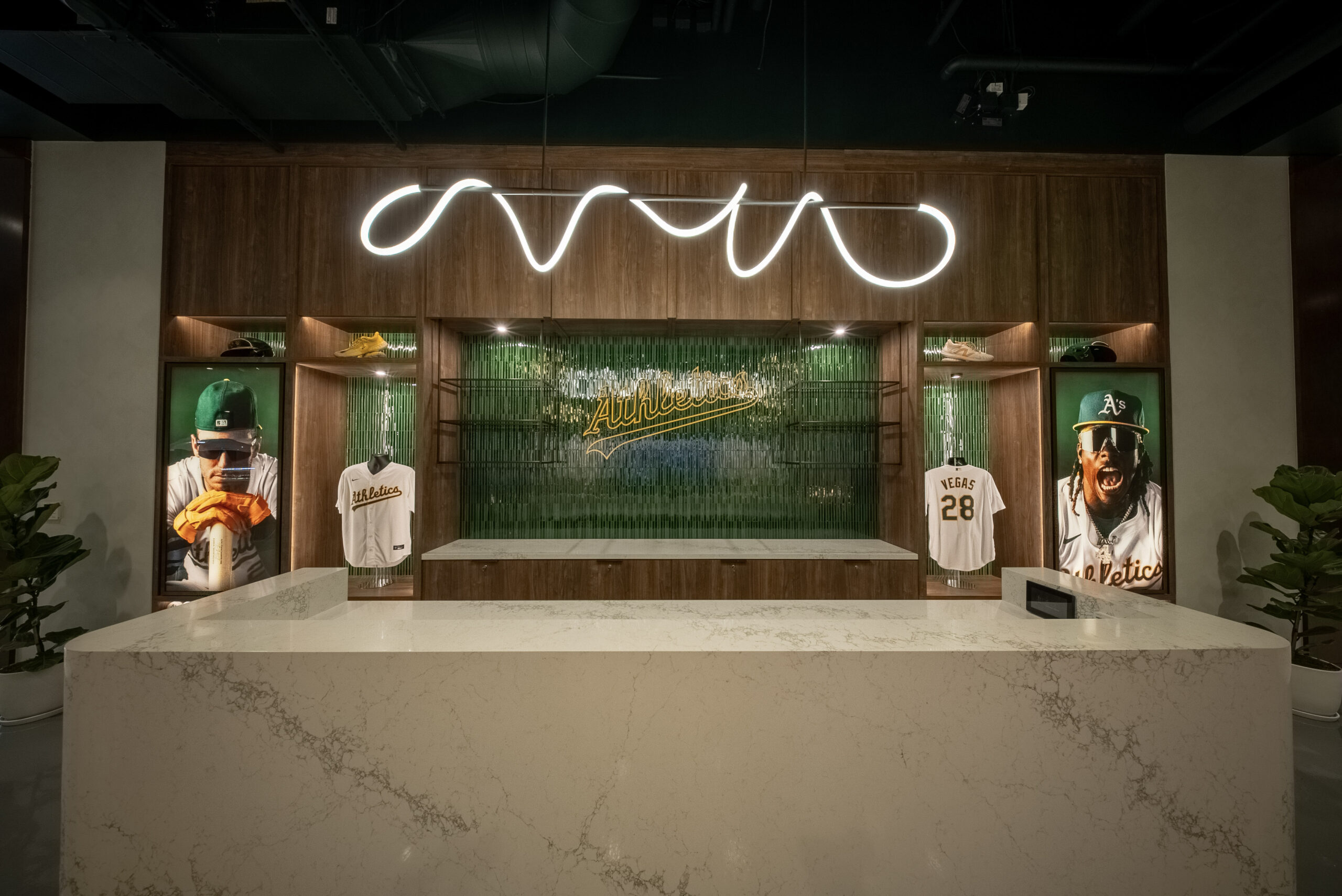
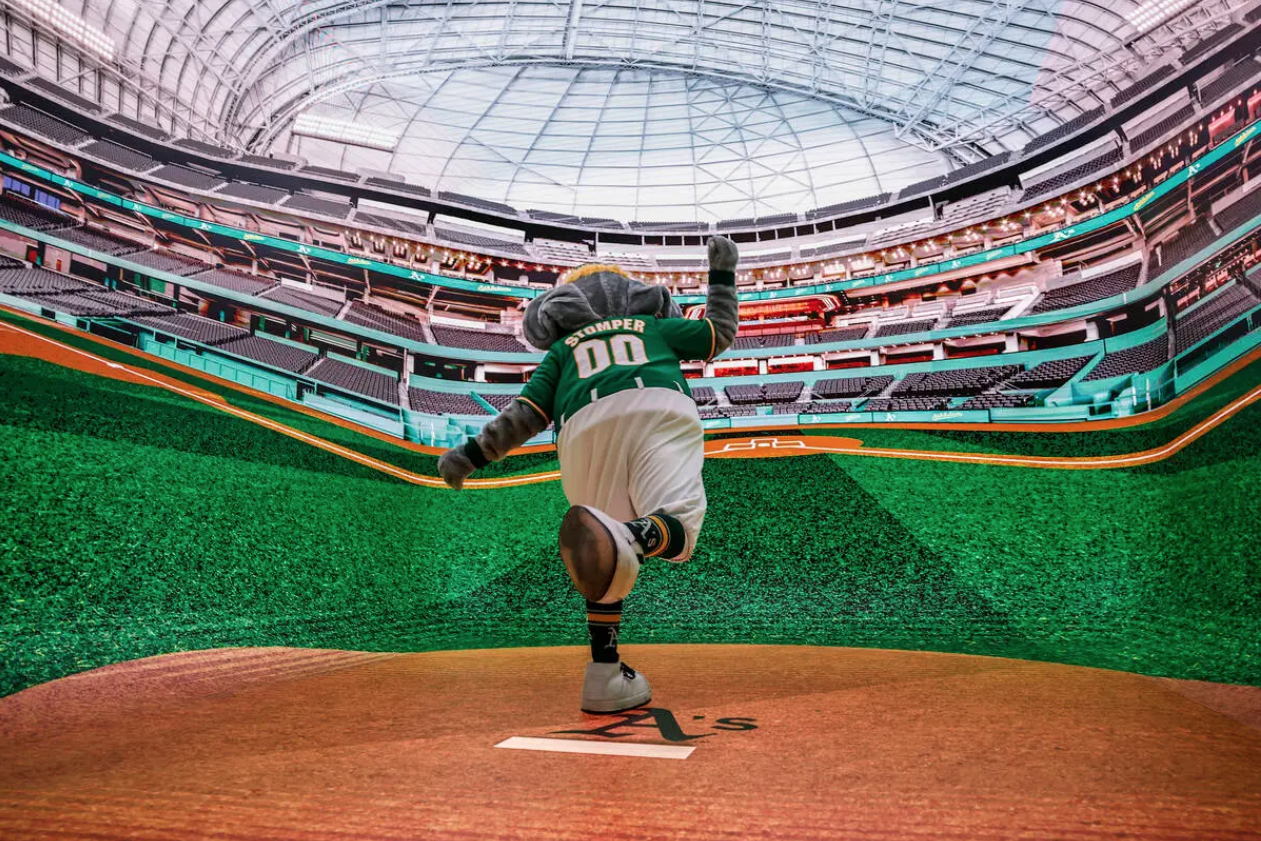
Experience centers sell recruitment to investors and fans alike. Professional sports teams need to show top players, executives, and sponsors what’s set to come, so they show it, not just talk about it. The Athletics’ New Ballpark Experience Center has been noted as their “best recruiting tool” (Sports Business Journal).
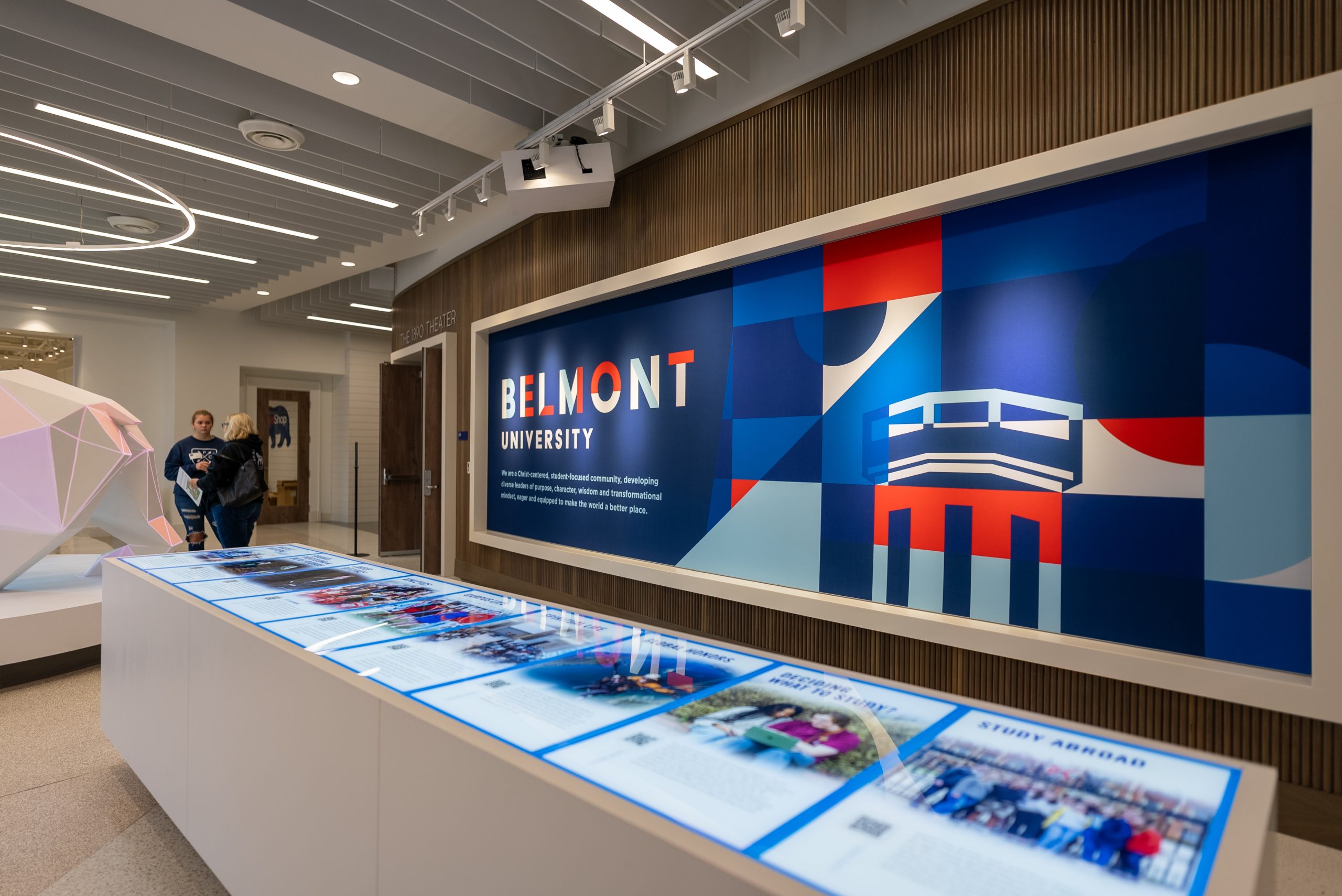
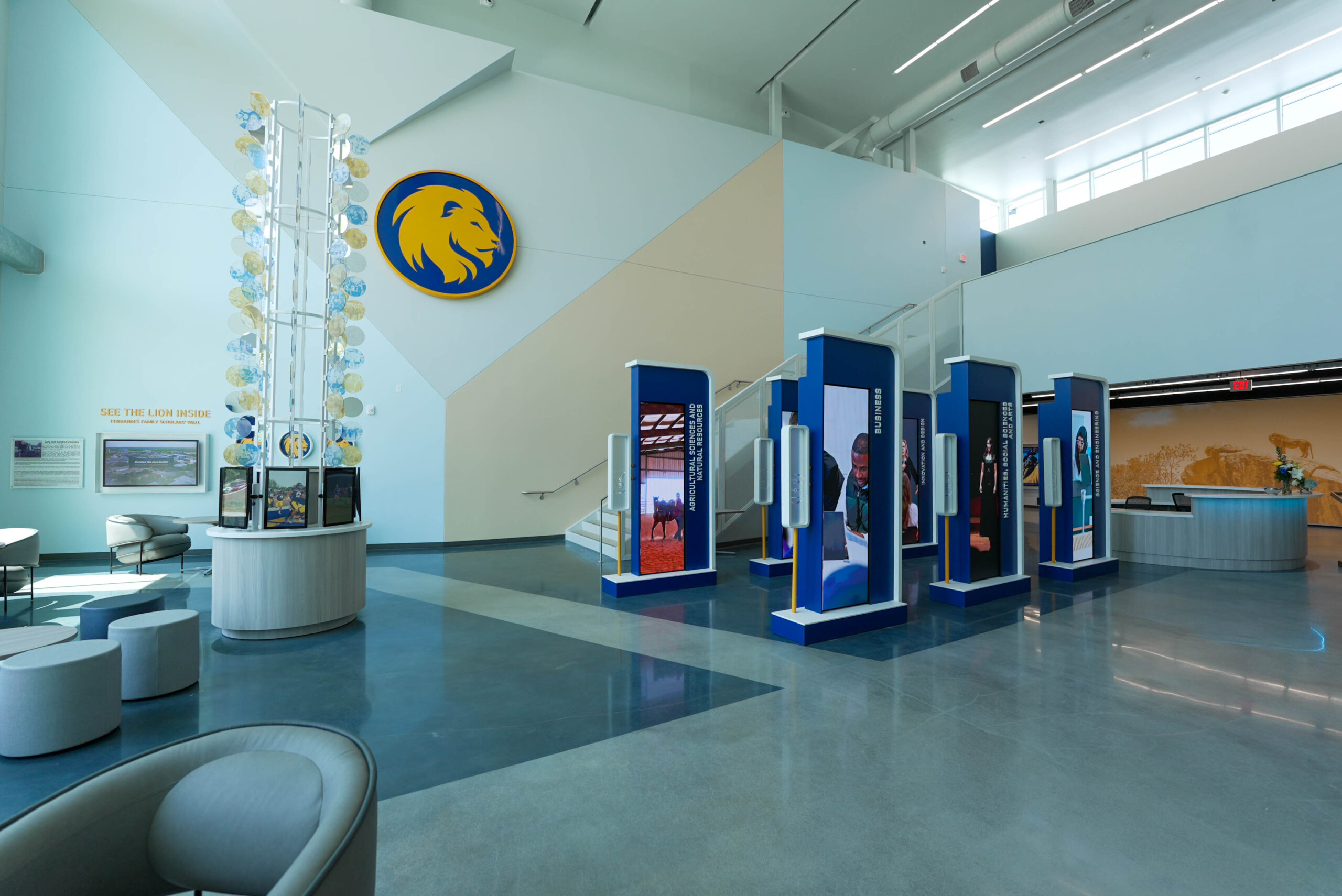
For universities, welcome centers and admissions centers become branded experience centers that immerse prospective students in the school’s brand, programs, and campus life. How do you confine the excitement of a 17-year-old’s entire future in a PowerPoint? You can’t, and you shouldn’t.
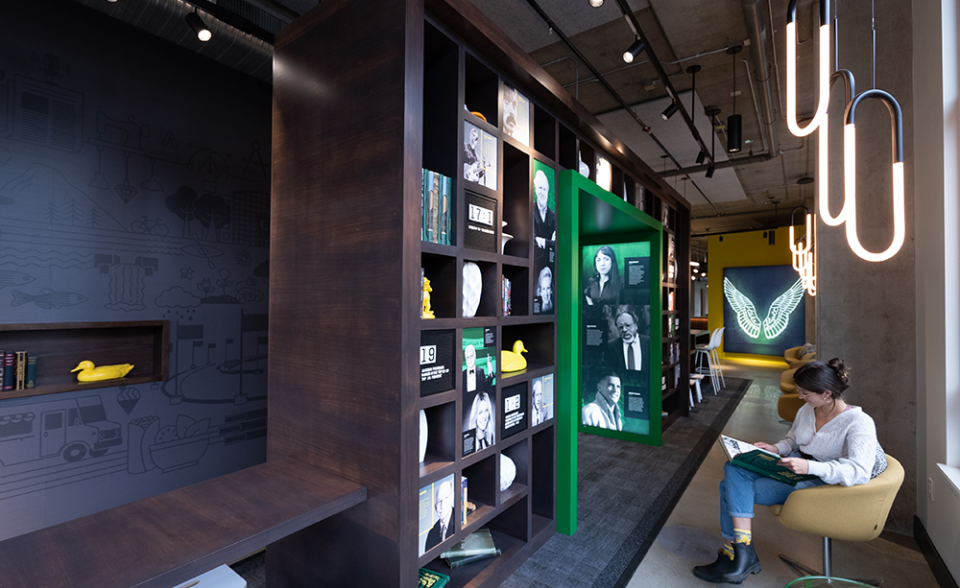
The SEGD Curiosity Award-winning University of Oregon Student Welcome Center saw the opportunity to spark excitement about what could be for every student with every interest. The goal wasn’t to throw up the Oregon “O” and call it a day. It was to inspire, connect, and make students feel like they’ve reached a place that will help them excel.
Here’s what baffles me: what corporate employee or investor doesn’t want to feel inspiration, innovation, and connection when walking into a global headquarters? Just like those 17-year-old high school students and baseball prospects throwing 103 MPH fastballs, your investors and top talent need more than a PowerPoint deck and a logo in the lobby to immerse themselves in your company’s mission.
Yet somehow, corporations are still treating their spaces like waiting rooms. Baseball teams figured this out. Universities cracked the code years ago. Meanwhile, Fortune 500 companies are spending millions on recruiting campaigns while their headquarters tell visitors absolutely nothing about who they are or where they’re going.
Most businesses simply don’t understand how to move visitors through a space in a way that becomes an experience. One that includes a flow of intentional touchpoints people naturally encounter along their journey. Better yet, interactive moments that engage their curiosity about your company’s goals, values, and vision.
The formula isn’t complicated. Understand the next person who may enter your building. Know the story you want to share. Work with the space you’re given. That’s how successful experience centers come together, regardless of industry. Sports franchises and admissions offices figured it out. It’s time corporations catch up.
Why a Simple Lobby Redesign Isn’t Enough… and What Your Headquarters Really Needs
I talk to a lot of executives who think they need a lobby refresh. New furniture, updated lighting, maybe some digital displays. And sure, those things matter. But that’s not what we’re really talking about here.
A branded visitor experience center isn’t about making your space look better (though it usually does). It’s about answering the questions your visitors are asking themselves the moment they arrive:
“Should I trust this company with our business?”
“Do they really understand our industry?”
“Are they as innovative as they claim to be?”
“What makes them different from everyone else we’re considering?”
Your physical space should answer these questions before your sales team even enters the room, no matter the industry the story across the space should showcase the intention behind it.
What Actually Goes Into a Headquarters Visitor Experience Center: Core Elements and Features
Every project we work on is different because every company’s story is different. But there are some common elements that show up again and again in the most effective visitor experience centers.
Strategic storytelling zones. These aren’t random displays. They’re carefully sequenced narratives that walk visitors through your company’s journey, values, and impact. We recently completed a project where visitors move through three distinct zones: legacy (where the company came from), innovation (what they’re doing now), and vision (where they’re headed). Each zone uses different media and interaction styles to keep the experience dynamic.
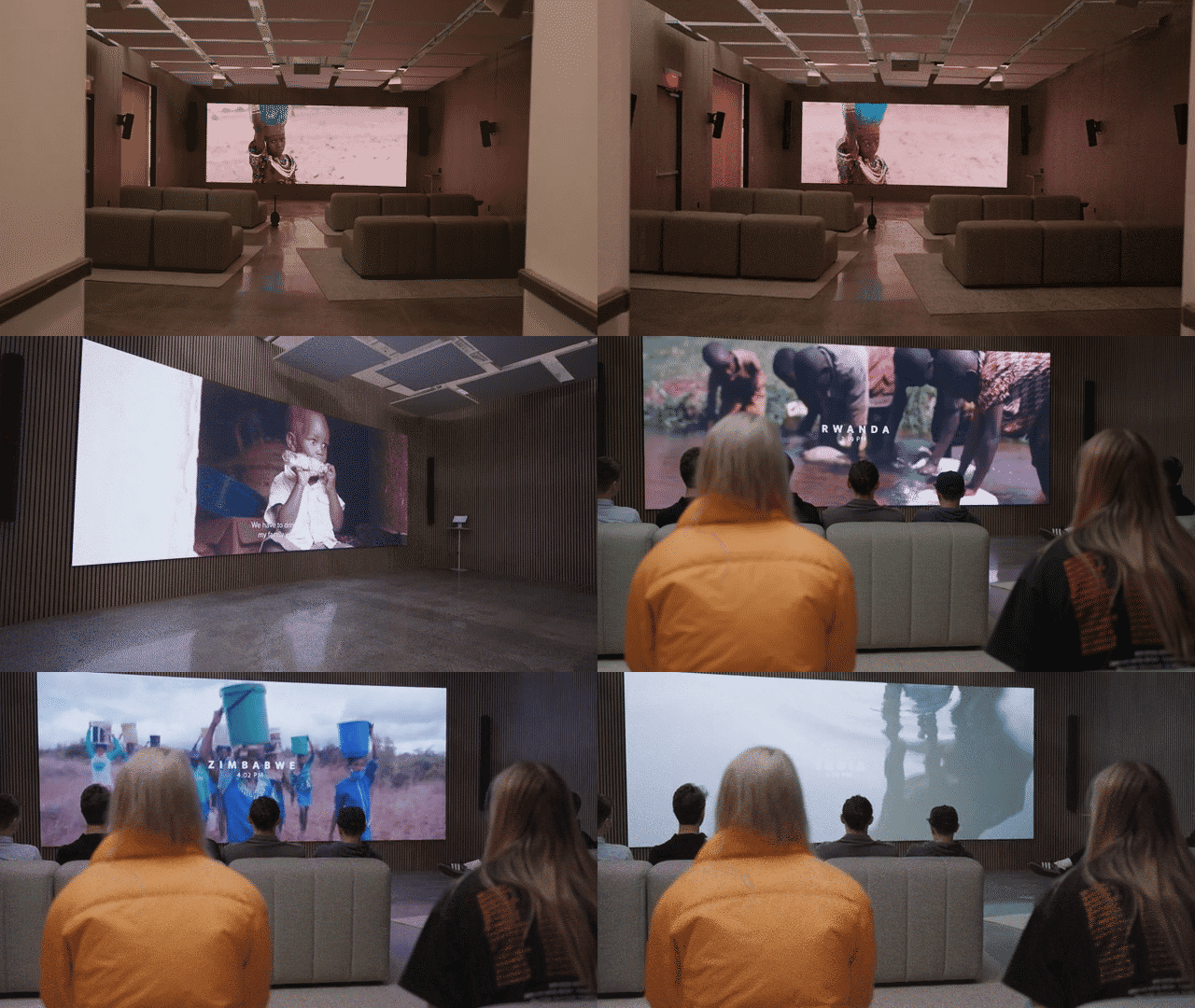
Interactive capability demonstrations. This is where you show, not tell. If you’re a technology company, let visitors interact with your platform. If you’re in manufacturing, display actual products or components. The goal is tangible proof of what you do, presented in ways that are accessible to non-technical visitors.
Client success showcases. Your best salespeople are your satisfied customers. Smart companies dedicate significant space to highlighting client relationships, showcasing results, and demonstrating industry expertise. We’re not talking about a wall of logos (please, no more logo walls). We’re talking about rich, contextual stories that prove you deliver results.
Flexible presentation environments. Your space needs to work for both planned presentations and spontaneous conversations. We design areas that can shift from formal pitch settings to collaborative workshops to casual conversations, all while maintaining the branded experience.
Subtle technology integration. Notice I said subtle. Technology should serve your story, not dominate it. The most effective spaces use technology to enhance human connection, not replace it. Digital displays that adapt to different visitors, interactive touchpoints that let people explore at their own pace, and seamless transitions between physical and digital content.
The ROI of Corporate Headquarters Visitor Experience Centers: How These Spaces Impact Sales and Trust
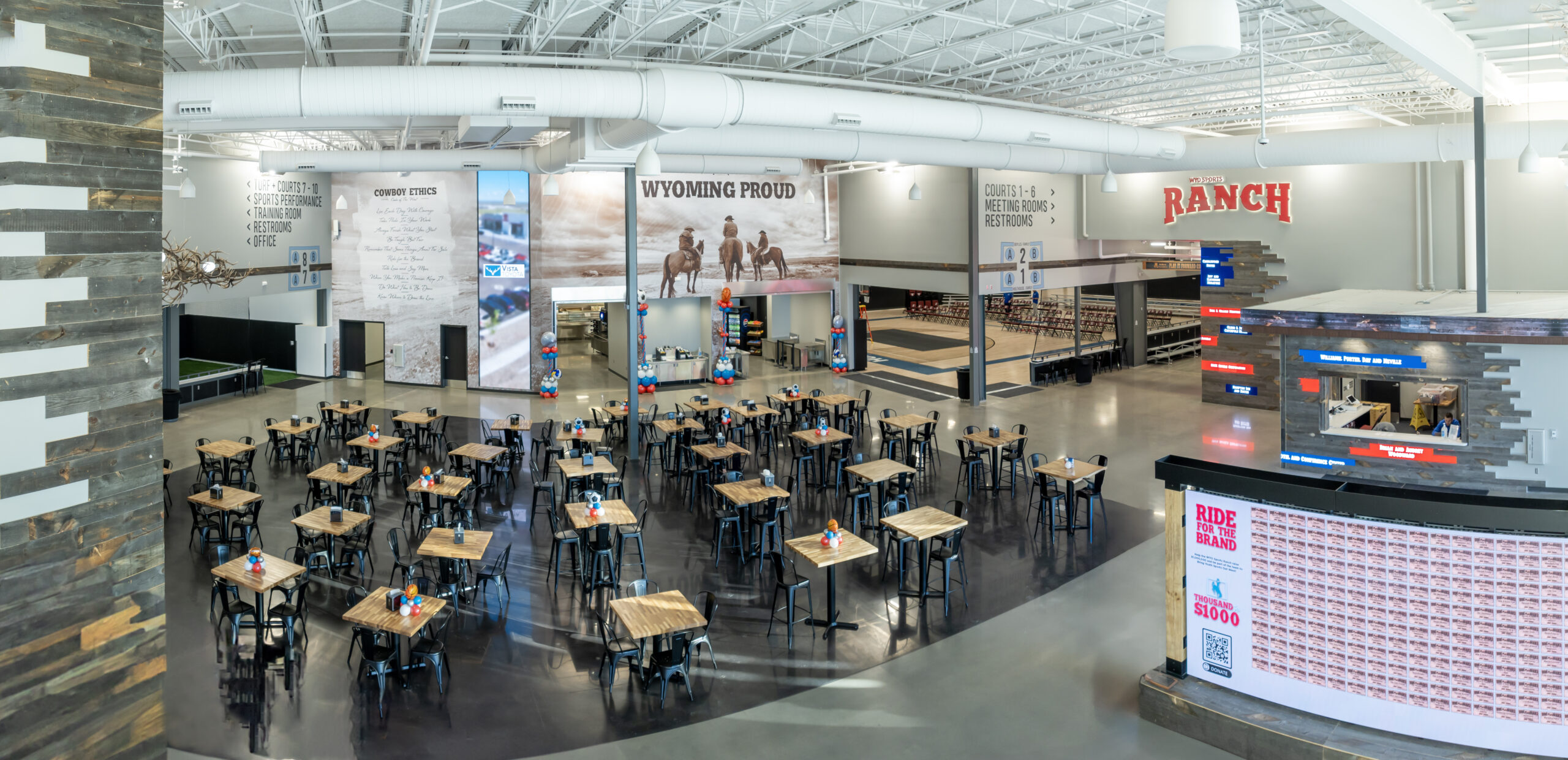
I get it. This sounds expensive. And yes, creating a world-class visitor experience center at your corporate headquarters is an investment. But let me flip the question: what’s the cost of losing deals because your physical space doesn’t match the quality of your work?
Let’s build out a scenario here. You’re a professional services firm that has consistently made it to the final round of major RFPs but losing deals to competitors. Your leadership team is left frustrated because they knew they had superior capabilities. After you transform your visitor experience center, you start winning those final pitches. The space gives prospects confidence that your company can execute at the level you promised.
The space won’t close the deals on its own. It will, however, remove doubt. It reinforces the messages your sales team are delivering. It creates memorable moments that prospects talk about after they leave.
That’s the real ROI: reducing friction in your sales process and creating differentiation in crowded markets.
Common Strategic and Design Mistakes to Avoid in Visitor Experience Centers
After working on hundreds of these projects, I’ve seen patterns in what works and what doesn’t. Here are the mistakes that consistently undermine even well-intentioned projects:
Starting with aesthetics instead of strategy. Your architect or interior designer can make a space look beautiful, but looking beautiful isn’t the goal. Telling your story effectively is the goal. Beauty should serve strategy, not the other way around.
Treating it like a one-time project. Your company evolves. Your client base shifts. New products launch. Successful visitor experience centers are designed to be updated and refreshed without requiring complete overhauls. We build in flexibility from day one.
Forgetting about the people who work there every day. If your employees roll their eyes when visitors are touring the space, you’ve got a problem. The most authentic visitor experiences happen when your team genuinely believes in what the space represents. Involve them in the process. Get their input. Make sure the story you’re telling is one they can get behind.
Measuring the wrong things. Foot traffic metrics and dwell times are interesting, but they’re not the point. The real measures are deal closure rates, employee recruitment success, and partner engagement levels. Those are harder to track, but they actually matter.
Which Organizations Truly Need a Visitor Experience Center (and Which Don’t)
Not every company needs a branded visitor experience center.
If you rarely have visitors to your office, if your business model doesn’t involve consultative sales, if your differentiation is purely price-based, then you’re probably fine with a nice lobby.
But if you’re in the running for major contracts, if you’re recruiting top talent in competitive fields, if you’re trying to command premium pricing in commoditized markets, or if you’re establishing credibility in new sectors, then your physical space is either helping you or hurting you. There’s not much middle ground anymore.
The companies seeing the most value from these investments share some characteristics: they’re in complex B2B sales environments, they’re competing against established players, they’re introducing innovative approaches that require education, or they’re expanding into new markets where credibility is still being built.
What the Visitor Experience Center Design Process Looks Like: From Research to Installation
When organizations reach out to us about creating a visitor experience center, they usually think they know what they want. And sometimes they’re right. But more often, what they think they need isn’t what they actually need.
That’s why we start every project with research. Deep research. We call it StoryMining, and it’s about uncovering the authentic narrative that should drive your space. We interview your leadership team, talk to your sales people, survey your clients, and analyze your competitive positioning. We’re looking for a story that’s true, differentiated, and compelling.
Only after we understand your story do we start thinking about space planning, technology integration, and design concepts. Because those decisions should flow from strategy, not the other way around.
Then we move into design development, where concepts become detailed plans. We prototype interactive elements, test user flows, and refine the experience based on feedback from your team.
Finally, we handle fabrication and installation. And here’s something important: we don’t hand you the keys and walk away. We train your team on how to use the space effectively, how to guide different types of visitors through different experiences, and how to maintain and update content over time.
Extending Your Visitor Experience Center into Virtual and Hybrid Experiences
COVID changed some things permanently. Even as in-person visits have returned, many companies still need hybrid solutions. Your best prospects might be on the other side of the country. Your board members might be spread across time zones. International partners might not be able to visit your headquarters regularly.
Smart companies are thinking about how their physical visitor experience center extends into virtual environments. Not as a separate thing, but as an integrated experience. We’re creating spaces that work beautifully in person but also translate effectively through video tours, virtual reality experiences, and hybrid presentation formats.
This isn’t about choosing between physical and virtual. It’s about creating a cohesive brand experience that works across all the ways people might interact with your company.
How to Decide Whether to Build a Visitor Experience Center and What to Do Next
If you’re reading this and thinking your organization might benefit from a branded visitor experience center, here’s my advice: start by asking yourself what story you need to tell. Not what your competitors are doing. Not what design trends you’ve seen. What authentic narrative about your company needs to be communicated more effectively to the people who matter most to your success?
If you can articulate that story clearly, the rest becomes a lot easier. If you can’t, that’s actually the first problem to solve.
We’ve worked with companies across every industry you can imagine. Technology firms in Silicon Valley, insurance companies in the Midwest, sports organizations, universities, healthcare systems. The specifics change, but the underlying principles stay the same: authentic stories, strategically told, in environments designed to move people toward action.
Your physical space is telling a story whether you’re intentional about it or not. The only question is whether it’s telling the story you want told.

Will Roberson
Director of Client Engagement | “Client Champion”