

Pro Sports
Technology
Roger Goodell Just Made Advent’s Case For Us: Sports is Becoming an Experience-First Business
I’ve spent almost thirty years telling executives that experience isn’t the cherry on top – it’s the sundae itself. But sometimes the best validation doesn’t come from the people who designed the space. It comes from someone with a 30,000-foot view of the entire industry.
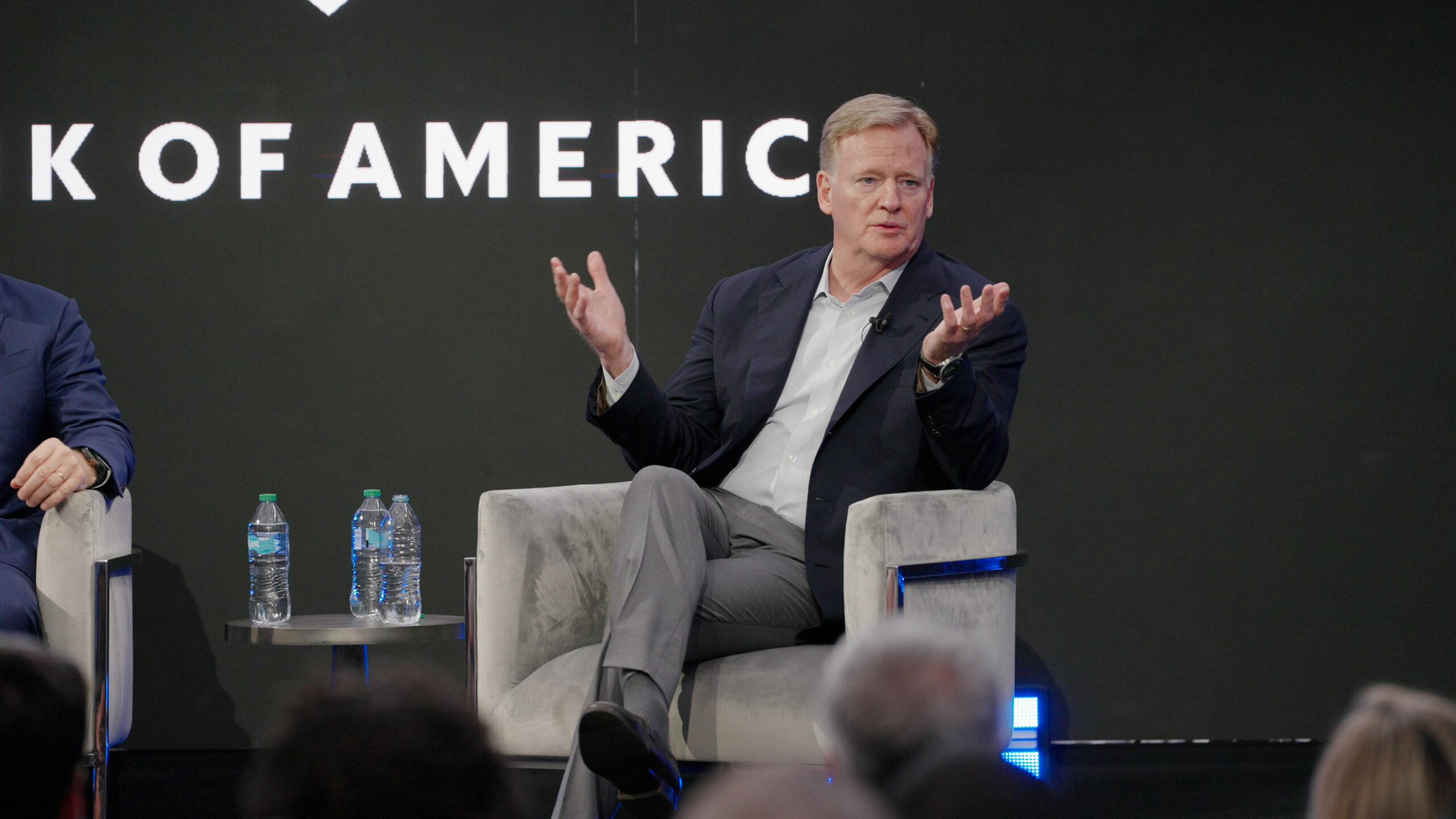
That happened when NFL Commissioner Roger Goodell took the stage last week for the unveiling of Tepper Sports & Entertainment’s unveiling of the brand new Bank of America Stadium Experience Center.
“I don’t think we’re building stadiums anymore,” Goodell said. “I think we are building experiences and bringing people together, and this is a great example of it.”
A ticket to a game is no longer a commodity. Fans don’t want to just consume an event; they want a reason to belong. The organizations that realize they aren’t just building steel and concrete, but are building stages for human connection, are the ones that will win the experience economy.
“That’s what excites me so much about what’s happened here,” Goodell said.
Goodell’s remarks captured a broader transformation that’s reshaping sports. Here are three points every organization should be thinking about as they plan the next generation of their fan experience.
1. Fan Expectations Are Rapidly Changing & Compounding
One of the biggest challenges facing sports organizations today is that fan expectations don’t reset with each new renovation, they compound. Fans aren’t experiencing your stadium in a vacuum. They’re comparing it to the best experience they’ve had anywhere, whether that’s another sports venue, a concert, a luxury hotel, or a world-class entertainment destination.
That isn’t just an industry theory. It’s confirmed by the people who actually stand in these buildings.
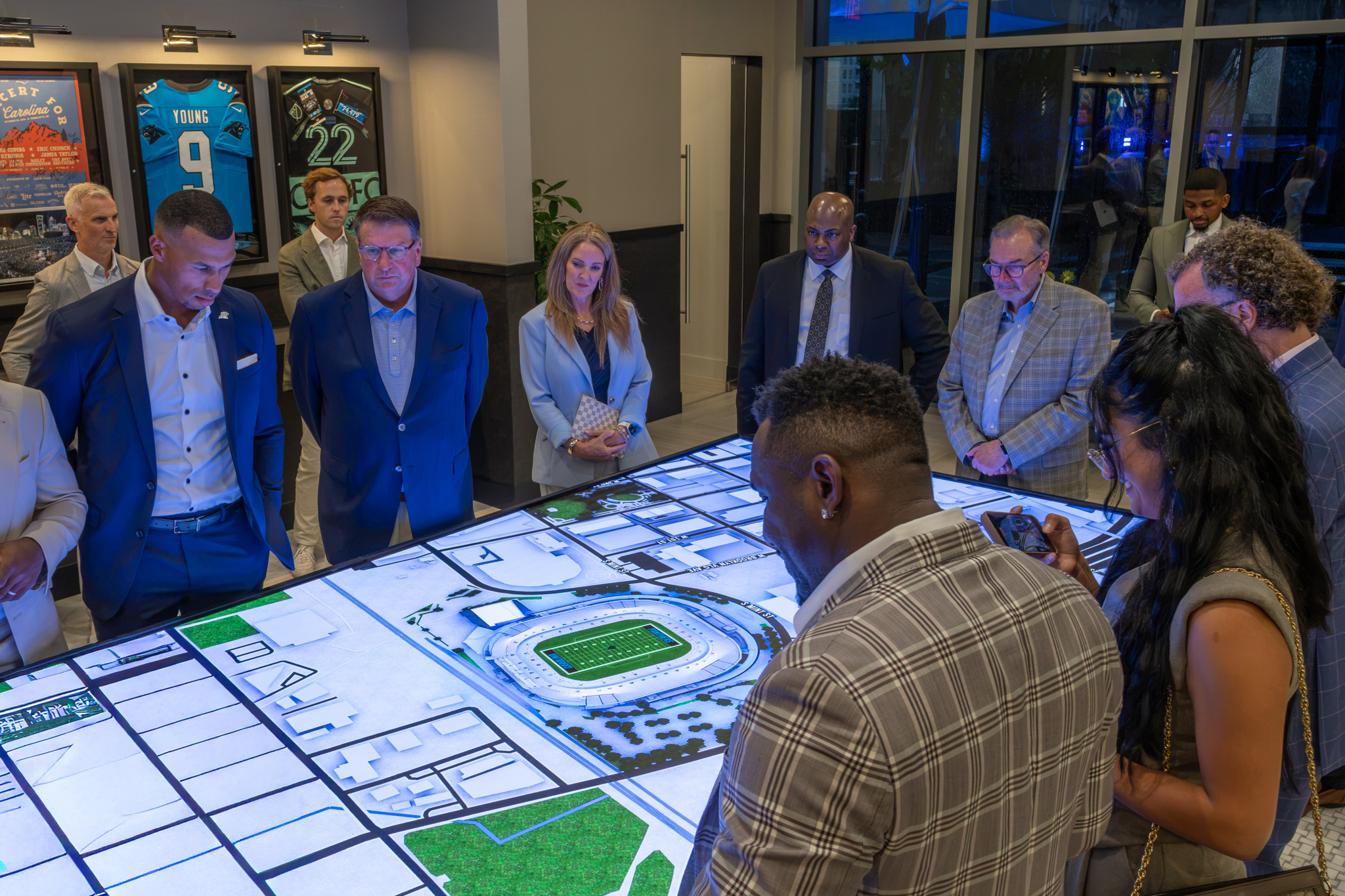
Charlotte FC midfielder Brandt Bronico is one of those people. Here’s what he told us at the MoMINTum unveiling:
“I think it’s more important for the fan experience,” he said. “What they can see, what they can bring, it’s incredible right now, but once these renovations are done, I feel like it will take it to the next level.”
Panthers legend Thomas Davis Sr. echoed that sentiment from a different perspective, emphasizing that the investment isn’t reserved for premium guests alone.
“They’re going to make sure that every single fan, along with every single suite owner, every single [Permanent Seat License] owner gets to experience a first-class experience.”
Bronico and Davis weren’t standing next to each other when they said this, and their agreement carries more weight because of it. It’s the kind of ground level confirmation we look for on every project, evidence that the fan expectations Goodell was describing at the league level are just as noticeable to the players on the field.
2. Your Stadium Is No Longer the Product
For decades, sports venues competed on physical features. More seats, better sightlines, larger scoreboards, premium amenities.
Today, those things are expected. They no longer define the experience.
The differentiator is how a place makes people feel. Every project of ours starts from the assumption that the space itself is only the beginning of what a fan or buyer is evaluating.
From there, the evaluation goes deeper.
3. Your Fans Aren’t Just Looking for Amenities, They’re Looking for a Feeling
Neuroscientist Antonio Damasio famously wrote, “We are not thinking machines that feel; rather, we are feeling machines that think.” His research fundamentally changed our understanding of decision-making, showing that people don’t make decisions despite emotion, they make them because of it.
Fans are not only expecting an unforgettable experience from your venue – the best amenities, the easiest ingress and egress, the nicest sightlines and comfiest seats. Those things matter, but they’re no longer enough. What they’re really looking for is something harder to measure: a feeling.
That feeling could be a sense of connection with their favorite team, their favorite player or even their city as a whole, and it’s another reason why the Bank of America Stadium Experience Center had to be more than a sales tool. It had to reflect the relationship between Charlotte’s teams and the people who cheer them both on.
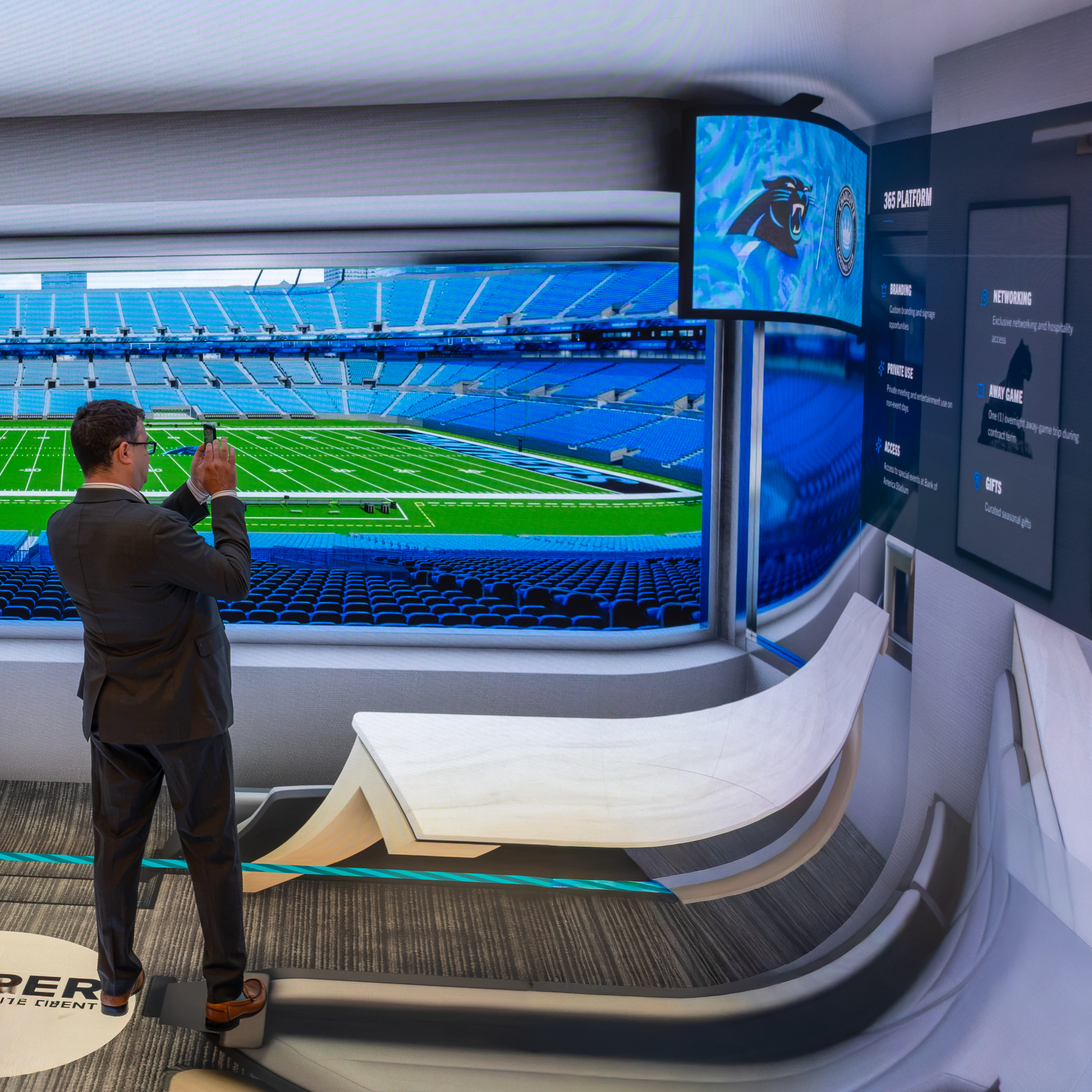
It’s why our custom holograms included not just Panthers and Charlotte FC players and front office staff, but the fans who fill the stadium as well.
It’s why we built Tepper’s Memory Vault to give each visitor an authentic, custom welcome into the space, powered by their own unique memories of their team.
Once again, Goodell said it better than we could have said it ourselves:
“It’s what I think sports does more than anything else.”
The Advent Takeaway
Nobody asked the NFL commissioner to comment on a specific piece of technology inside the MoMINTum sales center, and neither Bronico nor Davis mentioned pixel counts or platform names. They talked about what the space will feel like to the fans who interact with it.
That agreement, from the league commissioner down to the players, has been guiding all our projects for decades now. It confirms what we’ve known all along: that the industry has moved beyond viewing stadiums simply as containers for games and instead toward seeing them as platforms for connection, community and unforgettable experiences.
Want to talk about what the next generation of your venue or facility should feel like? Let’s talk.

For over 25 years, Advent has been creating emotionally resonant experiences for leading brands including AT&T, Fanatics, the Dallas Cowboys, and Stanford University. Our proprietary StoryMining methodology ensures that every project starts with the story, not the technology.