

Pro Sports
Technology
Selling an Unfinished Renovation Seems Impossible. Here’s How We Helped Tepper Sports Do It With Immersive Tech & Storytelling
Every major renovation creates the same paradox. The very building that’s supposed to inspire confidence is temporarily the least inspiring place to tell its story.
Think about it. You’re trying to close a five-figure suite deal while walking a prospect past active construction, half-finished concourses, and dusty floors. Even worse, maybe you’re simply sending your prospect a folder full of lifeless renderings and hoping they click through them all.
All of this, while constantly repeating the weakest, most tired pitch in the playbook:
“Just imagine what it’ll look like when it’s finished.”
Here is the problem: imagination is one of the biggest barriers to making a decision. When you ask a buyer to use their imagination, you’re asking them to take a leap of faith. And in high-stakes sports sales, a leap of faith is just another word for risk. It forces your prospect into an intellectual, analytical evaluation of raw space when what you actually need is an emotional commitment.
At Advent, we’ve designed Sales Experience Centers for some of the biggest franchises in the world including the Las Vegas A’s, the LA Rams, the Chargers, and Inter Miami CF. And the lesson holds across every one of them: you cannot sell a future renovation from inside the renovation.
The answer is never to wait until the ribbon-cutting ceremony, nor is it to rely solely on renderings. The answer is to build an alternate, purpose-built space that does the one job the active build site simply cannot do: collapse the gap between vision and reality and make the future feel real.
That’s exactly the challenge Tepper Sports & Entertainment brought us with their $1.3 billion Bank of America Stadium renovation project.
“We’re going through a renovation, and in order to showcase the experience, that can be a little bit challenging,” Eric Sudol, Chief Revenue Officer of Tepper Sports & Entertainment, told us at the sales center unveiling. “At the end of the day, we had to create that in an alternate space so people could see the reimagined stadium come to life.”
Tepper wisely didn’t want to show their clients floor plans or static renderings. They wanted them to step inside the finished spaces.
Tepper Sports & Entertainment’s challenge may have been unique to Charlotte, but the solution wasn’t. It reinforced principles we’ve seen play out across every Sales Experience Center we’ve designed. Here are three of the most important.
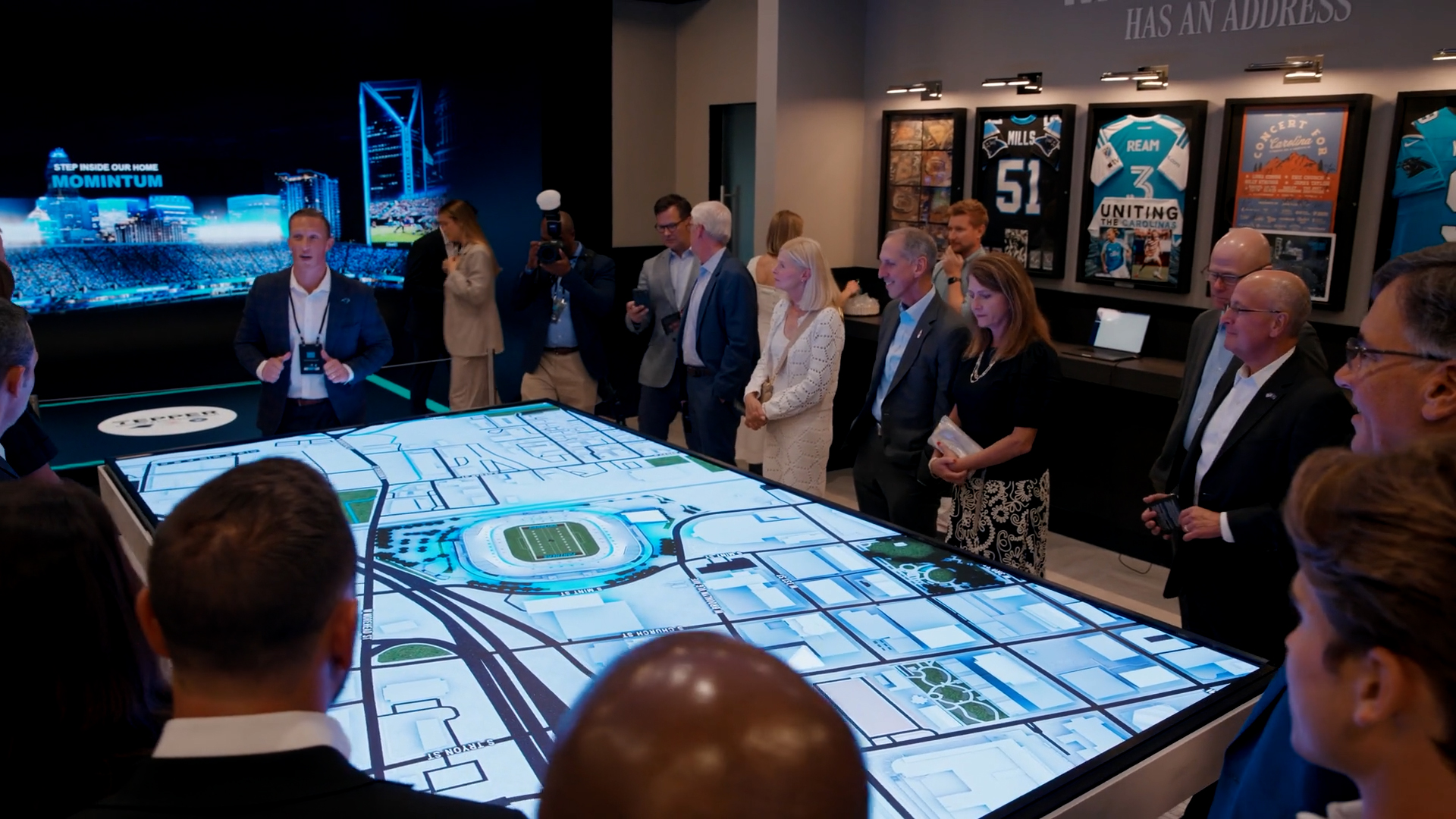
1. Make It Physical, Not Just Visual
A rendering asks a buyer to imagine. A walkthrough asks them to feel.
Those are fundamentally different questions with fundamentally different demands placed on the buyer. One asks, “Can you picture it?” – that ‘leap of faith’ that really just translates as risk in your buyer’s mind. The other asks, “Can you see yourself here?” The space already exists, the buyer has physically experienced it, and the demand put on them, as a result, is much smaller.
That gap – the space between imagining and feeling – is where premium deals are won or lost. It’s why we refuse to design spaces that are just rooms full of passive screens.
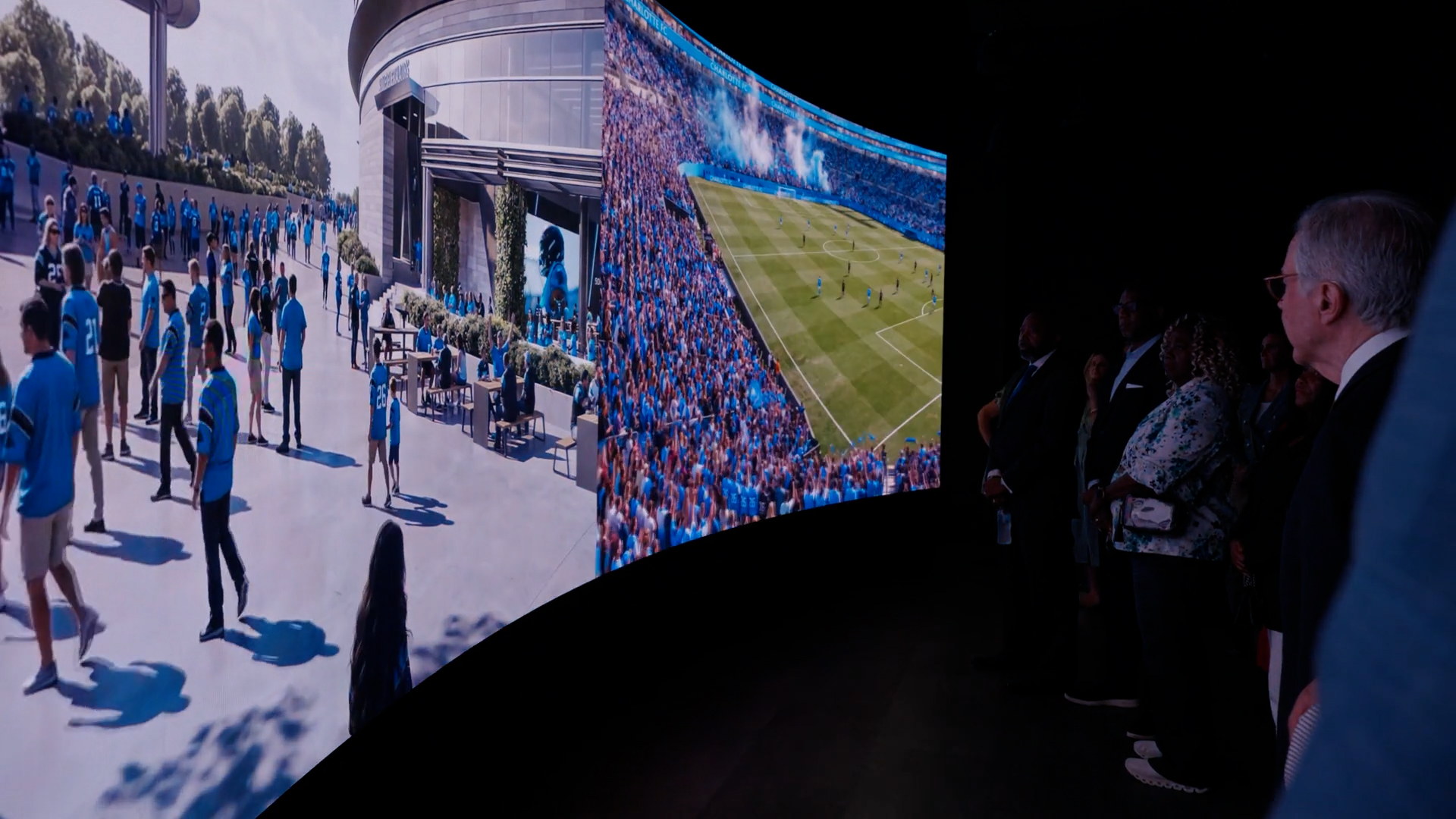
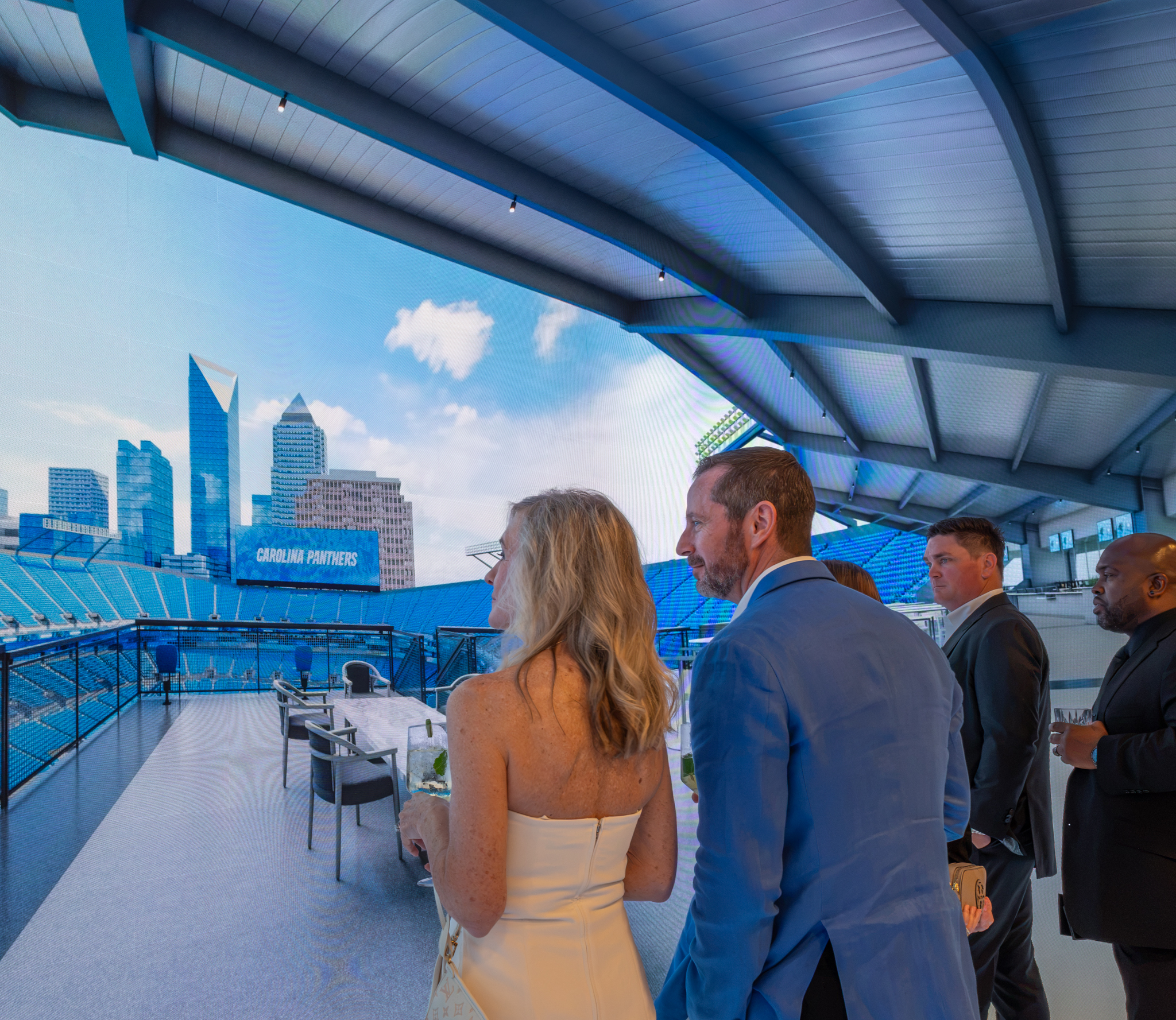
It’s why we developed The Immersive Cube®, a state-of-the-art technological marvel that allows someone to physically step inside your completed space – whether that’s a VIP lounge, their specific seat location, or even onto the field itself. Like virtual reality without the goggles; Vegas A’s President Marc Badain called it “the greatest piece of technology ever seen to promote a ballpark,” after we built one for his team.
Every Sales Experience Center we design is built around physical presence and multi-sensory interaction. We want people to step inside the spaces, and feel the importance of the renovation – and the emotional connection to it – before it’s even complete.
2. Look for every opportunity to weave in storytelling
Technology for the sake of technology is just an expensive light show. High-stakes sales don’t happen because your prospect is impressed by the screen resolution. They happen the exact moment they step inside and realize they’ve become a part of the story.
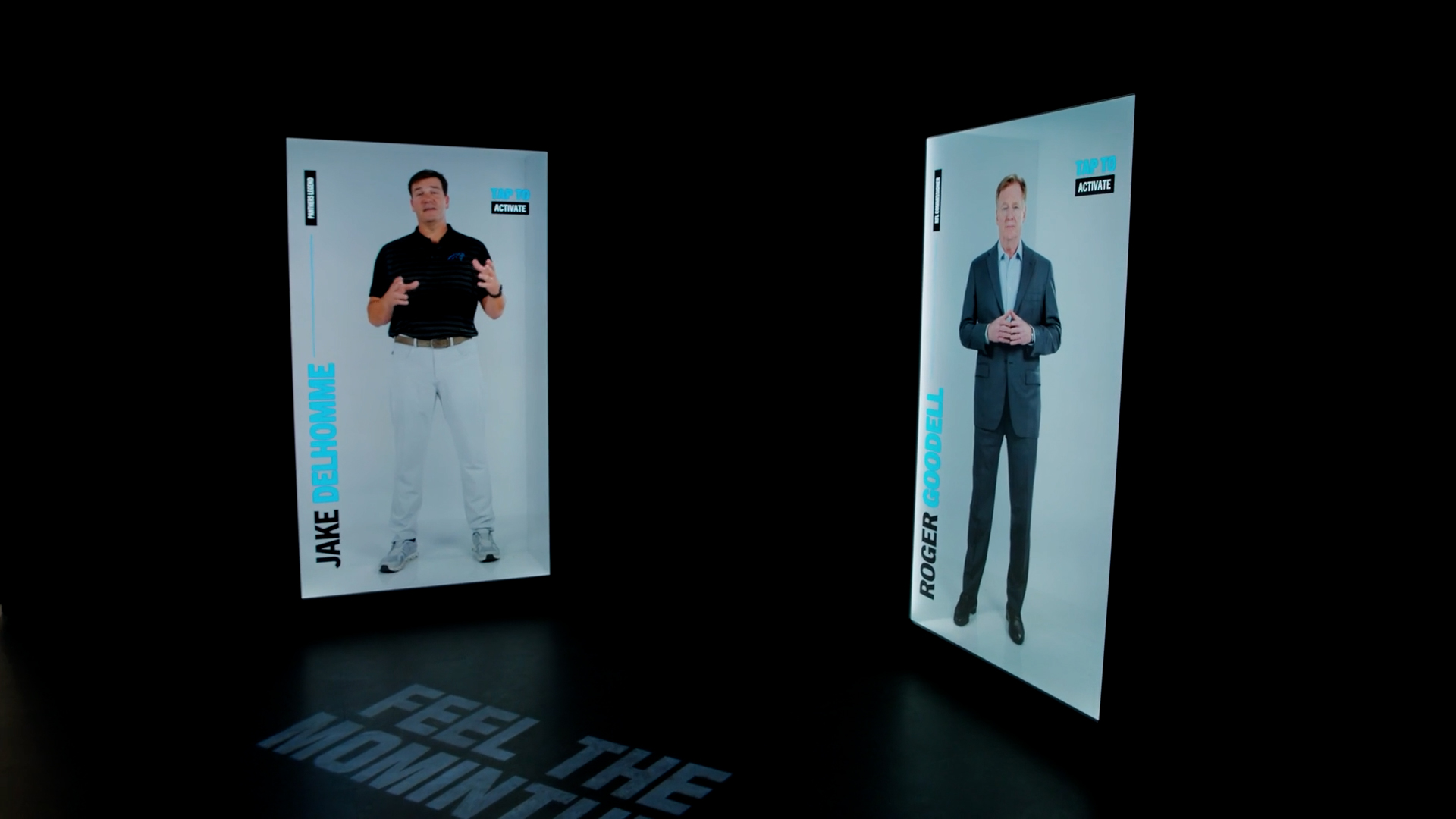
Imagine sitting in The Experience Center and having your favorite Panthers legend describe what it felt like to score the game winning touchdown in the super bowl. Or the legendary Charlotte FC coach is looking you in the eye, reliving the infamous halftime speech that changed the course of the season.
Those moments do more than entertain. They trigger something powerful in our neurology. They create emotion, reinforce identity, and lock in memories that stay with us.
It’s why we engineered the Holographic Experience. Not to showcase the life-size transparent OLED technology. We did it to bring eighty different curated story moments to life – stories that celebrate the players, the coaches, the traditions, and the defining moments that shape the soul of Panthers and Charlotte FC history.
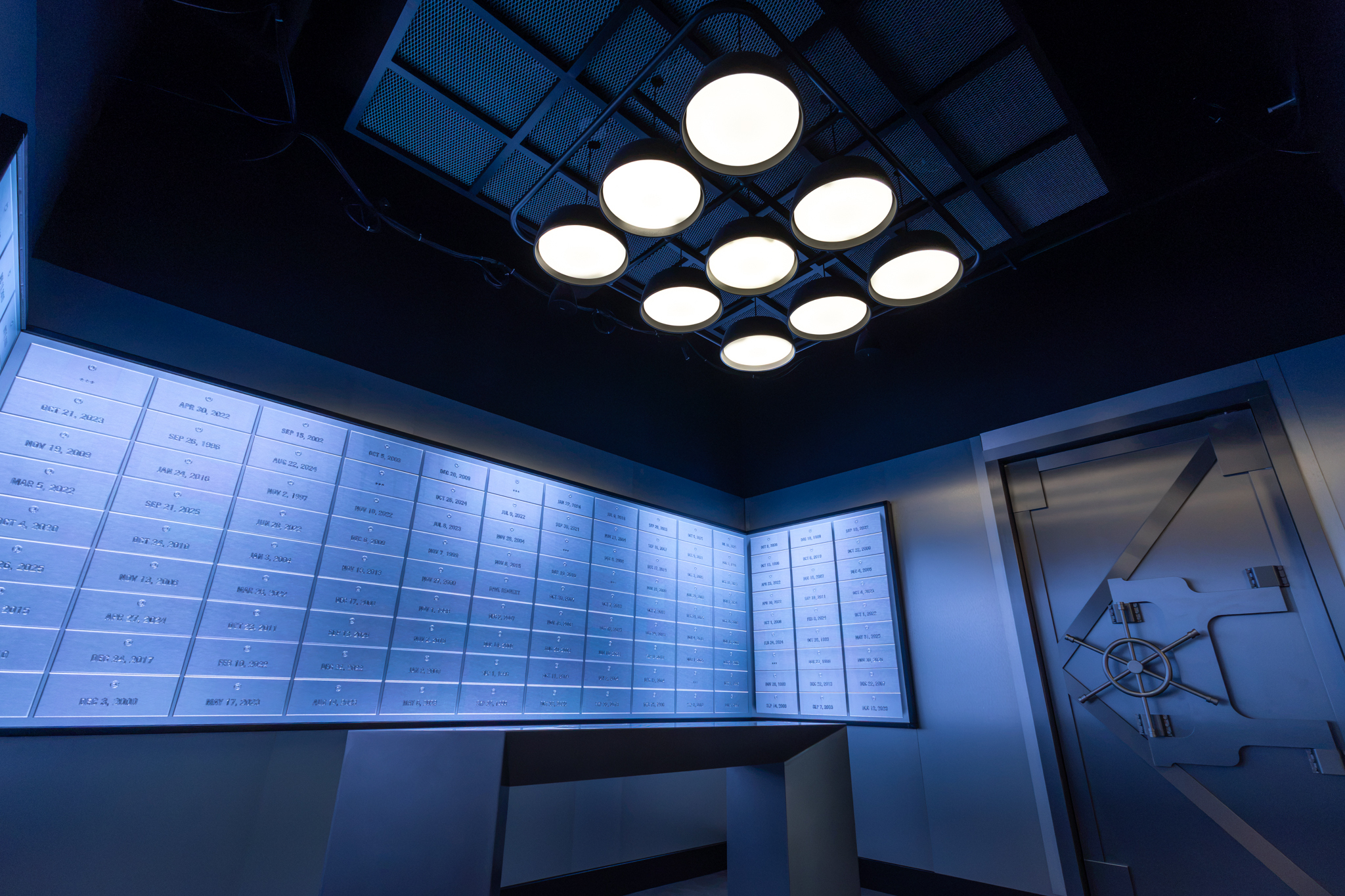
It’s also why we built Tepper The Memory Vault – a first-of-its-kind, interactive touchpoint that transforms existing CRM data into another unique opportunity for emotional connection.
Technology can create an awe. But stories? Stories give people a reason to care.
3. Every Build Needs a Thesis, Not Just a Sales Objective
A Sales Experience Center is a revenue tool. It’s also – if built correctly – a statement of intent, and we insist on establishing that intent first.
What do you want your fans to feel when they enter your space?
For Tepper Sports, they wanted them to not just see what the renovated Bank of America Stadium will eventually look like, but to feel the energy, history, and the future of the Carolinas – the connection to their team and the ways that connection is being rewarded.
That thesis becomes the filter every subsequent decision passes through. When a team knows the goal is to make people feel the future, decisions about content, layout, and pacing get easier to make and easier to defend. The Cube®, the Story Vault, the interactive holograms, all of it exists in service of the feeling, not for the sake of technology.
From Tepper Sports to the Vegas A’s, we design every space with a defined thesis in mind from day one.
The Advent Takeaway
Renovations are messy. Timelines are inconvenient and unreliable. That is just a brutal reality of the sports business.
But we know this for certain: construction does not have to stall your revenue.
Across every sales experience center we’ve built, from Vegas to Miami to Charlotte, the organizations that close the gap between imagination and reality – and keep their buyers, sponsors, and fans emotionally invested long before (and long after) the ribbon is cut – discover this to be true as well.
If your organization is planning a renovation or new build and needs a way to sell the vision before the vision is finished, this is exactly the kind of problem we solve. Let’s talk.

For over 25 years, Advent has been creating emotionally resonant experiences for leading brands including AT&T, Fanatics, the Dallas Cowboys, and Stanford University. Our proprietary StoryMining methodology ensures that every project starts with the story, not the technology.