

The Campus Visit is Still the Moment of Truth, So Why Are We Still Giving the Same Tour?
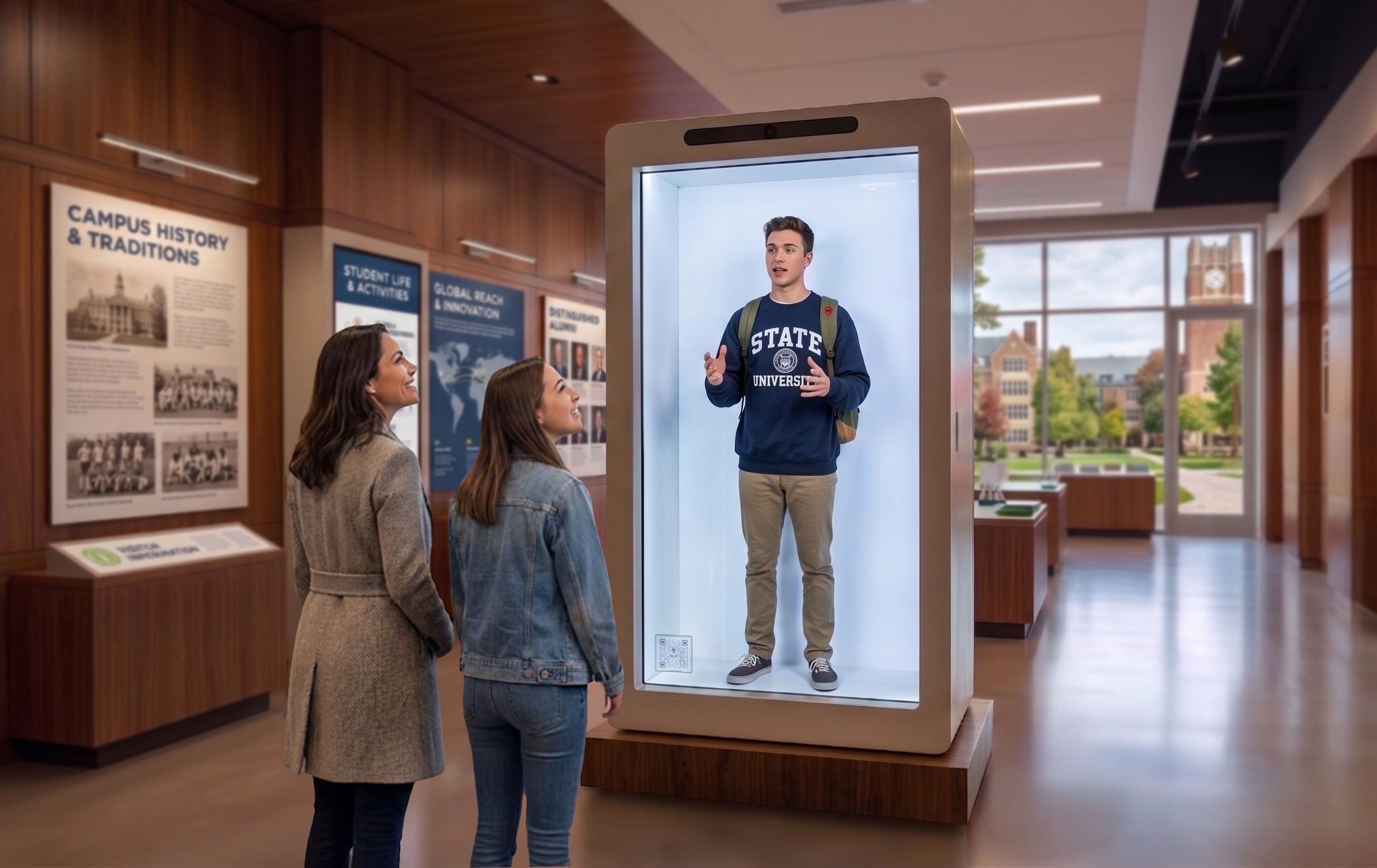
This July, StudentBridge hosted a fantastic webinar called The Campus Visit Is Still the Moment of Truth, featuring Jeff Kallay, SVP of Enrollment Consulting at Echo Delta, and Gil Rogers, founder of GR7 Marketing. It’s worth watching in full, and it’s worth sitting with, because Rogers opens by saying something that should stop every university admissions professional dead in their tracks: the campus tour most institutions run today would be almost entirely recognizable to a student who toured campuses twenty years ago. Same information session. Same scripted walk. Same backward-walking guide reciting the same list of buildings.
That’s not a knock on the people running these visits. It’s a structural problem, and it’s one we think about constantly at Advent: designing a campus tour that treats every visitor identically isn’t a tour anymore, it’s a real estate showing with a nineteen-year-old realtor.
We think the seminar diagnosed the problem exactly right. We also think Advent already has the blueprint, and the technology, to fix it.
How Today’s Students Have Changed, and Why Campus Visits Must Evolve
Rogers and Kallay’s argument, in short: the traditional campus visit was built for a different information economy. It assumes a family arrives knowing almost nothing about your institution, so the visit opens by collecting their name, hometown, and potential major, then walks them through an information session covering material that’s already sitting on your website and inside your marketing mailers.
By the time a prospective student actually shows up on campus, they’ve already done the research. StudentBridge says over half of prospective students have engaged with your content before they’ve even considered visiting campus. They’ve watched the videos, read the testimonials, compared the programs. So, when they finally arrive on campus, what they’re looking for isn’t more information. It’s clarity, and the confidence that comes from being able to picture themselves there.
The data backs this up. The campus visit used to be the single biggest influence on where a student applied. It no longer is. According to Kallay, website and email now outrank it, and the campus visit has slid to third.
But the visit hasn’t become less important, its job has simply changed. It’s no longer primarily a recruitment tool designed to generate interest. It’s a yield tool designed to transform existing interest into a confident decision. Enrolled students visit campuses at a dramatically higher rate than students who don’t enroll, and while correlation isn’t causation, the gap is too large to write off as coincidence.
And yet institutions keep treating the visit as if it’s the beginning of the relationship instead of the all-important middle chapter. Prospective students get walked around campus and shown a slide deck when what they’re actually seeking is deeper, more granular. They don’t want to sit through a PowerPoint presentation, no, they want to talk to a current student in their intended major. And when institutions do know something specific about a visitor, whether it’s a major, a hometown, or an activity they care about, that knowledge routinely gets left at the door instead of showing up on the tour itself. According to Kallay, two out of three students say generic messaging makes them less interested in a school. Colleges and universities need solutions that drill deeper and operate on a much more personal level.
How Advent Uses the CARE Framework to Redesign Campus Visit Experiences
Here’s what struck us watching the webinar: everything described as the fix, that prospective students want to talk to current ones, that families need to feel genuinely welcomed rather than processed, that the space needs to make someone believe I could belong here, is exactly what our adopted CARE framework is all about. Captivate. Amplify. Resonate. Empower.
Advent has already deployed this framework on college campuses across the country.
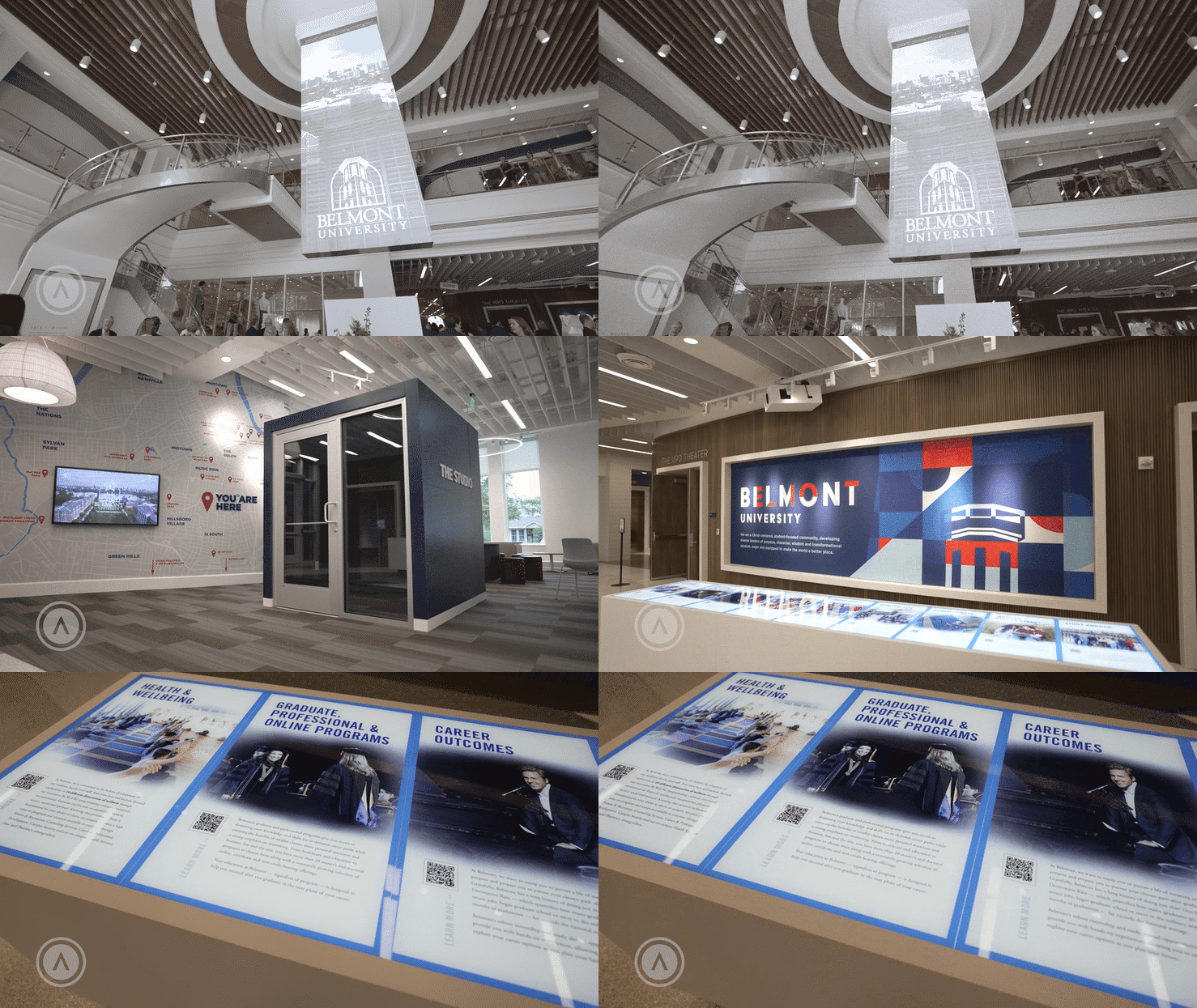
At Belmont University here in Nashville, we designed the Jack C. Massey Center to break the mold of the standard welcome center. Instead of feeling like a doctor’s office with Belmont’s logo slapped up on a wall and some painted brand colors – a space entirely separate and isolated from the campus at large – the center has a working cafe, a bookstore, and collaborative areas where current students actually study and hang out. A prospective student doesn’t walk into a showroom. They walk into what could be their own Tuesday afternoon a year from now. Belmont is a music school at heart, so we also built a working recording studio right into the welcome center, giving a seventeen-year-old who’s been making beats in their bedroom a chance to feel, not just hear about, what it’s like to be a Belmont music student and what’s possible.
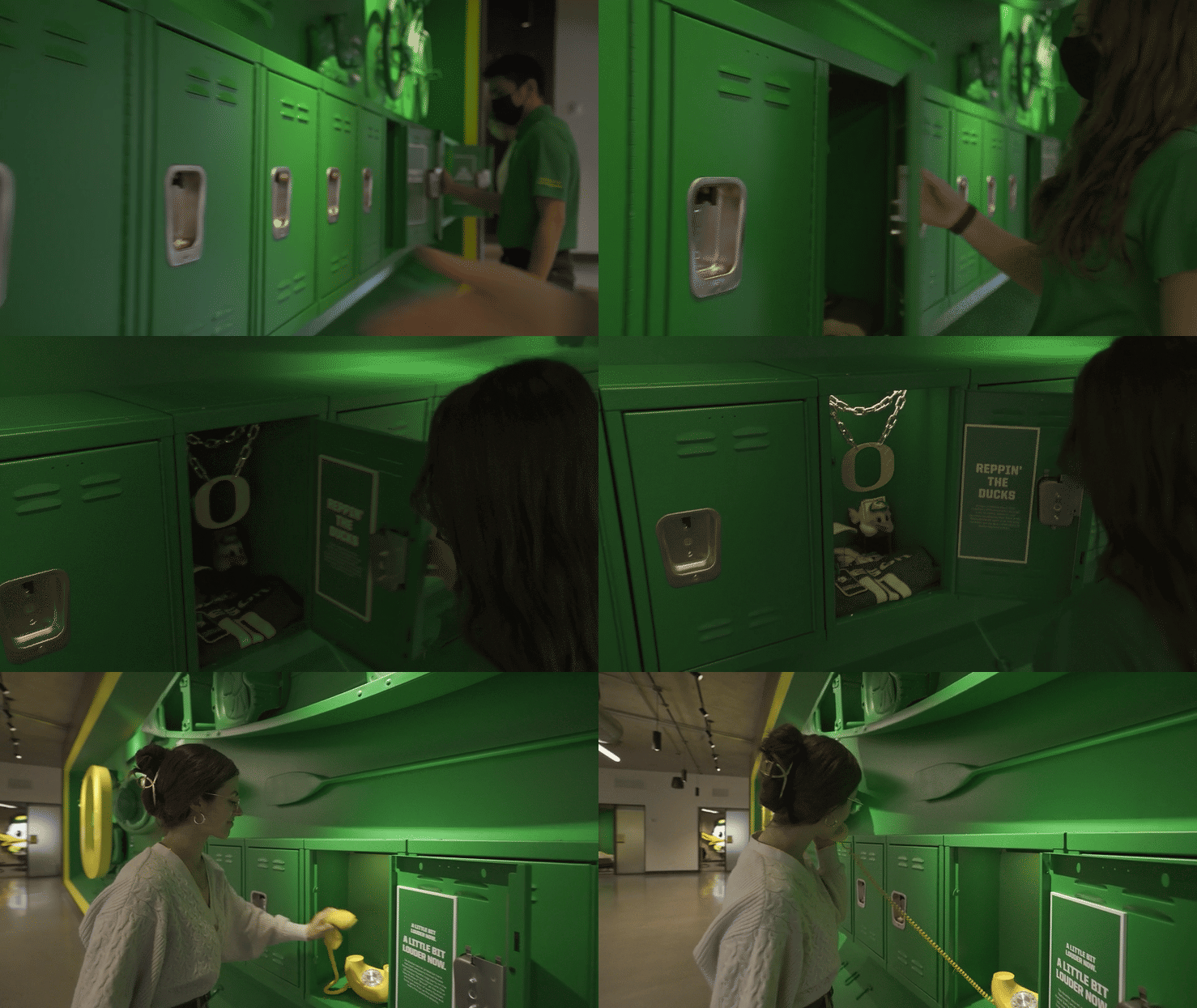
At the University of Oregon, we took a different approach by installing fifteen unlabeled locker doors, built into the walls of the welcome center. No signage, no instructions, no tour guide explaining what’s behind them. Each one hides something different: a vintage rotary phone that tells a joke when you pick it up, the Oregon Duck mascot dancing on a screen, headphones that drop you straight into the roar of game day at Autzen Stadium. After installation, Oregon admissions told us that roughly two out of three visitors open at least one door without being asked or told to, and about half their visitors open all fifteen. Applications from out-of-state students increased eighteen percent the year after installation. Not because we gave prospective students more information. Because we gave them a moment of discovery that belonged to them.
That last point matters, because it’s where we’d gently place an asterisk beside one word that came up a lot during the webinar: personalization. We’ve seen lots of institutions get personalization backwards before.
One university client built a fully-individualized recruitment experience, with private tours, private presentations, and private meetings for every prospective student. It sounded perfect, but it failed. Students felt isolated. Parents felt disconnected. Nobody could compare notes because nobody had shared an experience with anyone else.
The fix isn’t less personalization, it’s adopting a different kind – a better kind. At Advent, we call it mass personalization at scale: the same installation, the same physical moment, that means something specific and something different to every single person who experiences it. The Oregon lockers are identical for everyone. Which door someone opens first, and what they find behind it – both literally and emotionally – is entirely theirs. That’s the model. Shared structure, personal meaning.
Using Advent’s Holographic Platform to Personalize the Campus Tour Experience
Our personalized holographic experience platform takes this concept even further, and for that reason, we think it’s the perfect tool for the renewed campus visit model the StudentBridge webinar was calling for.
Here’s how it works:
A prospective student walks into your welcome center or admissions space, a light cue shows them where to stand, and a natural, spoken conversation begins with a holographic presenter who can field real questions in real time, steered by a rotating set of prompts tailored to what that visitor actually wants to know.
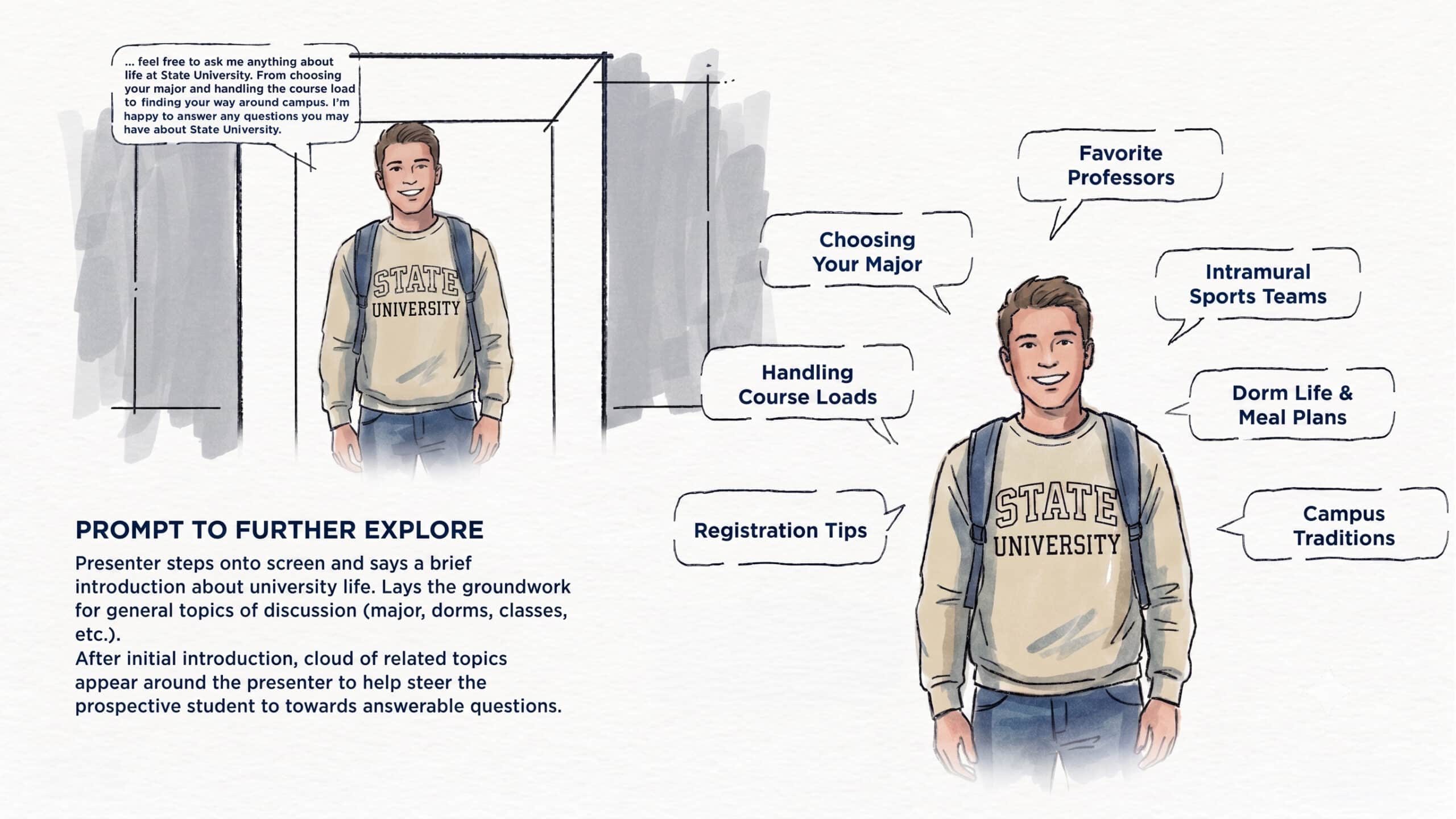
This Advent technology already exists at Stanford University and the new Bank of America Stadium Experience Center for the Carolina Panthers and Charlotte FC – needless to say, if you live close by to either, it’s worth experiencing in person.
While both those examples are sports-oriented, a campus tour edition would be built to feel like having a conversation with a current student about choosing a major, handling course loads, dorm life, favorite professors, or campus traditions – the exact list of topics Kallay said families actually care about and admissions offices routinely bury.
Think about what that solves. It eliminates the canned, shotgun approach of a PowerPoint presentation, because the conversation adapts to the specific person standing in front of it. It answers the “students want to talk to other students, not faculty” research Kallay cited, because the presence in the room is built to be a peer, not an administrator. And because it’s a shared installation rather than a private appointment, it avoids the isolation trap we touched on earlier.
A family can stand around it together and have one conversation. The next family to interact can have an entirely different conversation five minutes later. Same structure, same installation, but a personal, effective connection every time.
The campus visit still matters. It just has to adapt.
Nothing in the StudentBridge webinar suggested the campus visit is dying. If anything, Kallay made the opposite case: the visit is more important than it’s ever been, precisely because it’s now the moment where a family’s thorough research into your school is either confirmed or falls apart. The institutions that win are the ones that can make a seventeen-year-old feel, in one visit, that they’ve already found their place and their people.
That’s not a marketing problem. It’s an experience design problem, and it’s the one Advent has spent 25 years solving for stadiums, arenas, corporate headquarters, and yes, college campuses. The playbook already exists. The technology to bring it to more welcome centers, more efficiently, is here now.
Advent would like to thank Jeff Kallay of Echo Delta and Gil Rogers of GR7 Marketing for the webinar that inspired this think piece.
Watch here: The Campus Visit Is Still the Moment of Truth

Written by Grace Johnson, Senior Client Engagement Manager
For over 25 years, Advent has been creating emotionally resonant experiences for leading brands including AT&T, Fanatics, the Dallas Cowboys, and Stanford University. Our proprietary StoryMining methodology ensures that every project starts with the story, not the technology.