

Multi-Use Districts
The Future of Sports-Anchored Destinations and Youth Athletics Facilities: What Sets Yours Apart?
Mixed-use districts are quickly becoming the new normal
Sports facilities, restaurants, retail, hotels, entertainment venues, and public gathering spaces are increasingly being developed as interconnected destinations. For developers and municipalities, these projects offer unprecedented opportunities to attract visitors, stimulate economic activity, and create lasting community value.
But as more developments adopt a similar model, an urgent question emerges: When every development offers a similar mix of sports, dining, shopping, living, and live entertainment, what makes yours worth visiting, remembering, and returning to?
The answer isn’t necessarily another amenity or a larger facility. It’s the visitor experience and the ways in which you bring it to life. The most successful destinations connect their physical environments, storytelling, technology, and commercial strategies to create something distinctive.
So, what does that look like in practice? From the growing role of youth athletics as a development anchor to the power of storytelling, connected visitor experiences, and long-term planning, here are six considerations shaping the next generation of sports-anchored destinations:
1. The Mixed-Use Model Is Becoming the Expectation, Not the Differentiator
The combination of sports, hospitality, entertainment, living, and retail is no longer a novel concept.
Developments like The Star in Frisco, Texas, have demonstrated how sports can anchor a larger destination. Built through a public-private partnership involving the Dallas Cowboys, the City of Frisco, and Frisco Independent School District, The Star integrates professional sports, high school athletics, hospitality, retail, dining, and public gathering spaces.
Its identity is rooted in something competitors cannot simply replicate: the Dallas Cowboys brand, history, and connection to the community. That identity extends throughout the entire destination: from the Ring of Honor Walk to branded gathering spaces, sponsorship inventory that drives social engagement inside AND outside of the space, fan experiences, and year-round programming. The Star offers an important lesson for developers and destination planners: The physical mix of uses creates the opportunity. The identity and experience create the differentiation.
Not every community has a professional sports franchise to build around. But every community, organization, and destination has a story worth telling. The challenge is identifying what makes that story unique and bringing it to life through the built environment.

2. Youth Athletics Is Becoming an Anchor for Broader Development
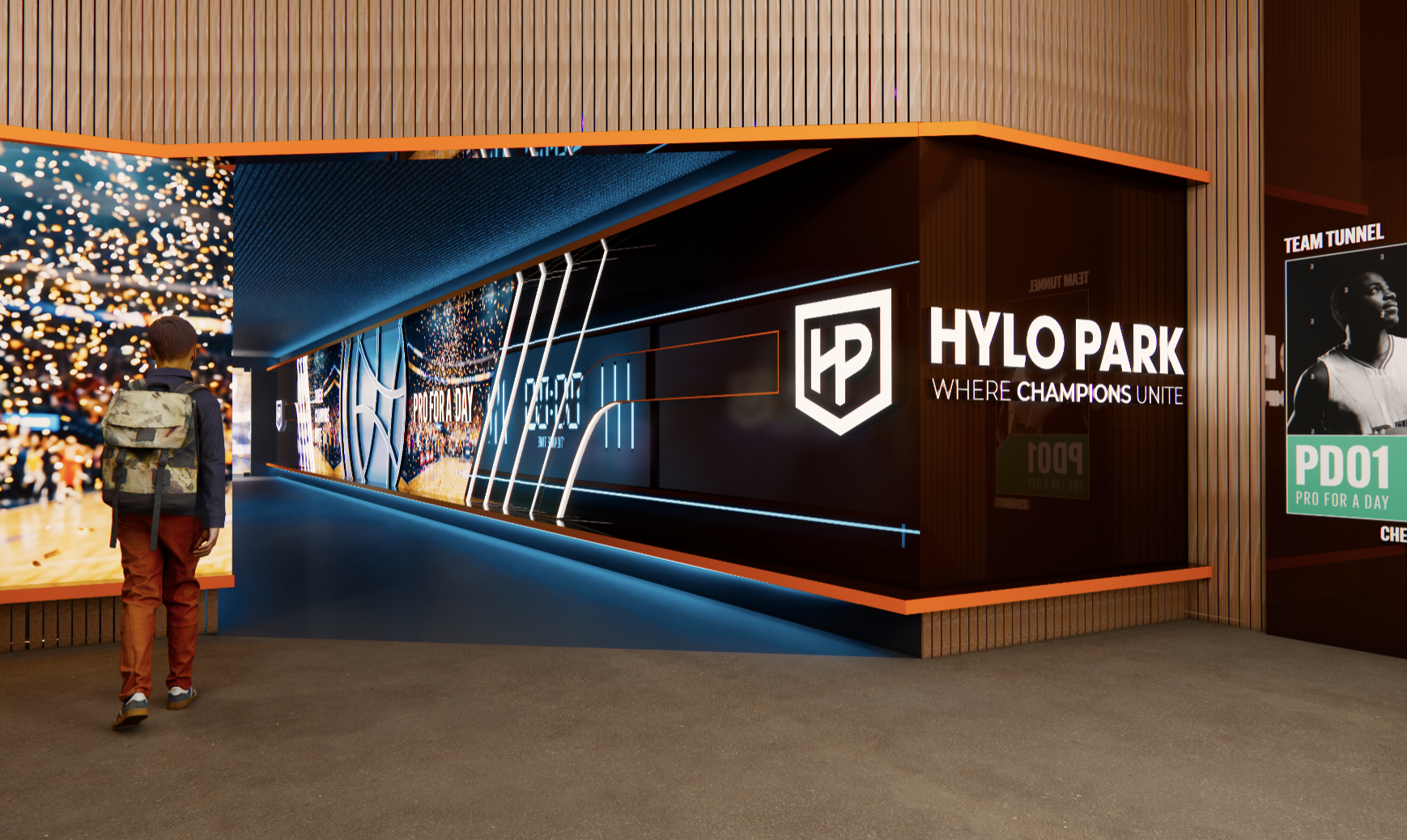
Youth sports tourism presents a compelling opportunity for municipalities and developers looking to create year-round activity and attract regional visitors. But building a tournament-ready facility is only the starting point. Consider Hylo Park in North Las Vegas. This 73-acre mixed-use concept illustrates how sports facilities are being integrated into broader commercial frameworks. Its planned athletics-centered phase includes a 250,000-square-foot indoor complex alongside hospitality, dining, entertainment, and residential uses.
The strategy recognizes that youth sports attract families to a destination, while surrounding businesses create opportunities to extend their visit:
For developers: It supports leasing velocity, tenant activity, and diversified revenue.
For municipalities: It generates benefits tied to tourism, jobs, recreation, and tax base growth.
For architects & consultants: It introduces a broader design challenge; building infrastructure that supports the entire destination ecosystem, not just athletic competition.
Simply placing these uses side by side doesn’t guarantee a cohesive experience. The real competitive advantage comes from connecting the assets, not simply co-locating them.
3. Creating Something Different Starts With the Story
A destination doesn’t need to be the largest or most expensive to create a memorable experience. It needs an identity that feels authentic and meaningful to the people it serves.
WYO Sports Ranch in Casper, Wyoming, illustrates this approach in action. What began as a community vision for expanded athletic opportunities evolved into a 131,000-square-foot facility supporting youth sports, regional tournaments, and community programming.
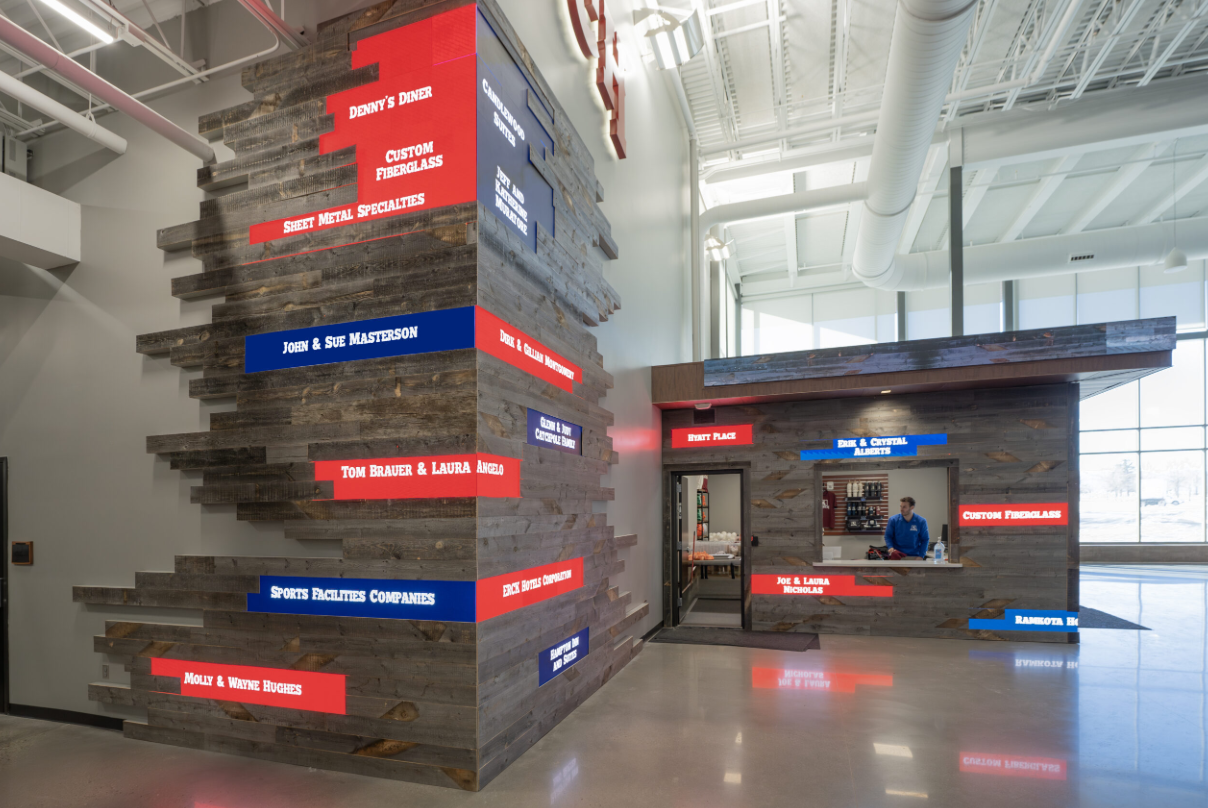
From the outset, the leadership team wanted something beyond a traditional sports complex. They wanted an environment that reflected Wyoming, celebrated its community, recognized key project donors, and created memorable moments for young athletes. Advent worked alongside the architects and project leadership to integrate storytelling and digital experiences directly into the architectural design:
-Large-format LED displays and interactive digital kiosks create dynamic event environments.
-Digital donor recognition celebrates community supporters dynamically.
-The Wyoming Proud Wall combines local artwork, cultural storytelling, and media content to create an experience deeply rooted in place.
Differentiation begins when a facility stops looking like every other facility and starts telling a story that only it can tell.
These aren’t simply tech installations; they turn ordinary moments into extraordinary memories. For an athlete, it means seeing their name celebrated on a stadium display. For a visitor, it means leaving with a lasting connection to Casper and Wyoming.
4. The Real Opportunity Is Connecting Every Point of Experience
One of the biggest untapped opportunities in mixed-use development exists in the friction points between individual assets. A sports facility, hotel, restaurant, retail center, and entertainment venue may each operate successfully on their own. But what happens when they are designed to work together?
Imagine a family arriving for a weekend sports tournament:
-Pre-Arrival: They receive schedule updates, curated dining options, and district activity maps.
-On-Site Arrival: Digital displays inside the facility welcome their team, celebrate athletes, and highlight surrounding events.
-Between Games: Integrated messaging directs families to nearby interactive attractions or lunch specials at adjacent restaurants.
-Evening: The family returns to a shared public plaza for a community event or movie night.
Throughout the visit, the destination feels cohesive, connected, and distinctly intentional.
For operators, this increases dwell time. For tenants, it drives cross-district spending. For sponsors, it unlocks multi-touchpoint activations across spaces. This is where storytelling, content, and technology become the connective layer between physical assets and the visitor journey.
5. Future-Proofing Means Planning for Experiences That Haven’t Been Imagined Yet
Mixed-use developments represent multi-decade investments, yet technology, consumer expectations, and programming trends evolve rapidly. How do you design a destination that can adapt without requiring constant, costly reinvestment?
The answer begins with flexibility.
A digital environment celebrating a youth basketball tournament on Saturday can host a corporate sponsor activation on Tuesday and a local cultural festival on Thursday. Public gathering spaces can seamlessly transition between athletic overflow, live entertainment, and private functions. Content management systems can evolve as tenants shift, sponsors rotate, and new demographics engage with the district.
Future-proofing isn’t about predicting every new technology. It’s about creating the infrastructure and flexibility to embrace what’s next.
Achieving this requires incorporating experience, strategy and technology early in the master planning process; well before power, connectivity, sightlines, and structural integration are locked down. Early alignment preserves design intent while ensuring long-term operational adaptability.

6. Differentiation Requires Stakeholder Alignment From Day One
Every stakeholder brings different priorities to a major development. Municipalities focus on economic impact and community benefit. Developers prioritize financial feasibility, tenant mix, and asset value. Architects and designers focus on functionality and sense of place, while consultants and engineers ensure infrastructure and integration. Owners and operators look at programming, visitor engagement, and revenue generation.
But visitors don’t experience these responsibilities separately. They experience one cohesive destination. Creating that experience requires alignment from day one.
That starts with asking the right questions: What makes this destination unique? Who are we trying to attract? What do we want visitors to feel, remember, and do? And how can every stakeholder contribute to a shared vision?
The Advent Takeaway
Whether looking at marquee professional destinations like The Star, master-planned concepts like Hylo Park, or authentic community-driven facilities like WYO Sports Ranch, one clear lesson emerges: Building the right mix of assets creates a development. Connecting those assets through a meaningful, differentiated experience creates a destination people actively choose.
At Advent, our work sits at the intersection of research, storytelling, design, content, and technology. We collaborate with architects, developers, municipalities, and owners to translate overarching project visions into meaningful Points of Experience. It’s not about adding screens for the sake of technology; it’s about creating something distinctive, intentional, commercially valuable, and built to evolve.
Are you planning a new sports-anchored development or evaluating how to differentiate an existing district? Connect with the Advent team to explore how experience strategy and storytelling can elevate your next project.

Written by Jenn Cunningham, Director: Strategic Client Relations
Frequently Asked Questions
What is The Immersive Cube®?
The Immersive Cube® is a room of seamless LED walls, floor and, in some installations, ceiling that surrounds guests with one continuous image. Guests step inside a stadium, a suite or a moment on the field without a headset, and the whole group sees it together. Each Cube is sized to fit the space a team has, and it runs on the Advent Operating System™ (AOS).
What happens to the Cube after my venue project is completed?
It gets a new job. Because everything inside the Cube runs through AOS, a team can swap sales content for fan experience, sponsor activations or recruiting content without new hardware. The tech stays the same. The function changes.
Can we move the Cube out of the sales center once we've hit our goals?
Yes. A team can relocate the Cube into the new venue, onto a concourse or into a premium space – or keep it where it is and change what plays inside. The Athletics have already shared plans to bring their Cube into their new ballpark on the Vegas Strip and turn it into a fan experience destination.
Can I use the Cube for sponsor activation?
Of course. Sponsors can present the Cube experience, own a branded “boot-up” scene, appear inside sponsor-presented moments, brand the floor markers or host private sessions for their own clients and employees. Keep in mind, the strongest activations fit the team, the partner and the fan at the same time, which we call the value intersection.
Can college athletics programs use the Cube for recruiting?
Yes. The same technology pro teams use to sell stadiums can put a recruit in the huddle, show them a facility that’s still under construction or personalize a visit with their name and number. With the transfer portal and direct athlete payments reshaping college rosters, the experience a program offers matters more than ever, both for winning recruits and keeping current players.
Who creates the content for the Cube?
Advent’s digital experience team builds the Cube’s digital content within AOS, then passes the controls to you. For live-action, immersive footage, we work with our official content partner, Magic Trick Media, an Emmy and Peabody Award-winning production team that shoots and edits specifically for the Cube to truly immerse the viewer.
Does our team need technical expertise to run the Cube?
No. Sales reps inside your experience center can run the Cube from an iPad utilizing the incredibly user-friendly Advent Operating System, and the Advent DX team provides hands-on training and ongoing support. If you can use a phone or tablet, you can run the Cube.
For over 25 years, Advent has been creating emotionally resonant experiences for leading brands including AT&T, Fanatics, the Dallas Cowboys, and Stanford University. Our proprietary StoryMining methodology ensures that every project starts with the story, not the technology.