

Experience Design
Pro Sports
Technology
What Makes a Pro Sports Sales Center Exceptional? It’s Not a Scale Model
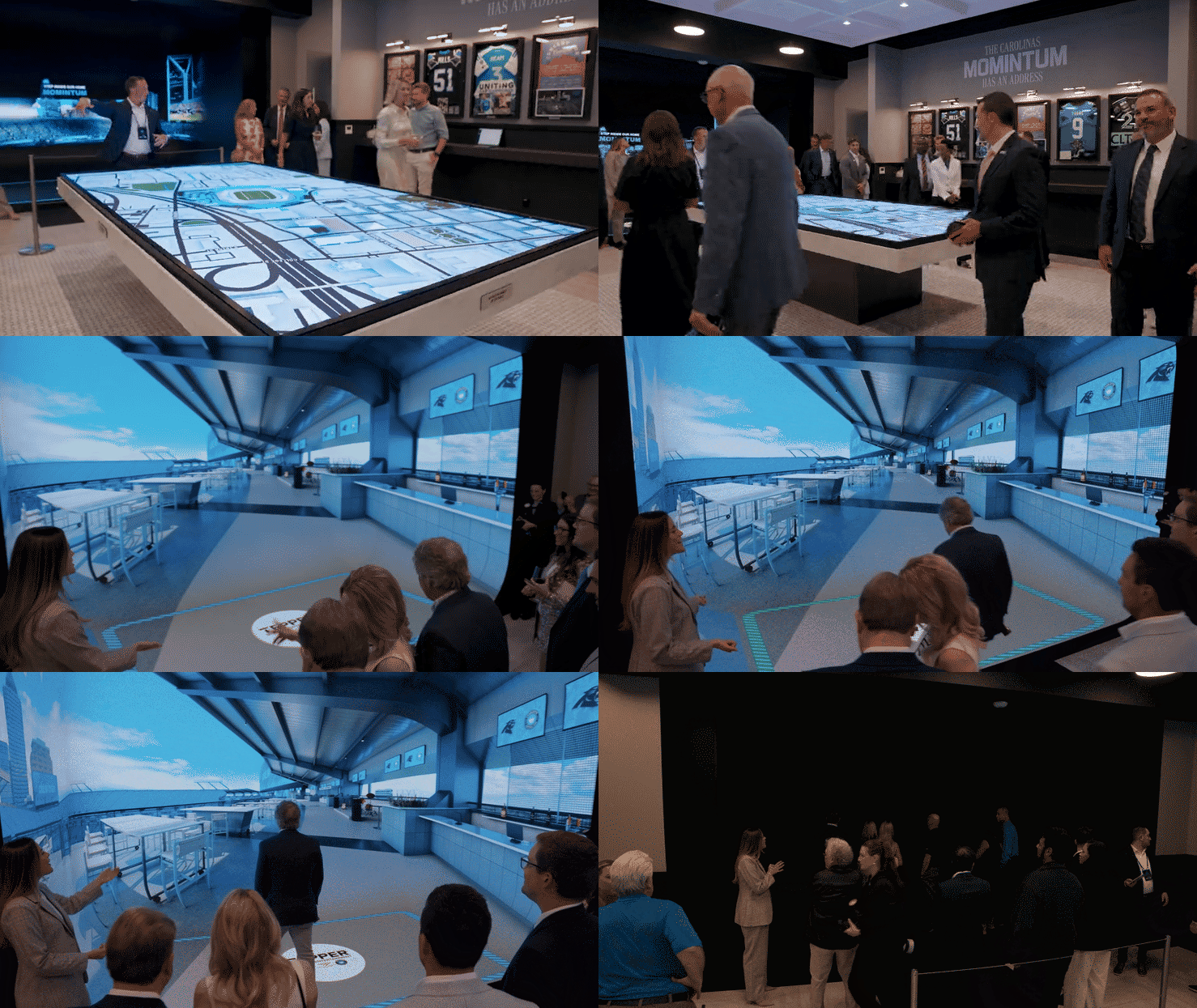
Most professional sports sales centers lean on a scale model behind glass, some static screens – maybe even a brochure – and hope these components are good enough to close a deal.
Don’t get us wrong, a good scale model still earns its place, and Advent has certainly built our share. They’re a strong, tangible entry point, something a prospect can walk up to and examine at close range. But that’s the distinction: it’s an entry point, not the full sales journey. Stop there, and you’ve given a prospect something nice to look at, not a reason to sign.
The organizations winning right now understand that difference.
When the Las Vegas Athletics needed to sell season tickets, premium suites and sponsorship deals for a $2 billion ballpark that didn’t even exist yet, a model and a brochure were never going to cut it – especially not in the most entertainment-saturated city on the planet.
So Advent didn’t stop at a model. Instead, we built a 12,000-square-foot experience center around it – one that treats the sales process like a full ballpark journey, from the moment a guest walks through the door to the moment they pick their seats. One that incorporates legacy storytelling, shared fan experience, and yes, our technological pièce de résistance: The Immersive Cube®.
Tepper Sports & Entertainment faced a slightly different version of the same problem – that is, how do you sell PSLs and premium upgrades on a $1.3 billion stadium renovation project that won’t be live and fan-facing for years? When Tepper’s Chief Revenue Officer Eric Sudol led media through the Advent-designed space this summer, the Cube front and center, he didn’t call it a nice showroom.
He called it “the most technologically advanced preview center in sports.”
The A’s Ballpark Experience Center got the same read from an outside reporter. Sports Business Journal Publisher and Executive Editor Abe Madkour toured the space and called it “a stunning sensation,” adding that other teams “will copy The Cube because it is an incredibly effective sales tool, benefiting sellers and buyers.”
Madkour, Sudol, Tepper Sports and the Vegas A’s have all arrived at the same conclusion: that a pretty showroom just isn’t enough to close deals anymore. That the “old way of doing things” is not just going out of style, it’s already extinct.
That’s the realization that can separate a professional sports sales center that simply looks the part from one that’s actually built to drive sales.
What actually separates a great pro sports sales center from a good one
It’s inclusive, not exclusive.
Good sales centers show guests where your team has been and where it’s going. Great sales centers invite their guests along for the journey.
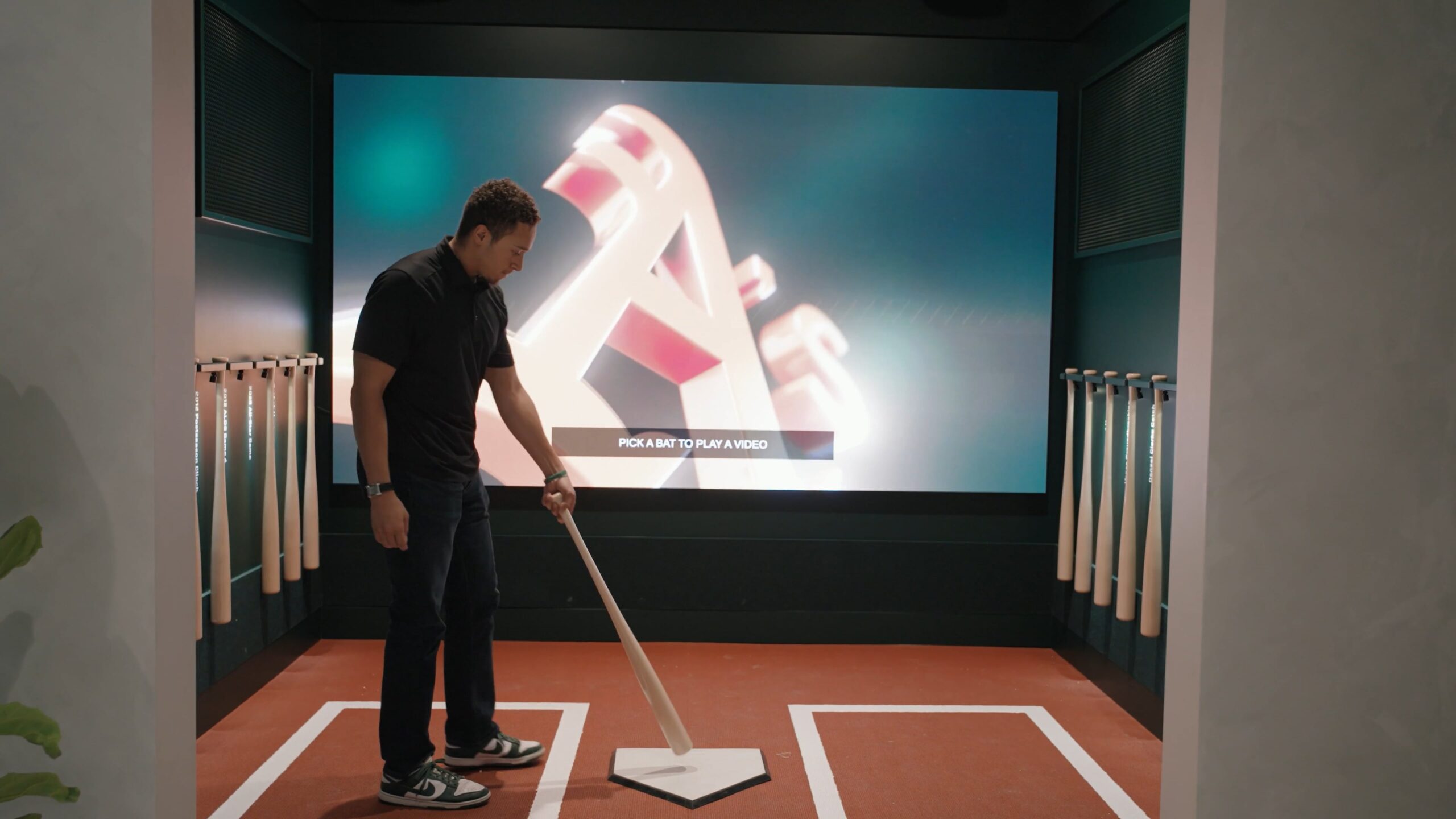
At the A’s Ballpark Experience Center, a custom wall of bats lets a guest pick one up and physically interact with franchise history. Lift a bat, tap home plate, and the corresponding moment plays on screen – from Rickey Henderson setting the all-time stolen base record to the Swingin’ A’s clinching their third consecutive World Series title. A guest isn’t simply reading a timeline. They’re choosing which piece of history they want to interact with. The best part? We’ve found guests rarely need encouragement from their sales rep to pick up a bat.
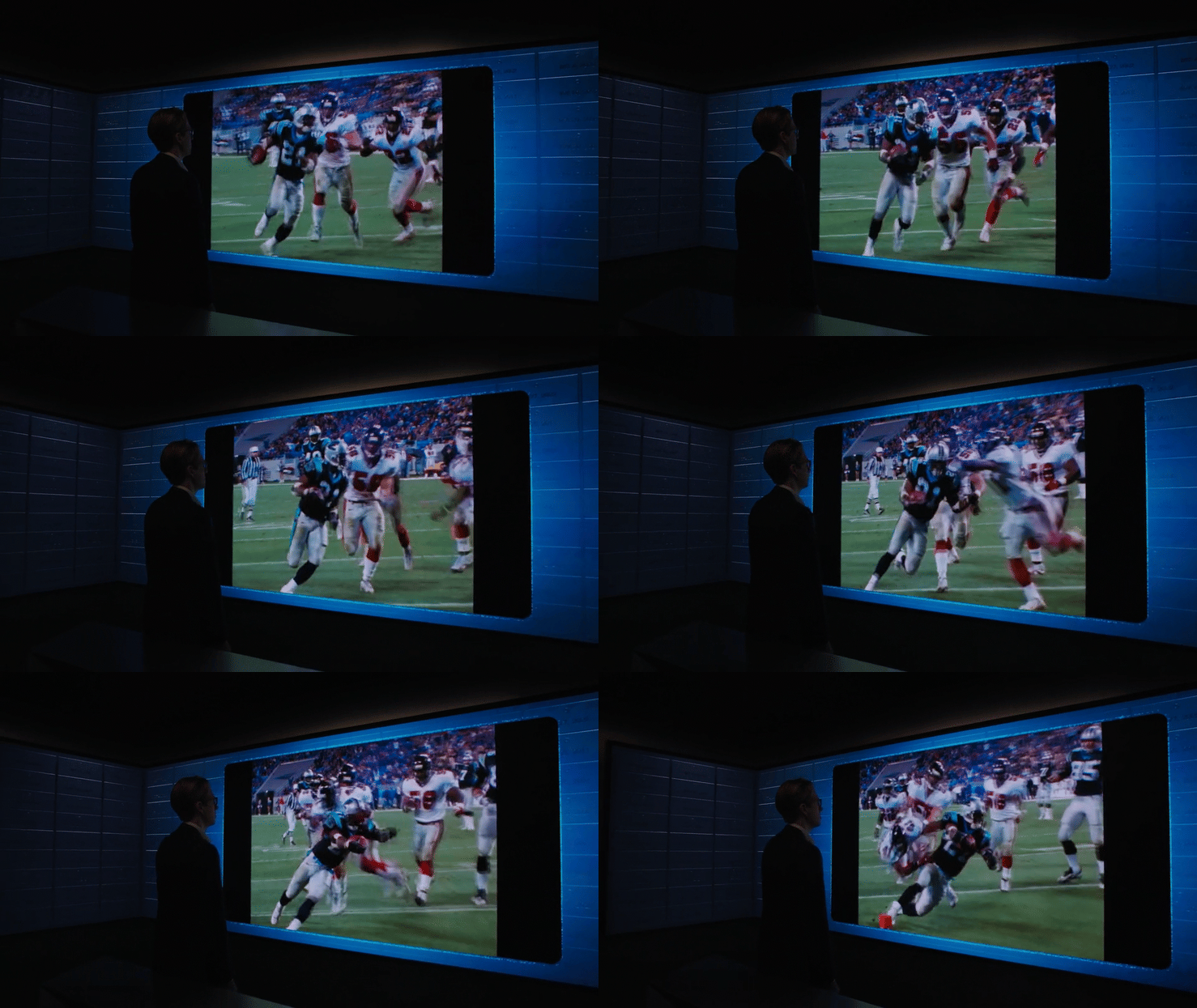
The Carolina Panthers and Charlotte FC StoryFrame™ room accomplishes the same goal. Two holographic display frames can summon more than eighty filmed testimonials on demand – from legendary players to diehard fans – that your guest can interact with in real time. The result: Tepper’s guests aren’t getting a canned sales pitch on why the team matters, they’re hearing from the people who can tell the team’s story from their own unique perspective.
Tepper’s guests not only hear from their favorite players. In the Panther’s and Charlotte FC’s iteration of the Cube, live-action 360 footage allows guests to step inside the huddle with the team or watch a goal from the opposing keeper’s vantage point, changing their role from spectator to participant.
It adapts to who you’re selling to.
A corporate sponsor asking about hospitality shouldn’t get the same walkthrough as a season-ticket or PSL holder. Great pro sports sales centers know who’s coming and adapt accordingly.
For the Carolina Panthers and Charlotte FC, Advent’s StoryVault utilizes Tepper’s CRM data to build a personalized welcome the moment a guest walks in. Think Spotify Wrapped for your favorite NFL or MLS team.
Once Tepper’s guests reach the Immersive Cube®, the effect gets even more granular. A corporate account sees their future suite, exact sightlines and all. A PSL holder gets placed exactly into their specific section, row and seat number.
Remember our old friend, the scale model? It may look pretty, but it also looks exactly the same to whoever’s looking at it – whether that’s a corporate account, a season ticket holder or someone else entirely.
Great pro sports centers create tailor-made sales journeys that are both personal and memorable.
Surprise! It closes sales.
It may seem obvious that a great sales center closes sales, but that can often be easy to lose sight of.
Across our 25 years in experiential design, we’ve seen clients become distracted by the aesthetics of their sales center and lose sight of that all-important objective. And we totally get it. The bells and whistles are fun, and we all want your prospects’ jaws to drop when they walk into your space. Ultimately, though, we want them to sign on the dotted line.
At Advent, our philosophy towards sales center design has delivered proven results time and time again.
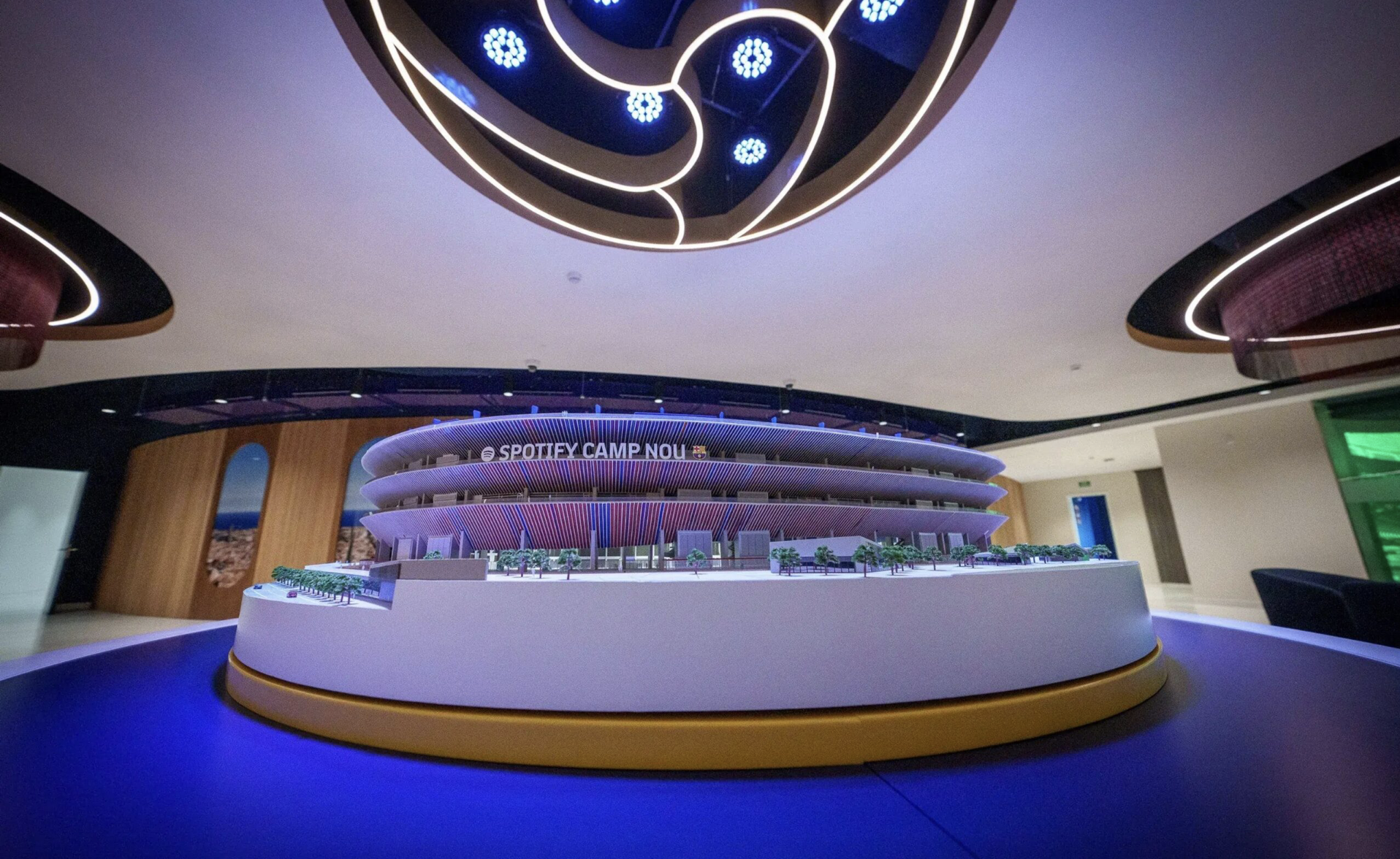
When FC Barcelona needed to sell premium suites for a stadium that didn’t exist yet, the Advent-designed experience center sold 90% of its premium inventory – twenty VIP suites and ninety-six boxes – almost immediately, projecting more than €120 million a year once complete.
The Vegas A’s Ballpark Experience Center saw similar success. The Athletic Club tier – the ballpark’s highest-end seating option – is already 92 percent sold out at $900 per ticket per game. Club-level seating is roughly 50 percent sold, and about 75 percent of buyers so far are local to Las Vegas, defying the cynical assumption that a relocated franchise would have to lean entirely on tourists. Luxury suites have “all but sold out.” The early premium wave alone is on pace to help drive a projected $124 million in inaugural-season ticket revenue.
Both examples weren’t simply return on a pretty room. Instead, it’s return on a sales experience that invited prospects into the team’s story, delivered a tailor-made experience and, ultimately, made the future feel real enough to buy into.
Good sales centers get your prospect thinking. Great sales centers get them signing.
The Advent Takeaway
A sales center isn’t defined by its square footage, its technology, or how good it looks on social media. It’s defined by whether a prospect who walked in undecided walks out already bought in, emotionally, so that by the time they sit down with a sales rep, the paperwork is just a formality.
In other words, when the experience is built to move people – not just to impress them – the revenue follows.
Looking to build a truly exceptional sales center? Let’s chat.

Written by John Roberson, CEO
For over 25 years, Advent has been creating emotionally resonant experiences for leading brands including AT&T, Fanatics, the Dallas Cowboys, and Stanford University. Our proprietary StoryMining methodology ensures that every project starts with the story, not the technology.